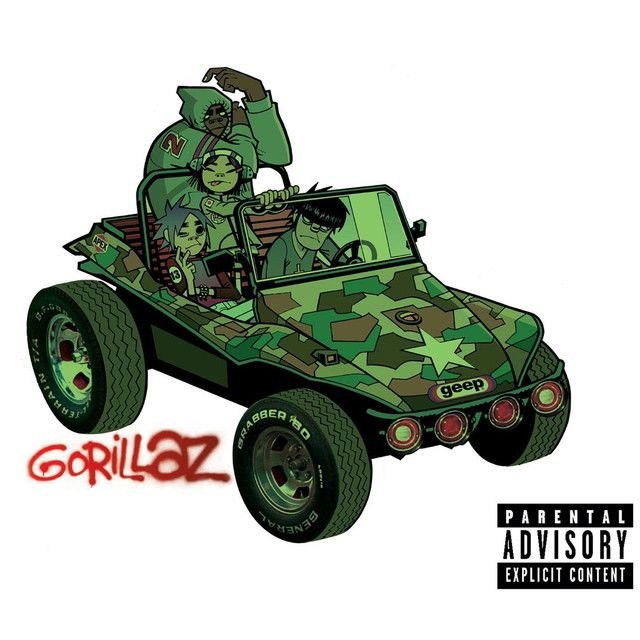
Clint Eastwood by Gorillaz
Why This Debut Still Feels So Strange
The meaning of Clint Eastwood Gorillaz starts with a contradiction. The song sounds cool, laid-back, and catchy, yet its words are full of doubt, pressure, and psychic confusion. That push and pull is the point.
"Clint Eastwood" - Gorillaz
I ain't happy, I'm feeling glad
I got sunshine in a bag
Loading lyrics...
Unable to load lyrics
We're unable to display the lyrics at this time. Please try again later.
Released in 2001 as Gorillaz's debut single and lead single from their first album, the track helped define the band's mix of animation, hip-hop, dub, and alternative rock. Factually, it features Damon Albarn on the sung hook and Del the Funky Homosapien on the rap verses, and it became one of Gorillaz's signature hits.
At its core, the song is about feeling stuck but sensing change on the horizon. The chorus says they are not okay, yet they still have sunshine in a bag
. That image turns hope into something portable but also unreal, like a mood they can carry without fully living it.

Watch the official Clint Eastwood
music video
A Hook Built on Mixed Feelings
The emotional center of the song lives in the chorus. They say I ain't happy
, then immediately shift to feeling glad. That quick swing captures depression, numbness, and fragile optimism all at once.
The phrase not for long
matters just as much. It suggests that uselessness, paralysis, or self-doubt are temporary. Then comes the promise that the future is coming on
, which sounds reassuring but also slightly mechanical, like change is arriving whether anyone is ready or not.
Interpretation: this is less a simple happy message than a survival mantra. They are trying to talk themselves through a dark mental state. The song does not erase sadness; it places hope right beside it.
Del's Verse as a Ghost in the Machine
The rap verses deepen that inner conflict. Del does not sound like a normal narrator telling a story from the ground. He feels more like a spirit, a hidden force, or the voice of inspiration bursting through a blocked mind.
That idea fits the Gorillaz mythology too. In the animated world, Del appears as a ghostly presence linked to Russel. In the lyrics, he talks about being released, becoming visible, and guiding perception. He presents himself as a creative energy that can repair damaged thinking and cut through noise.
One short passage captures that mission:
You perceive with your mind
That's the inner
Before and after those lines, the verse argues that real vision is mental, not just visual. The song keeps returning to the gap between appearance and truth. They may look lifeless or trapped, but internally something is waking up.
What the Title Has to Do With Anything
The title does not summarize the lyrics directly. According to Damon Albarn, the name came partly from the vibe they wanted and from associations with Clint Eastwood, Sergio Leone, and Ennio Morricone. The track also echoes the wide, sparse feel of spaghetti-western music without copying it literally.
That matters because the song feels like a standoff. One side is boredom, corruption, and emotional deadness. The other side is imagination, rhythm, and mental freedom. The title gives that conflict a cinematic frame, as if they are entering a dusty showdown inside the mind.
Sound First, Meaning Second
A huge part of the meaning of Clint Eastwood Gorillaz comes from the production. The beat is slow and hypnotic, with a dub-like pocket that makes the whole song feel half-awake. Albarn built early versions on simple gear, and reporting on the song's recording notes the use of melodica, a Solina String Ensemble, and even a preset from an Omnichord as part of the track's foundation.
Those choices explain why the song feels both cheap and futuristic in the best way. The melodica gives it a woozy, haunted melody. The drums leave space. The strings drift instead of explode. Nothing rushes.
Interpretation: the production mirrors the song's main idea. They are suspended between heaviness and motion. The groove says they are stuck in place, while the melody says something new is still trying to break through.
Corruption, Culture, and Inner Life
Del's second verse broadens the message. He moves from personal confusion to social criticism, pointing to deception, corruption, and damage hidden inside everyday systems. He describes a world where people are fed illusions and lose touch with deeper feeling.
That is why the song's final emotional move is so important. It says dead feelings can return. Even when life feels flattened by media, commerce, or routine, art can wake the mind back up. Rhythm becomes medicine.
This also helps explain why the song landed so hard in 2001. Critics and listeners heard a fresh hybrid of rap, rock, electronic music, and cartoon identity. It reached No. 4 in the UK and became a lasting crossover hit, later earning major critical praise and strong long-term sales. Its success was not just the hook; it was the feeling that pop could be detached, funny, eerie, and sincere at once.
The Best Way to Read the Song
The clearest reading is that "Clint Eastwood" is about creative resurrection. They begin in a cage, emotionally and mentally. A ghostly force of rhythm, thought, and personality enters. By the end, the future is still uncertain, but it is possible.
A second valid reading is more psychological. Interpretation: Del's voice can be heard as the part of the self that returns during depression or dissociation, the inner guide that says meaning has not disappeared, only gone quiet.
Either way, the song's power comes from its balance. It never promises easy healing. It simply insists that emptiness is not the end.
Final Take on the Song's Pull
For many listeners, the meaning of Clint Eastwood Gorillaz is the feeling of hope arriving before happiness does. They are still low, still doubtful, still surrounded by weirdness. But they can sense movement.
That is why the song endures. It turns uncertainty into a groove and makes inner recovery sound cool instead of sentimental.
Disclaimer: This interpretation mixes documented facts about the song with informed reading of its lyrics, themes, and presentation. Like most songs, it can support more than one meaning.








