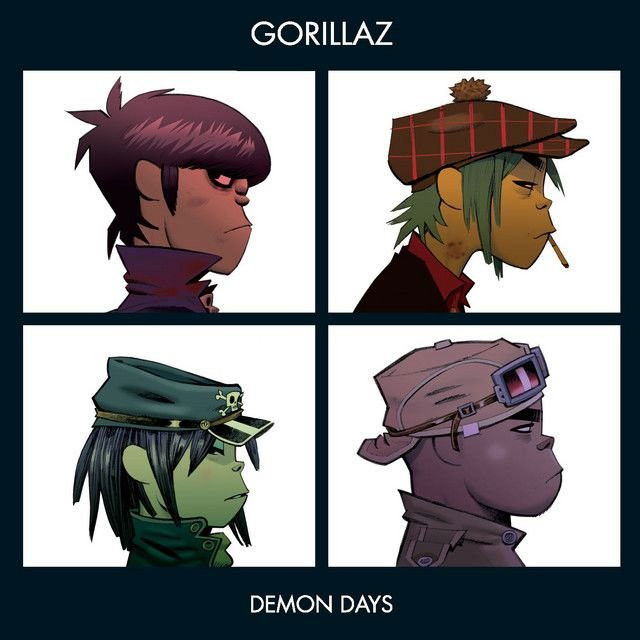
Dirty Harry by Gorillaz
The meaning of Dirty Harry Gorillaz becomes clearer the moment the song sets two ideas against each other: danger and movement. One voice sounds frightened and cornered, while another remembers a simpler human urge — to dance, to live, to feel normal. That clash is the heart of the song.
"Dirty Harry" - Gorillaz
All the poor people are burning in the sun
But they ain't got a chance
Loading lyrics...
Unable to load lyrics
We're unable to display the lyrics at this time. Please try again later.
Released on Demon Days in 2005 and later issued as the album’s third single, “Dirty Harry” sits in one of Gorillaz’s darkest eras. Factually, it comes from the group’s second studio album and features Bootie Brown alongside the San Fernando Valley Youth Chorus, with production from Danger Mouse and others associated with the project. It was released as a single on November 21, 2005, according to reference sources including Wikipedia and Songfacts.
A War Song Hidden Inside a Pop Hook
On the surface, “Dirty Harry” is catchy and rhythmic. Underneath, it sounds like a song about civilians and soldiers trapped inside a war machine. The repeated line I need a gun
is not framed as power or swagger. It sounds defensive, scared, and resigned.
That fear is paired with the image of poor people
suffering under brutal conditions. The song does not describe war as heroic. It shows people exposed, helpless, and denied escape. When the chorus says they ain't got a chance
, it strips away any fantasy that violence is controlled or fair.
Interpretation: Many listeners read the song as an anti-war statement, and that reading is strongly supported by its imagery and by commentary around the song’s release. Songfacts summarizes Damon Albarn’s view of it as an anti-war song, and the era of Demon Days often focused on anxiety, politics, and social collapse.

Watch the official Dirty Harry
music video
Who Is Speaking in the Verses?
The song works because it shifts perspective. The hook sounds like a frightened civilian voice or a vulnerable observer. Bootie Brown’s verse then moves inside the mindset of someone in combat.
He describes someone trying to stay alert, carrying gear, reading threats, and feeling morally worn down. Phrases like peace-loving decoy
and filled with guilt
suggest a person caught between orders and conscience. This is not the portrait of a proud conqueror. It is the portrait of someone surviving a system larger than themselves.
That is why one of the verse’s most important ideas is the memory of ordinary life. Near the end, the speaker recalls, all I want to do is dance
. That line connects directly to the chorus and gives the whole song a tragic center. The desire to dance stands for innocence, routine, pleasure, and peace.
The Line That Sharpens the Political Message
The clearest political moment comes late in the verse, when the speaker says the war is supposedly finished, but the people still inside it do not feel free.
The war is over
so said the speaker
with his flight suit on
This brief moment points toward public declarations of victory and the distance between political theater and lived reality. Songfacts directly links that image to the Iraq War era and the George W. Bush “flight suit” visual that many listeners would have recognized at the time. Even without naming a country, the song suggests that leaders can announce closure while ordinary people remain trapped in violence.
Why the Sound Matters So Much
Part of the meaning of Dirty Harry Gorillaz comes from its production. The track mixes hip-hop rhythms, funk movement, choir vocals, and tense percussion. That blend creates a strange emotional split: the song is danceable, but it never feels carefree.
The children’s choir is especially important. According to Songfacts, Albarn used youthful voices to underline how children around the world are exposed to war’s horrors. Their singing gives the chorus an innocent sound, which makes the lyrics hit harder. Instead of a hard military chant, Gorillaz chose voices that suggest vulnerability.
Danger Mouse’s production also helps shape the song’s meaning. The beat pushes forward, but the arrangement carries unease. Strings and layered textures make the track feel cinematic, while the drums keep it rooted in physical motion. That tension mirrors the lyrics: the body wants rhythm, while the mind is stuck in conflict.
The Video Deepens the Reading
The music video adds another layer. Reference sources note that it was filmed in the Namib Desert and combines live desert footage with animation. In the video, children are stranded after a helicopter crash and wait to be rescued, while Bootie Brown appears in military clothing.
Interpretation: The video turns the song’s themes into a visual allegory. The desert setting, the stranded children, and the delayed rescue all suggest the failures of war and occupation. Even the rescue does not feel fully triumphant, which fits the song’s skepticism about official narratives.
A Song About Powerlessness, Not Strength
One reason “Dirty Harry” lasts is that it does not present violence as thrilling. Even when the verse speaks in a tougher tone, the deeper feeling is powerlessness. The soldier is pressured. The civilians are exposed. The leaders are distant. Everyone below the top seems trapped.
That is why the recurring wish to dance matters so much. Dancing is the opposite of military function. It is spontaneous, social, and human. In this song, it becomes a symbol of the life war interrupts.
Final Take on the Song’s Meaning
The meaning of Dirty Harry Gorillaz is best understood as a sharp anti-war song about fear, manipulation, and stolen normality. Its chorus speaks from vulnerability, its rap verse shows the mental cost of combat, and its production turns that message into something both catchy and unsettling.
Rather than celebrate force, Gorillaz show how war reduces people to survivors, pawns, or spectators. The song keeps returning to one simple truth: beneath the uniforms, orders, and speeches, people still want an ordinary life.
Disclaimer: This interpretation is based on the song’s lyrics, production, video, and public context. As with many Gorillaz songs, some meanings remain open to listener interpretation.








