Why 'Feel Good Inc.' Isn’t Meant to Feel Good
Gorillaz built a hit out of a contradiction. The chant tells listeners to feel good
, yet the verses and visuals sketch a world of decay, distraction, and control. That tension is the engine of the meaning of Feel Good Inc Gorillaz: a critique of happiness sold like a product.
"Feel Good Inc" - Gorillaz
Sha, sha-ba-da, sha-ba-da-ca, feel good
Sha, sha-ba-da, sha-ba-da-ca, feel good
Loading lyrics...
Unable to load lyrics
We're unable to display the lyrics at this time. Please try again later.
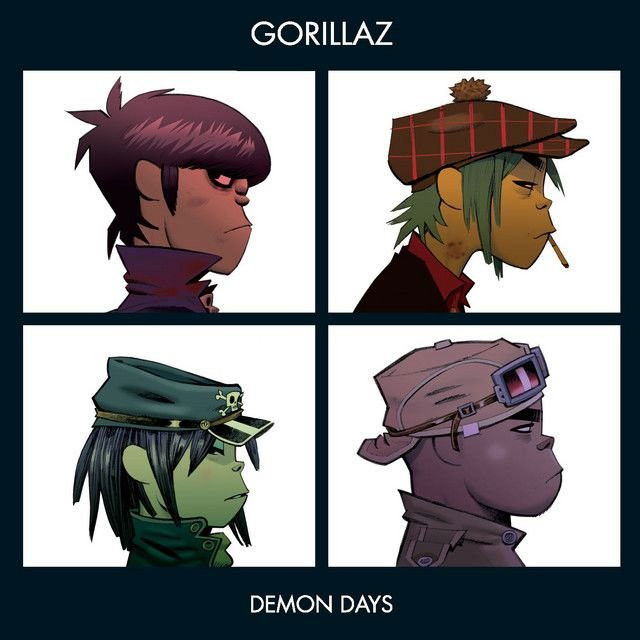
Released in 2005 as the lead single from Demon Days, the track features De La Soul and production by Danger Mouse. It became a global success and won a Grammy, which makes the satire sting even more—pop spectacle exposing pop spectacle.
The Corporate Smile Behind the Hook
At surface level, it’s a party starter. But the hook’s command acts like an ad slogan. It loops until it sticks, just as media loops messages until they feel true. In the video, the towering “Inc.” presides over a broken city, while a floating windmill island hints at another way to live.
Interpretation: the “feel good” promise is engineered cheer that distracts from social rot. The beat is hypnotic on purpose; pleasure becomes product.

Watch the official Feel Good Inc
music video
Who’s Talking, and Who’s Being Sold?
Damon Albarn’s 2D voice sounds worn and detached. He notes the city's breaking down
and longs for a signal—the message beep
—that could cut through the noise. He’s a witness inside the tower, half-aware, half-captive.
De La Soul play the role of the Inc.’s hype team. Their lines swagger, taunt, and accelerate the rush. They embody the sales pitch: irresistible, funny, and a little menacing. Together, the two voices stage a debate between conscience and spectacle.
A Quick Map of the Story
- A decaying city and a sealed tower sell distraction as freedom.
- The narrator senses the trap and looks for a way out.
- De La Soul’s hype floods the room, keeping the crowd compliant.
- Outside, a windmill island drifts—a vision of slower, shared life.
- The cycle snaps back; the chant resumes; escape is postponed.
Symbols That Spin, Towers That Loom
Windmill, windmill for the land Love forever, love is free
The windmill suggests clean, steady power—movement that serves a community, not a brand. It’s a machine, but a humble one, turning with nature rather than against it. The tower is the opposite: sealed-off height, screens, surveillance, and branded laughter.
Other clues sharpen the satire. The manic giggles echo like canned amusement. Helicopters and megaphones hint at policing and propaganda. Even the phrase “damned and free” (implied by the lyrics’ tension) sounds like the kind of freedom that leaves people stuck.
How the Sound Makes the Point
Danger Mouse’s production splits the song into two worlds. The verses ride a grimy, descending bass and tight drums, with Albarn’s weary melody hovering above. It feels cramped and looped, like an elevator that never stops at the ground floor.
The chorus opens up—acoustic guitar, air in the mix, a melody that breathes. That contrast dramatizes the choice: stay in the branded loop or step into community. De La Soul’s bursts of energy are thrilling, but they also perform the sell—“don’t think, just vibe.” It’s satire by sonic design.
The Hook’s Irony, in Plain English
The song uses the very tools it critiques. Earworm repetition, chant vocals, and ad-like catchphrases keep listeners hooked. Lines like don't stop, get it
and watch me navigate
sound like hustle mantras, but inside the narrative they double as the Inc.’s commands—work harder, scroll faster, buy another hit of joy.
Interpretation: the track is meta-pop. It makes you move while pointing out how easily you can be moved.
Why It Stuck: Impact and Legacy
Feel Good Inc. was a major crossover, peaking at No. 2 in the UK and No. 14 in the US, and ruling US Alternative Airplay for eight weeks. It won the 2006 Grammy for Best Pop Collaboration with Vocals and landed on multiple “best of the 2000s” lists. The success underlines the song’s point: catchy critique can travel farther than a sermon.
Culturally, the video’s two-worlds concept—windmill vs. tower—became a shorthand for escaping the algorithmic feed. Listeners still hear it as a warning wrapped in a banger.
Alternate Readings Worth Considering
- Media satire: The “Inc.” is the modern content economy, feeding loops of pleasure while flattening attention. The windmill is cooperative time—friends, craft, locality.
- Personal cycle: The tower stands for addiction or burnout. The windmill is the fragile routine that keeps you grounded. The chant tempts relapse.
Both readings fit the imagery and the audio split.
Takeaway
The meaning of Feel Good Inc Gorillaz lands here: a hook that sells bliss, a verse that shows the bill, and a chorus that imagines an exit. You can dance to the critique and still hear the alarm.
Interpretation disclaimer: Meanings are subjective and may differ by listener; this article combines lyrical analysis with documented context and one informed reading.








