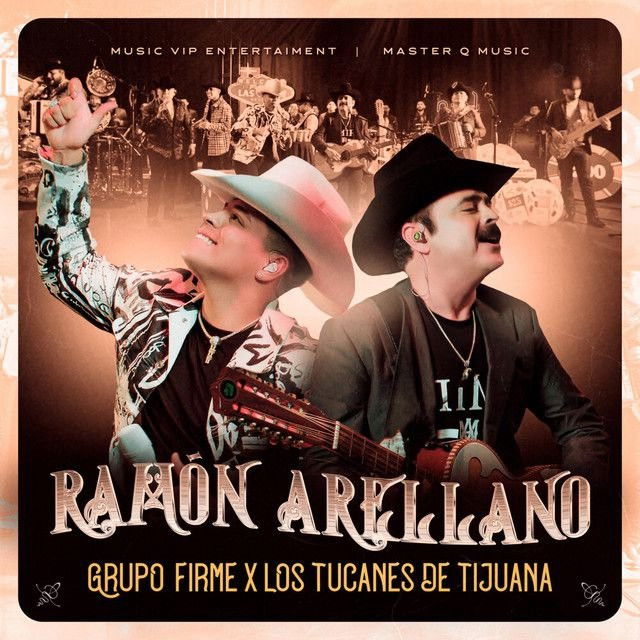
Why “Ramón Arellano” Sounds So Chilling
The meaning of Ramón Arellano Grupo Firme, Los Tucanes de Tijuana starts with one clear idea: this is a corrido that builds a legend through fear. The song does not spend much time on inner emotions. Instead, it stacks details about reputation, weapons, silence, and command to present a man whose presence alone makes others back down.
"Ramón Arellano" - Grupo Firme, Los Tucanes de Tijuana
(Los Tucanes de Tijuana)
Vamos a darle con Los Tucanes de Tijuana
Loading lyrics...
Unable to load lyrics
We're unable to display the lyrics at this time. Please try again later.
Written by Mario Quintero Lara, the song fits the long corrido tradition that Los Tucanes de Tijuana have helped popularize over decades, while Grupo Firme add a bigger modern spotlight through their collaboration. That mix matters because the track feels both old-school and current at once.
A Portrait Built on Fear, Not Confession
At its core, the song is a character sketch. The narrator speaks in third person and keeps returning to how little the man says and how much fear he creates. Early on, the lyric calls him Hombre de pocas palabras
, which frames him as someone whose silence is part of his power.
From there, the writing keeps adding status markers. He is described as the Orgullo de sus hermanos
, which suggests family pride and loyalty. But the song quickly pairs that pride with danger, saying others feared him and that he never hesitated.
Interpretation: the song’s real engine is not biography alone. It is mythmaking. Each detail is selected to make him seem larger than life.
How the Story Turns a Man Into a Legend
The verses move like a list of evidence. They mention weapons, years in the trade, and control of territory. Those details matter because corridos often establish authority through public facts or claims, not private reflection.
One phrase, Veinte años en el negocio
, gives him endurance. Another, acaparó la frontera
, paints him as someone who dominated space as well as people. Whether a listener hears that as admiration, warning, or grim documentation, the song clearly wants the figure to feel formidable.
There is also a heavy focus on performance. He carries visible signs of rank and protection, turning his body into a symbol of command. The result is a song where image is power.
Violence Is the Song’s Main Language
The most striking part of the song is how directly it links identity to violence. It does not hide behind vague threats. Instead, it describes quick retaliation and a man who settles disputes with force.
That is why the line No toleraba reclamos
matters so much. It shows that in the song’s world, challenge leads to punishment. The lyrics are not building suspense around whether he will act. They insist that action is immediate.
Sin decir ni una palabra
Les disparaba en la cara
This is the song’s clearest summary of its character: silence first, violence next. The scene is brutal, and that brutality is central to the track’s meaning. The song wants listeners to understand that his legend is built on fear, not persuasion.
Regional Pride and Criminal Myth
Another layer in the meaning of Ramón Arellano Grupo Firme, Los Tucanes de Tijuana is regional identity. The song says he was from Sinaloa and ties him to corridos, norteños, and tambora. That places him inside a wider cultural map of northern Mexican music and masculine reputation.
At the same time, the lyric compares his way of settling scores to something al estilo italiano
. That image broadens the myth. It gives him a gangster aura that reaches beyond one region and into a more cinematic code of organized crime.
Interpretation: this does not make the song historically precise in every detail. It shows how corridos can turn a real name into a stylized figure, blending local identity with movie-like archetypes.
Why the Collaboration Fits the Subject
Los Tucanes de Tijuana are closely associated with corridos and narrative songwriting, and Mario Quintero Lara is known as a key writer in that lane through the group’s catalog and public profile. Grupo Firme, meanwhile, are known for bringing regional Mexican music to large U.S. and international audiences. Their team-up helps this song feel like a bridge between corrido tradition and current star power.
Musically, the performance supports the meaning. The arrangement stays grounded in regional Mexican style, with a steady pulse and a direct vocal approach that keeps the story in front. There is no dreamy softness here. The sound feels blunt, social, and public, like a tale meant to be announced in a crowded room.
Is the Song Celebrating or Reporting?
That is the hardest question around tracks like this. The lyrics clearly elevate the subject’s power and image. They spend far more time on command and fear than on consequences.
Interpretation: some listeners will hear that as glorification. Others will hear it as a classic corrido method, where the singer documents how a feared person was seen by others. Both readings are possible because the song offers description without much moral commentary.
What seems most accurate is this: the track preserves a legend by speaking in the language of reputation.
The Lasting Meaning of the Song
In the end, the meaning of Ramón Arellano Grupo Firme, Los Tucanes de Tijuana is about how power becomes story. The lyrics build a man out of silence, weapons, status, and fear until he sounds less like a person and more like a warning.
That is why the song can feel so chilling. It is not asking listeners to know him deeply. It is asking them to recognize the force of his name.
Disclaimer: This interpretation focuses on the song’s lyrics, style, and cultural framing. It does not endorse the actions described, and song meaning can vary by listener.








