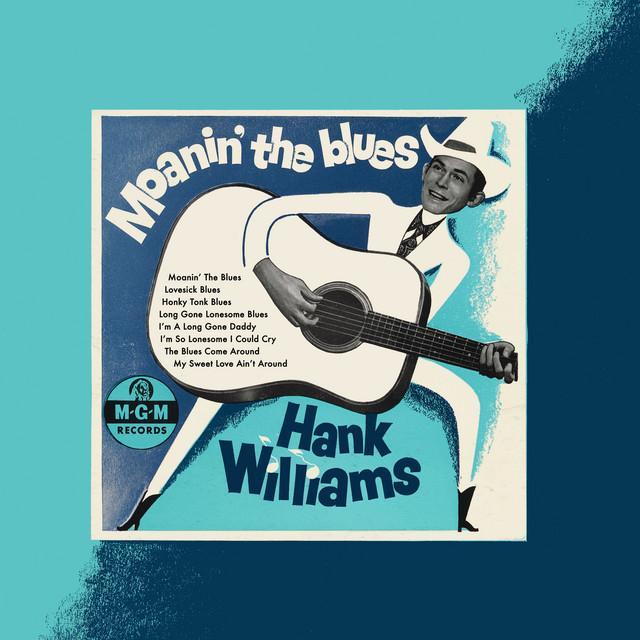
Why Hank Williams Still Hurts Here
The heart of the song in one line
The meaning of I'm So Lonesome I Could Cry Hank Williams comes down to this: it turns private heartbreak into a whole landscape of sorrow. Instead of simply saying they are sad, the singer hears grief in birds, trains, the moon, and the night sky. The world seems to share the pain.
"I'm So Lonesome I Could Cry" - Hank Williams
He sounds too blue to fly
The midnight train is whinin' low
Loading lyrics...
Unable to load lyrics
We're unable to display the lyrics at this time. Please try again later.
That idea is why the song lasts. Written and recorded by Hank Williams in 1949 and released that November, it became one of country music's defining laments, later reaching No. 4 on the country chart and earning lasting acclaim from critics and artists alike via Wikipedia. The song is plain, but never simple.
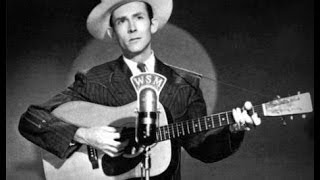
Watch the official I'm So Lonesome I Could Cry
music video
Nature becomes a mirror
Williams builds the lyric by projecting emotion onto the outside world. A bird call sounds broken. A train does not just pass in the distance; it seems to moan. Even the moon appears to hide from the pain. The famous title line, I'm so lonesome
, does not feel exaggerated because every image around it prepares the listener for that emotional collapse.
This is the song's great trick. The speaker is not describing events so much as perception. When someone is deeply lonely, neutral things begin to look wounded too. The whippoorwill, the train, the clouds, and the falling star may not truly be sad, but the singer hears and sees them that way.
Small images, huge feeling
A key reason the lyric hits so hard is scale. Williams uses tiny details to suggest endless suffering: a bird, a leaf, a star, a stretch of nighttime. Then he adds time itself moving slowly. The phrase time goes crawlin' by
makes loneliness feel physical, like every minute drags across the room.
The midnight train
is whinin' low
That brief image matters because trains in country songs often signal travel, distance, and separation. Here, the sound underlines absence. Someone is gone, and the night makes that fact louder.
Who is speaking, and to whom?
The song uses a first-person voice, but the article can still say the singer presents themselves as a lonely observer waiting in emotional suspension. They are not arguing with a lover or retelling a breakup scene in detail. Instead, they sit inside the aftermath, wondering where the other person is.
That missing person gives the lyric its hidden center. The song never needs a full backstory. A single thought, where you are
, tells listeners enough. The pain comes less from drama than from emptiness.
How the verses connect to the theme
Each verse raises the emotional pressure in a careful sequence:
- The night opens with natural and mechanical sounds that seem mournful.
- Time slows down, making loneliness feel endless.
- Seasonal change suggests decline and emotional exhaustion.
- The final sky image pushes the feeling outward, as if sorrow fills the universe.
The line about a robin losing the will to go on is especially stark. Interpretation: this may be the song's darkest moment, because the singer is no longer just sad; they are identifying with a creature that seems drained of purpose. The lyric does not turn graphic or melodramatic, but it edges toward despair.
The sound is part of the meaning
The production deepens the message. According to reporting gathered by American Songwriter, Williams first imagined the words as spoken rather than sung. That detail helps explain the performance: the melody feels almost like heightened speech, simple and direct.
The arrangement is spare but rich in feeling. Steel guitar sighs around the vocal line, the fiddle adds a lonely ache, and the rhythm section stays restrained. Session players on the 1949 recording included Jerry Byrd on steel guitar and Tommy Jackson on fiddle, and their parts never crowd the lyric. They leave space for silence, which is crucial in a song about absence.
Hank's vocal restraint
Williams does not oversing this material. They stretch certain syllables and let a slight catch in the voice do the work. That restraint matters. If the delivery were bigger, the song might feel sentimental. Because it stays controlled, it feels more believable.
Artist context and why listeners believe it
Biographical context matters, but it should be handled carefully. Many writers connect the song to Williams's troubled feelings around his first wife, Audrey Sheppard, during a turbulent period in his life. That context can inform the performance, though the song's power does not depend on any single literal event.
What is factual is the song's reach. It has been covered by Elvis Presley, Johnny Cash, Al Green, Bob Dylan, and many others. Bob Dylan once said he identified with the song even before he had lived through similar pain, noting that he had never heard a robin cry but could imagine it. That comment helps explain the song's universality: listeners do not need the exact same life story to understand the feeling.
Why it still resonates today
The meaning of I'm So Lonesome I Could Cry Hank Williams still lands because it captures a common truth: loneliness changes perception. It makes the world seem slower, darker, and more distant. Williams expresses that truth in language so clear that it feels inevitable.
Interpretation: the song is not only about missing one person. It is also about the human urge to find companions for pain in the natural world. When grief feels too large to hold alone, the night itself seems to join in.
Final takeaway
This is one of country music's purest songs about isolation. Its images are simple, its sound is spare, and its emotion is huge. That balance is why it remains a standard and why so many singers keep returning to it.
This reading is an interpretation based on the lyric, recording, and documented history; different listeners may hear the song's sadness in different ways.








