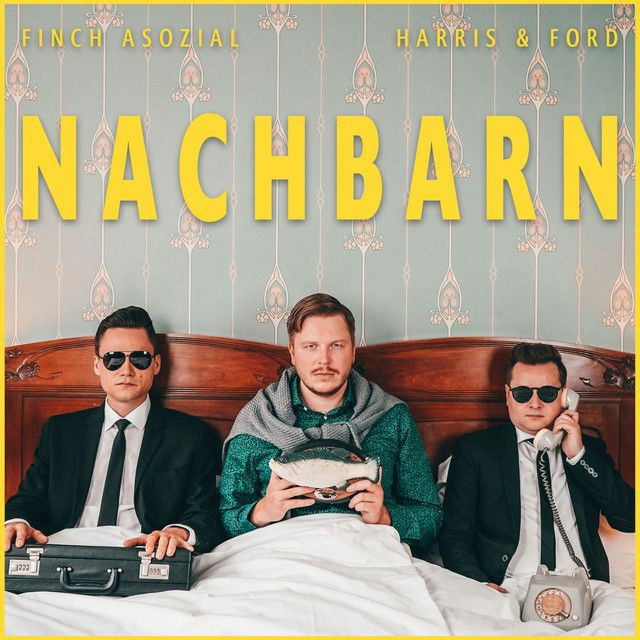
Why 'Nachbarn' Turns Noise Into a Party
The meaning of Nachbarn Harris & Ford, FiNCH is not hard to spot on the surface: it is a loud, rowdy song about blasting music, annoying the neighbors, and refusing to back down. But the track works because it turns that simple setup into something bigger. It becomes an anthem for excess, release, and the thrill of not caring what anyone thinks.
"Nachbarn" - Harris & Ford, FiNCH
Ich dreh jetzt richtig laut
Ich scheiss drauf, was sie sagen, denn ich weiss sie wollen es auch
Loading lyrics...
Unable to load lyrics
We're unable to display the lyrics at this time. Please try again later.
Harris & Ford are known for high-energy dance production, while FiNCH has built a reputation on blunt humor and over-the-top attitude. In "Nachbarn," those styles meet in a track that feels less like a story and more like a dare.
The Core Idea Behind the Chaos
At its heart, the song is about rebellion in a very everyday setting. The conflict is not epic. It is just neighbors complaining about noise. Yet the lyrics treat that complaint like a symbol of boring rules, social pressure, and limits on pleasure.
When the hook says "richtig laut"
, it does more than describe volume. It signals a mindset. The louder the music gets, the less room there is for restraint, politeness, or compromise.
Interpretation: The neighbors are not only literal neighbors. They can also represent anyone who tells people to calm down, act normal, or stay within accepted boundaries.
Watch the official Nachbarn
music video
From Small Complaint to Big Anthem
The song’s writing is intentionally simple. It repeats the same threat, the same pushback, and the same emotional charge. That repetition matters because it mirrors what party music often does best: turn one feeling into a collective chant.
The narrator keeps escalating. If someone complains, the answer is not apology but more noise. A line built around "noch weiter auf"
makes that clear. The song keeps pushing the idea that resistance only fuels the party.
That is why the track feels comic as much as confrontational. It is so exaggerated that it moves beyond realism. Most listeners are not hearing a serious neighborhood dispute. They are hearing a fantasy of total release.
How FiNCH’s Voice Shapes the Meaning
FiNCH delivers the lyrics with swagger and a wink. Even when the words sound aggressive, the performance suggests theater as much as threat. He sounds like someone playing the role of the ultimate bad neighbor because the image is funny, familiar, and easy to picture.
A phrase like "Puls 180"
captures that rush well. The body is overheated, overstimulated, and fully locked into the beat. This is not calm listening. It is music for losing control on purpose.
A Persona, Not a Confession
Interpretation: The song works best if they hear the speaker as a persona. The voice is exaggerated to fit the genre’s taste for provocation. That keeps the song from feeling like a literal statement of values and makes it land more as performance.
What the Verses Add to the Hook
The verses expand the world of the chorus without changing its message. They add sweat, physical force, nonstop rhythm, and conflict. The details are blunt: max volume, pounding kicks, and arguments with the people nearby.
One useful phrase is "Volume auf Max"
. It expresses more than a technical setting. It stands for total commitment. There is no middle ground in this song. Everything is pushed to the limit.
Another key detail is the mention of authorities knocking. That raises the stakes, but only slightly, because the song treats even that as fuel. In this universe, every warning becomes proof that the party is working.
"Und wenn sie weiter klopfen,dann dreh ich noch weiter auf"
Those lines sum up the song’s entire logic. Opposition does not stop the narrator. It energizes them.
Why the Production Matters So Much
The meaning of Nachbarn Harris & Ford, FiNCH would be weaker if the production were not so forceful. The track’s hard dance sound gives the lyrics a physical setting. Fast tempo, pounding kick drums, and huge bass make the song feel like the disturbance it describes.
This matters because the production does not just support the words. It acts them out. When the lyrics talk about blasting music, the instrumental already sounds like walls shaking. The theme is embedded in the sonic design.
Sound as Storytelling
Harris & Ford’s style often leans on festival-ready energy and hard drops. In this song, that approach turns a joke into an experience. The listener does not simply hear about excess. They feel it in the rhythm and compression of the track.
FiNCH’s rough, shouted vocal tone also helps. He does not sound reflective or poetic. He sounds immediate, impulsive, and proudly obnoxious. That vocal choice fits the song’s theme of acting first and never apologizing.
A Song About Freedom—or Just Being Annoying?
There are at least two strong ways to read the song.
- Interpretation: It is a party anthem about freedom, release, and refusing shame.
- Interpretation: It is a comic portrait of selfishness, where the joke is how proudly unreasonable the narrator becomes.
Both readings can be true at once. That tension is part of the appeal. The song invites listeners to enjoy the fantasy while knowing it is messy and ridiculous.
Why the Track Connects
Part of the appeal is how universal the setup is. Almost everyone understands the idea of loud neighbors, noise complaints, or arguments over shared space. "Nachbarn" takes that common irritation and flips it into entertainment.
For fans of hard party music, that flip feels satisfying. Instead of treating social friction as a problem, the song turns it into a badge of honor. A phrase like "ich raste richtig aus"
captures that exaggerated pride in going too far.
Final Take on the Message
The meaning of Nachbarn Harris & Ford, FiNCH is about more than just loud speakers. It is about the thrill of defiance, the comedy of excess, and the way dance music can turn bad behavior into a communal chant. The song is blunt, repetitive, and intentionally obnoxious because that is exactly the point.
In the end, "Nachbarn" is less a realistic statement than a hyperactive party character sketch. It celebrates the moment when volume becomes identity and conflict becomes fun.
Disclaimer: This interpretation is based on the song’s lyrics, performance style, and production choices. As with any song, meaning can vary from listener to listener.







