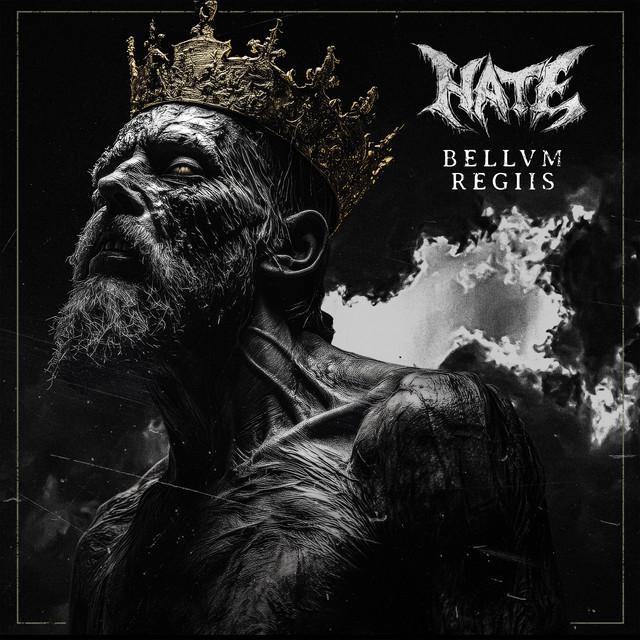
Why 'The Vanguard' Turns Hate Into Myth
The meaning of The Vanguard Hate is not subtle. The song imagines a chosen force marching under its own dark creed, united by rage and framed in mythic, almost apocalyptic language. Rather than tell a personal story, it speaks like a war proclamation.
"The Vanguard" - Hate
Scythian logos born of flames
Wolfheart! Burn in our chests!
Loading lyrics...
Unable to load lyrics
We're unable to display the lyrics at this time. Please try again later.
That matters because the lyrics are less about emotion in a private sense and more about identity. They build a world of altars, stars, blades, beasts, and execution. In that world, hate is not just a feeling. It is treated as a sacred duty.
A Battle Hymn for the Godless
At the center of the song is a group identity. The speaker uses collective language to present a band of believers who define themselves against temples, kings, and inherited authority. Early lines like United we remain
and Fueled by godlessness
make that clear.
In plain terms, the song imagines a fellowship built on refusal. They reject the sacred order around them, then replace it with their own violent code. The phrase Pouring hate
turns hostility into an active mission, not a passing mood.
Interpretation: the song treats hate as a source of cohesion. Instead of portraying anger as destructive chaos, it frames anger as discipline, purpose, and belonging. That inversion is the song’s main trick.
How the Lyrics Build a Dark Mythology
The song’s imagery is dense, but it is consistent. Ravens, wolves, lions, serpents, stars, black fire, shrines, and spears all work together to create an invented mythos. Even when the plot is abstract, the symbols keep pointing toward power, conquest, and ritual.
The repeated image of light is especially important. When the song calls for The vengeful light
, it flips the usual meaning of light as mercy or truth. Here, light becomes punishment. The same reversal happens with shrines and grace, which are normally comforting words but become tied to violence.
That makes the song feel ceremonial. It is not describing one fight. It is staging a whole belief system.
Fire, stars, and the sacred turned inside out
Several images connect heaven and destruction. Black starlight, fire-blessed weapons, and cosmic beings suggest something larger than earthbound conflict. The song wants the struggle to sound eternal.
Interpretation: this cosmic scale may be a way of glorifying ideology. By moving from everyday reality into star-born symbols, the lyrics make hatred sound ancient, fated, and heroic. That distance from reality is part of the song’s power.
The Chorus as an Oath, Not a Hook
The recurring section acts less like a catchy chorus and more like a vow. It returns to shining, vengeance, temple-less gods, and a shrine shaped by violence. That repetition gives the song a ritual pulse.
Shine forth
The vengeful light
To gods with no temple
This is the article’s only multi-line lyric quote, and even here the idea is clearer in paraphrase: the group is calling on a power outside accepted religion and asking it to reveal itself through destruction.
Because the chorus repeats, it keeps resetting the song’s worldview. No matter how many beasts, battles, or executions appear in the verses, the song comes back to the same core idea: their movement sees itself as holy, even while denying holiness in its usual form.
Violence as Purification
A lot of the song’s force comes from purification imagery. It speaks of war that will wash the world, kings being beheaded, monuments smashed, and hope placed on the guillotine. These are not random violent pictures. They suggest cleansing through removal.
That helps explain the title. A vanguard is the front line, the force that moves first. In this song, that role belongs to people who think they must clear away the old order by force.
Interpretation: the lyrics may be using revolution imagery to present hate as rebirth. That does not make the message complex so much as extreme. The song pushes the listener into a worldview where destruction is presented as necessary renewal.
Sound and Delivery Likely Carry the Message Further
Only the lyrics were provided here, but they strongly suggest an extreme metal setting: forceful rhythm, shouted or growled vocals, and dense, aggressive riffing. A text like this would lose impact if performed softly. It is built for pressure.
Fast drumming and sharp guitar tone would support the military feel. Repeated slogans and command verbs would also land harder with gang-chant delivery, turning lines into something between anthem and incantation.
That production style matters to the meaning of The Vanguard Hate because the song’s ideas are collective and confrontational. The sound likely makes that communal aggression feel physical.
Artist Context and a Necessary Distinction
The provided credit lists ADAM DOMINIK BUSZKO as the writer. Beyond that, verified production and release details were not provided here, so they should not be assumed.
It is also worth separating this song from unrelated uses of the word “Vanguard.” For example, the extremist group Vanguard America is a real U.S. organization described by watchdogs and reporting as white supremacist and neo-fascist, with national attention after Charlottesville in 2017. But there is no evidence in the material provided that this song directly references that group, so drawing a firm connection would be speculation.
Final Reading: Hate as Religion
The simplest reading is still the strongest one. The song depicts a united force that rejects the old sacred world and builds a new identity out of vengeance, myth, and blood. It turns hate into ceremony.
That is why the lyrics feel so intense. They do not just describe violence. They sanctify it.
Disclaimer: This interpretation is based on the lyrics supplied and limited verified context. Song meaning can remain open to multiple readings, especially when artists have not explained their intent in detail.








