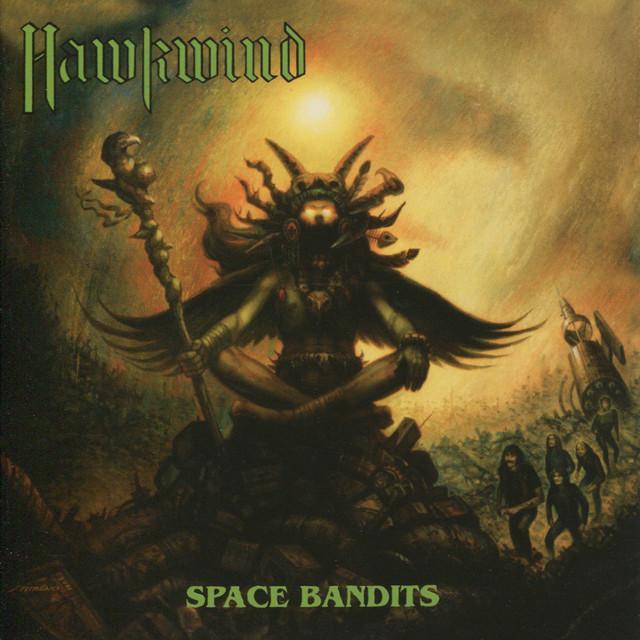
Images by Hawkwind
The meaning of Images Hawkwind centers on memory as a force that can feel vivid, haunting, and almost physical. Rather than telling a simple story, the song builds a set of mental snapshots: a doorway, dust in the air, voices, hallways, and fading laughter. Together, those details suggest someone revisiting a place loaded with personal history.
"Images" - Hawkwind
Walking through the door
Smells of dust and summer heat
Loading lyrics...
Unable to load lyrics
We're unable to display the lyrics at this time. Please try again later.
Hawkwind are best known as one of the earliest space-rock bands, blending hard rock, psychedelia, and progressive sounds across a career that began in 1969, with Dave Brock as the one constant member (Hawkwind history). Yet “Images” turns away from outer space and looks inward. Its mystery is emotional, not cosmic.
A Haunted House of Memory
At the song’s core, “Images” seems to describe a person entering a familiar place and being overwhelmed by the past. The opening quickly links physical space to emotional recall. The smell of old air and heat does not just decorate the scene; it triggers thought. When the lyric mentions dust and summer heat
, it suggests memory arriving through the senses before the mind can control it.
That is why the song feels so immediate. The past is not discussed in an abstract way. It presses in through rooms, surfaces, and sounds. The result is less like nostalgia and more like an ambush.
Watch the official Images
music video
Who They Are in the Song
The lyric starts from a slight distance, describing memory surrounding “them,” but it soon moves closer to a more private voice. That shift matters. It makes the song feel split between witness and participant, as if the speaker is both watching themselves and living through the experience.
Interpretation: this split point of view mirrors the instability of memory itself. People often remember painful events in fragments. They see pieces from outside, then suddenly feel them from inside.
How the Lyrics Build Their Meaning
The song works in stages rather than a strict plot. A simple way to read it is:
- A return to a charged place.
- A flood of strange, symbolic scenes.
- A confrontation with pain, fear, and loss.
- A final recognition that the past cannot stay alive.
In the middle, the images become more surreal. Phrases like the face of fate
and life's final game
widen the song beyond one room or one memory. They suggest mortality, regret, and the sense that time always wins.
That is where the song becomes darker. It is not only about remembering old days. It is about recognizing damage that cannot be undone.
The Refrain and the Song’s Emotional Turn
The emotional center comes with the repeated idea It's gone now
. Those words are very simple, but they carry the weight of the entire song. After all the visions and sensations, the speaker lands on absence.
Interpretation: what is gone could be a relationship, a home, a period of youth, or even a former self. The lyric does not specify, and that ambiguity gives the song its reach. Many listeners can fit their own loss into that blank space.
The later lines push even harder into emotional paralysis. The phrase Turn Flesh to stone
presents fear as something that freezes a person from the inside out.
The fear and the anger
Of the lost and alone
These lines make the song’s stakes clear. The past is not only sad. It is isolating.
Symbols That Keep Returning
Several motifs shape the meaning of Images Hawkwind:
Rooms, doors, and halls
These suggest entry into memory. Walking through a door becomes a passage into old feeling. Hallways and balconies imply distance, echo, and incomplete access.
Smell and heat
These are sensory triggers. They make remembrance involuntary, which gives the song a dreamlike realism.
Games, fate, and stone
These images hint at larger themes: mortality, helplessness, and emotional hardening. The person in the song seems to struggle against forces bigger than choice alone.
Echoes and fading
By the end, laughter does not comfort. It returns bitterly, then dissolves. That suggests memory fading even as it hurts.
How Hawkwind’s Sound Supports the Lyrics
Even without quoting much, the text clearly invites a moody arrangement. Hawkwind’s long career has often mixed rock drive with psychedelic atmosphere and electronic texture, traits central to their broader catalog (band overview). In a song like this, that style matters because drifting keyboards, sustained guitar tones, and spacious production can make memory feel unstable and ghostly.
Their music often creates the feeling of motion through space, but here that same musical language can be heard as motion through the mind. Reverb, repetition, and slow-building intensity would all fit the lyric’s haunted architecture. Instead of sounding triumphant, the rock setting likely gives the song pressure and unease.
Artist Context Matters Here
“Images” was written by Alan Davey, Bridget Wishart, and Dave Brock. That combination matters. Wishart’s period in Hawkwind brought a different vocal and emotional texture to the band, while Brock remained the group’s creative anchor and Davey helped give this era a strong, heavy pulse.
That helps explain why the song balances poetic mystery with direct emotional language. It has Hawkwind’s surreal edge, but it also feels intimate and human.
Final Reading: Loss That Will Not Sit Still
The best way to understand the meaning of Images Hawkwind is to hear it as a song about being trapped between presence and absence. A place still exists. The senses still work. The mind still sees flashes. But the life once attached to those things is gone.
That is why the song lingers. It treats memory as something alive enough to wound, yet too fragile to restore. Hawkwind turn that contradiction into the song’s deepest feeling.
Disclaimer: This interpretation is based on the published lyrics, known band context, and musical style. Like many Hawkwind songs, “Images” remains open to more than one valid reading.







