
Hanging Around by Hazel O’Connor
They ask what keeps people circling the same corners of a city night. Hazel O’Connor’s 1981 cover of The Stranglers’ “Hanging Around” answers with a cool stare and a lean, new‑wave snap.
"Hanging Around" - Hazel O’Connor
She's just trying to impress us
And she's got the barley fever
Loading lyrics...
Unable to load lyrics
We're unable to display the lyrics at this time. Please try again later.
A Street Portrait, Recast in New Wave
The meaning of Hanging Around Hazel O’Connor centers on urban drift—how people survive, posture, and numb themselves while waiting for something to change. The verses sketch distinct characters and deals in motion; the chorus returns like a shrug. O’Connor’s detached vocal frames the scenes like a camera lens. Instead of shouting, she observes.
Factual context: The Stranglers wrote the song after watching characters around West London clubs in the late ’70s, particularly in the Earl’s Court orbit. Hazel O’Connor’s 1981 single preserves that setting but swaps the original’s snarling punk edge for a tighter, brighter arrangement. The result feels less seedy and more clinical—like fluorescent light on a crowded bar.
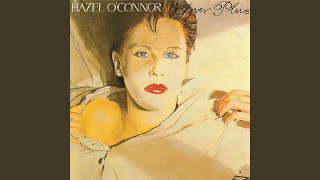
Watch the official Hanging Around
music video
Who’s Watching Whom?
The narrator mostly stands at a distance, noticing gestures and status games. A line like big girl in the red dress
points to performance—someone dressing to be seen, but also to shield herself. The voice is descriptive, not confessional, and that distance makes the chorus’s claim of being okay land with extra irony.
At times the song slips into quoted viewpoints from the scene, hinting that these are snatches of talk overheard between clubs. That blend—third‑person framing with quick flashes of first‑person experience—mirrors how nightlife feels: everyone’s starring in their own mini‑movie, crossing paths for a verse or two, then moving on.
Snapshot Timeline: From Earls Court to the Coleherne
- Early pass down a busy strip:
hustlers big and burly
work the pavement, practical and unromantic. - There’s a market for everything—
buyers can be found
—which turns the street into a revolving door of needs. - A man appears with a
monkey on his shoulder
, an image that flags addiction. Even the “grin” reads brittle. - Across rooms slick with sweat, people avert contact; their
eyes are on the ground
. Whether it’s shame, caution, or burnout, no one wants to meet a gaze for long.
These vignettes add up to a city where motion doesn’t equal progress. People orbit familiar corners, rehearsing the same exchanges.
The Hook’s Double Edge
The chorus sounds confident on first pass, but it’s layered with doubt:
Cos he’s alright in the city Cos he’s high above the ground
Interpretation: “Alright” is a mask. “High above the ground” can mean both literal height—lofts, high‑rises, the myth of being above the mess—and altered states. The refrain “hanging around” snaps that illusion back to earth. They’re suspended, not soaring.
Symbols That Carry Weight
- Red dress: visibility as armor. The outfit is both invitation and shield.
- Hustlers/buyers: the city as marketplace where everything (and everyone) has a price.
- Monkey: addiction clinging to the body, riding every step.
- Downcast eyes: survival tactic; don’t engage, don’t risk.
- “Hanging around”: stasis. The phrase turns a casual shrug into a diagnosis of urban paralysis.
Together, these symbols sketch a culture of motion without destination. People keep moving to avoid stillness, but stillness finds them anyway.
Why Hazel’s Version Lands Today
The Stranglers built their original around a distinctive bass pulse and bar‑band menace—a document of specific London haunts and characters from the club circuit. O’Connor keeps the street‑reporter eye but tightens the groove. The early‑’80s production trims the ramble, snaps the snare, and brightens the keys, which makes the song feel like reportage rather than rant.
Interpretation: That shift matters. With O’Connor, the narrator sounds less implicated in the scene and more like a witness. Her phrasing—cool, slightly distant—lets the images indict themselves. Where the original winks and sneers, her take feels like triage.
It also met its moment. In 1981, post‑punk/new wave favored angular rhythms and crisp arrangements. O’Connor’s version fit that palette, and the single reached the UK Top 50, proof that the story still resonated.
Alternate Takes You Might Hear
- Social documentary: a map of London’s nightlife economy, from club fixtures to coded spaces like the Coleherne, where communities built signals to find one another. The chorus mocks the idea that anyone here is really “alright.”
- Fame allegory: the red‑dress performer, the hustlers, the gawkers—every scene mirrors the music industry’s own transactions. “Hanging around” becomes the wait between breaks, an artist’s purgatory.
- Religious spark: the casual “Christ” in the chorus pokes at sacred language, using shock to underline how belief, blasphemy, and bravado all mingle under neon.
The Last Word
Hazel O’Connor turns a punk snapshot into a sharper, colder x‑ray: people moving fast, going nowhere. That’s the enduring meaning of Hanging Around Hazel O’Connor—an anthem for anyone who has ever felt stuck in motion.
Disclaimer: Song meanings are interpretive and may vary by listener; this piece blends verified background with informed analysis.









Thanks, I always thought he said "Moving to the corner" The "monkey" part just always made me think of a hustler with a habit GREAT BAND GREAT SONG