Why 'SUVs (Black on Black)' Hits So Hard
The meaning of SUVs (Black on Black) Jack Harlow, Pooh Shiesty starts with a simple idea: they turn talk into proof. The song is built like a flex anthem, but beneath the surface it is also about credibility. Both artists use money, cars, women, risk, and hometown struggle to show that status is not just performance for them—it is something earned, displayed, and defended.
"SUVs (Black on Black)" - Jack Harlow, Pooh Shiesty
And that's why
All my brags turn to facts, all my hunnids turn to racks
Loading lyrics...
Unable to load lyrics
We're unable to display the lyrics at this time. Please try again later.
Released on August 3, 2021, as a single from Pooh Shiesty’s Shiesty Season, the track pairs two rising rap stars at a key moment in both careers. It was produced by Go Grizz and Smash David and became a charting hit, reaching the Billboard Hot 100 and later earning Gold certification in the United States, according to publicly listed release and certification data.[1][2]
The Hook Turns Boasting Into a Mission Statement
The chorus gives the song its main claim. When they say all my brags turn to facts
, they are not just celebrating wealth. They are framing their whole public image as verified. In other words, the things people might dismiss as rap talk are presented as real outcomes.
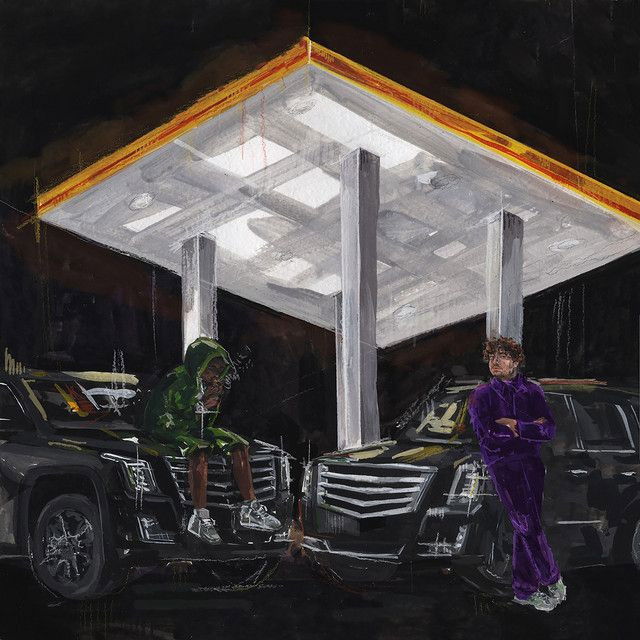
That is why the title image matters too. SUVs black on black
is more than a car detail. It suggests luxury, uniformity, and menace all at once. The all-black vehicle becomes a status symbol, but also a moving shield—sleek, expensive, and hard to read.
Interpretation: the hook works because it joins aspiration with proof. It says success is visible now, and nobody gets to call it fake.
Watch the official SUVs (Black on Black)
music video
Jack Harlow’s Verse Mixes Humor With Self-Correction
Jack Harlow opens with his usual mix of wit and confidence, but there is a small arc in his verse. He jokes about wealth and attention, then slips in a key line: now I'm back on track
. That phrase matters because it gives the flexing some shape. They are not only hearing victory; they are hearing recovery.
He moves from comfort to memory. The verse contrasts fine dining and penthouse living with older images of sleeping on couch cushions and trying to escape hard circumstances. That shift keeps the verse from feeling flat. It tells listeners that present comfort stands next to past scarcity.
A short sports reference, I call the shots
, reinforces control. He is saying they are no longer waiting for approval. They direct the action now.
Pooh Shiesty Pushes the Song Into Darker Territory
Pooh Shiesty’s verse changes the temperature. Where Harlow sounds playful and polished, Shiesty sounds alert and severe. He adds themes of betrayal, retaliation, weapons, and survival. His lines about people turning informant and about fast cars and tactical movement make the song feel less like a party record and more like a warning.
That contrast is one reason the collaboration works. Critics noticed it at the time. The Fader described the track as a sign of Harlow’s flexibility, while Billboard called it a grimmer counterpoint to the brighter energy around some of Harlow’s other 2021 releases.[3][4]
Interpretation: Shiesty gives the song its sense of risk. Without him, it might sound like a clever luxury-rap cut. With him, it becomes about what success looks like when danger still rides alongside it.
The Real Theme Is Proof Under Pressure
A lot of rap songs brag. This one keeps returning to evidence. Money becomes stacks. Cars become symbols. Attention becomes public recognition. Even romantic boasting is framed as another sign of social power.
But there is pressure inside all that proof. Harlow hints that he had to correct his path. Shiesty suggests that enemies, surveillance, and old neighborhood realities have not disappeared. The result is a song where wealth does not erase tension. It just changes its costume.
That helps explain the title image again. The SUV is large, protective, and expensive. The black-on-black styling makes it more anonymous and more intimidating. It is luxury shaped by paranoia.
How the Beat Supports the Meaning
Production is a big part of the song’s message. Reports on the single describe a beat built from heavy 808s, hard percussion, and dark chords.[1] That musical design matters because it gives the rappers a hard, shadowy backdrop instead of a bright celebratory one.
The beat does two things at once:
- It makes the song feel triumphant.
- It keeps that triumph tense and street-focused.
That is why the song lands differently from a lighter crossover hit. The low-end rumble suggests power, while the darker harmony suggests threat. As Kazi Magazine put it, the production gave both artists a strong canvas for confident performances.[5]
Why the Collaboration Feels So Sharp
Part of the appeal is regional and stylistic contrast. Harlow came in representing Louisville with a smooth, conversational delivery. Pooh Shiesty brought Memphis energy that feels more aggressive and blunt. Reviews from outlets like GRM Daily and The Source praised how naturally they traded that energy back and forth.[6][7]
They do not sound the same, and that helps the song. One rapper sells success through cool control; the other sells it through intimidation. Together, they make success sound both glamorous and dangerous.
Final Take on the Song’s Meaning
The meaning of SUVs (Black on Black) Jack Harlow, Pooh Shiesty is about more than cars or cash. It is a song about making success visible and undeniable while admitting that pressure, memory, and threat still surround that success. Their message is simple: the flex is real, and the stakes are real too.
That mix of polish and menace is why the track still stands out. It is catchy, but it never sounds comfortable.
Disclaimer: This interpretation blends documented facts about the release and reception with close reading of the lyrics and sound. Meaning in music can remain open to different listeners.








