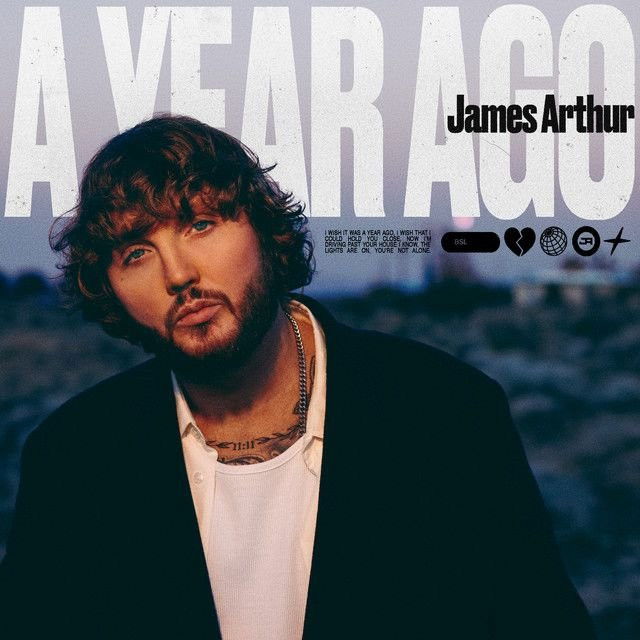
How “A Year Ago” Turns Memory Into Heartache
They know the breakup is over, but their body and brain haven’t caught up. That tension powers James Arthur’s “A Year Ago,” a slow‑burn ballad that turns tiny domestic memories into a tidal wave of regret. The meaning of A Year Ago James Arthur centers on how longing rewrites time—how someone can feel one phone call, one admission, could have changed everything.
"A Year Ago" - James Arthur
Your name's still on my coffee cup, I miss you
The way you chose the films we watched, I miss you, babe
Loading lyrics...
Unable to load lyrics
We're unable to display the lyrics at this time. Please try again later.
What Time Can’t Undo—And What This Song Says About It
At its core, the song is about realizing what mattered too late. The narrator catalogs ordinary moments—coffee, films, a messy car—and treats them like artifacts of a lost life. They open with the direct ache of I miss you
, then keep finding new angles on the same feeling. Each detail suggests that the past wasn’t flashy; it was intimate and steady. That ordinariness is exactly what hurts to lose.
Interpretation: The hook frames regret as time travel fantasy. Wanting to rewind isn’t only about love; it’s about agency. If they could go back, they could speak, decide, fix. The song admits they didn’t.
A Voice Calling Through the Past
The narrator speaks in the first person to an ex who has moved on. Their language is tender, not accusatory. When they recall your name's still on my coffee cup
, they’re not blaming—they’re confessing how memory clings to objects. The line I'm just somebody you forgot
shows clear self‑awareness. They see their own smallness in the other person’s new life, and that humility keeps the song from turning bitter.
A Loop in Four Scenes
- Home relics: The cup on the counter, the half‑empty bed. These props ground the grief in daily routine.
- The drive‑by: They’re
driving past your house
, a ritual that mixes hope with pain. - A window lit up: They notice
the lights are on
, which implies company and confirms the ex’s new chapter. - The wish: The chorus resets to
I wish it was a year ago
, making the song itself a loop. Every verse feeds back into that impossible desire.
Each scene narrows the world. By the chorus, time is no longer moving forward; it’s revolving around one unreal wish.
Why the Chorus Lands Like a Confession
The repeated wish to go back isn’t just nostalgia—it’s accountability. They imply they failed to say what mattered when it mattered. So the chorus sounds like a late confession, stripped of pride. Interpretation: In this light, the refrain isn’t a plea to the ex; it’s a plea to the self they used to be, the one who could still act.
Objects, Rooms, and Roads: Symbols That Carry Weight
- Coffee cup: Everyday intimacy that lingers even when the person is gone.
- Films and kitchen singing: Shared taste and private rituals—signs of a life built together.
- Messy car, taking up half the bed: Flaws and comforts that felt annoying in the moment, missed in hindsight.
- House lights: Proof of life continuing without them; a literal window into exclusion.
- The drive: Movement that goes nowhere—grief as a circle.
These grounded images make the heartbreak believable. Rather than grand metaphors, the song trusts the gravity of small things.
How the Sound Carries the Ache
“A Year Ago” leans on piano and a gentle beat, with strings that swell in the chorus. The arrangement rises and falls in waves, like memory returning in surges. James Arthur’s vocal starts close and breathy, then opens into a fuller belt, mirroring the way a thought becomes a confession.
Lyrically and musically, repetition is key. The hook returns with subtle variations, and the production saves its biggest lift for the line that names the wish. This design makes the song feel like a thought the narrator can’t stop thinking.
Factually, James Arthur co‑wrote the track with Jamie Graham and Steven Solomon. The style aligns with his emotive pop‑ballad lane—clean piano, modern drums, and dynamic vocals that aim for catharsis without crowding the mix.
Other Ways to Hear It
- Interpretation: The drive‑by could be metaphorical, a cinematic way to show rumination. The car becomes the mind, circling the block of memory.
- Interpretation: It could also hint at a stuck pattern that isn’t healthy. The song doesn’t endorse it; it simply observes how heartbreak can make people do small, irrational things.
Both readings rest on the same truth: moving on is a process, not a flip of a switch.
What Stays With Listeners
They leave with a picture book of a relationship: mugs, movies, music by the sink, and a lighted window that no longer welcomes them. The song honors how huge tiny things can be once they’re gone. That’s why its quiet details hit so hard.
Disclaimer: Song meanings are subjective. This analysis combines lyrical evidence, production choices, and public context to offer one informed interpretation.








