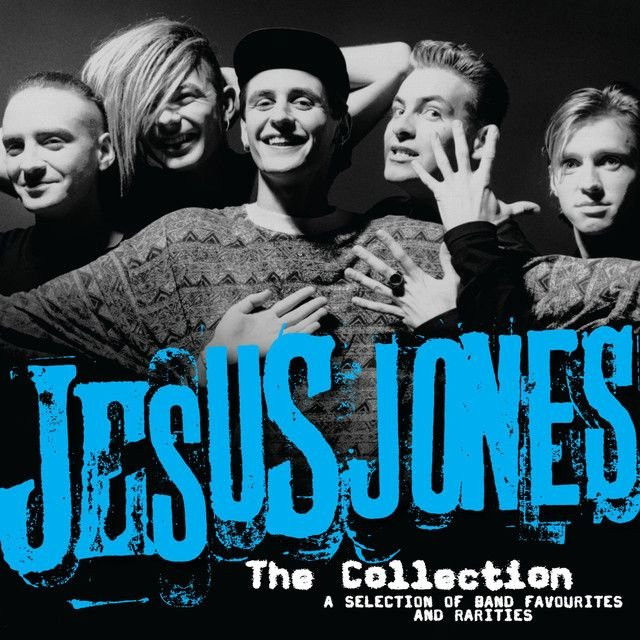
Right Here, Right Now by Jesus Jones
Why This Song Still Feels Like a Headline
The meaning of Right Here, Right Now Jesus Jones starts with a rare feeling: history is not something in a textbook, but something unfolding in front of them. Released on Jesus Jones' Doubt and issued as a single in 1990, the song arrived as Europe was changing fast. In the United States, it became huge, reaching No. 2 on the Billboard Hot 100 and No. 1 on Modern Rock, which shows how widely its message landed.
"Right Here, Right Now" - Jesus Jones
When it's already passed her by
Bob Dylan didn't have this to sing about
Loading lyrics...
Unable to load lyrics
We're unable to display the lyrics at this time. Please try again later.
At heart, the song is about being alive at a turning point. It captures excitement, disbelief, and gratitude all at once. Rather than telling one personal story, it zooms out and treats world events as something deeply emotional.

Watch the official Right Here, Right Now
music video
A Pop Song About History Moving
The Core Message in Plain English
The song opens with news and politics, then quickly shifts to personal feeling. A line about a woman discussing revolution suggests that events are moving so fast that commentary cannot keep up. The key idea is simple: change has already arrived.
That is why the refrain matters so much. When they sing Right here, right now
, they are not just talking about location. They are saying the present moment feels charged with meaning. The line watching the world wake up
frames political change as awakening, as if whole societies are finally stepping out of a long sleep.
How the Verses Feed the Chorus
The verses build a contrast between old protest language and a new reality. The reference to Bob Dylan implies an earlier era of political songwriting, but the band suggests this moment is different. Interpretation: they are not dismissing past protest music; they are saying they are witnessing a fresh chapter that needs its own soundtrack.
One of the song’s smartest moves is its repeated sense of waiting. The phrase I waited for this
turns huge public events into private anticipation. It sounds like someone who has lived through years of tension and suddenly sees a break in the clouds.
The Real-World Context Behind the Lyrics
According to reporting collected by Wikipedia, writer Mike Edwards drew on the Revolutions of 1989, especially changes in Eastern Europe and perestroika in the Soviet sphere. He also said the band’s trip to Romania shortly after the overthrow of Nicolae Ceaușescu shaped some of the lyrics.
That background matters because it explains the song’s unusual mood. This is not a cynical political track. It is energized by the sense that old systems were cracking open. In a brief reflection for The Guardian, Edwards described the atmosphere around those events as a world changing in front of them. That helps explain why the song sounds amazed rather than angry.
There is no other place
I wanna be
watching the world wake up
These lines distill the whole theme: history is no longer distant, and being present for it feels almost joyous.
Sound That Turns News Into Emotion
Jesus Jones were known for blending rock with dance and sample-era pop ideas, and this track uses that hybrid style well. The beat is firm and forward-moving. The guitars add lift rather than heaviness. The synth textures brighten the mix, making the song feel open and airborne.
Produced by Martyn Phillips, the recording avoids gloom even though it deals with serious world events. That is important. If the arrangement had been darker, the song might have sounded fearful. Instead, its pulse suggests momentum. The chorus arrives like a release, matching the emotional rush of seeing change happen at the blink of an eye
.
Why the Hook Works So Well
The chorus repeats a short idea until it feels communal. Anyone can sing it, even without knowing the detailed politics behind it. That helped the song travel far beyond its original context.
In other words, the production turns a specific historical moment into a universal pop feeling: they are here, they are awake, and they do not want to miss what comes next.
More Than Politics: Other Ways to Hear It
The strongest reading is historical, but it is not the only one. Interpretation: the song can also be heard as an anthem of presence. Even if a listener does not know anything about 1989, the repeated stress on now makes the track feel almost philosophical. It celebrates being fully awake to the moment.
There is also a media angle. The first verse starts with radio and public commentary, hinting that modern life is filtered through broadcasts and headlines. Yet the chorus pushes past secondhand information. It says real life is happening now, not just on a screen or through a pundit’s voice.
That helps explain why the song still works in later decades. People still know the feeling of events moving faster than language can explain them.
Why Americans Connected With It
For U.S. listeners, the song arrived as the Cold War order was shifting. Even though Jesus Jones were British, the single crossed over because its theme was broad and immediate. It sounded modern, but it also carried a hopeful political message that many listeners recognized.
Its chart run supports that point: this was not only an alternative hit but a mainstream one. A song rooted in recent world events became a pop-radio anthem, which is unusual. That blend of topical content and singalong energy is a big reason it endures.
The Lasting Meaning of the Song
The meaning of Right Here, Right Now Jesus Jones is the thrill of witnessing a world turn a corner. The lyrics connect public transformation with personal emotion, and the music gives that feeling speed, brightness, and lift.
Their central message is that history can suddenly feel intimate. A person may hear world events on the radio, but in rare moments, they also feel them in their chest. That is what this song captures so well.
Disclaimer: This interpretation combines documented context with critical reading of the lyrics and sound. As with any song, listeners may hear meanings that go beyond the artist’s stated intent.







