
Why Joan Baez’s Song Turns Love Into a Warning
The meaning of Love Is Just a Four-Letter Word Joan Baez comes down to a hard lesson: love can sound sacred, but in real life it is often tangled up with power, projection, and disappointment. In Joan Baez’s recording, that lesson lands with unusual calm. They do not hear a tantrum against romance. They hear a mature song about how people learn, often too late, that love is not saved by big words alone.
"Love Is Just A Four-Letter Word" - Joan Baez
I left my mind behind
Down in the gypsy café
Loading lyrics...
Unable to load lyrics
We're unable to display the lyrics at this time. Please try again later.
The song is closely tied to Bob Dylan, who wrote it, while Joan Baez recorded it on Any Day Now in 1968. That matters, because Baez’s voice gives Dylan’s language a cleaner emotional shape. Instead of sounding slippery or ironic, the song feels reflective and bruised.
A refrain that sounds small but cuts deep
At the center is the repeated line about love being just a four-letter word
. Before that phrase ever becomes the narrator’s own conclusion, they first hear it from someone else. That detail is important. The song begins with observation, not certainty.
In the opening scene, the speaker remembers a woman in a café, someone carrying real burdens but speaking with a kind of freedom. She has a child on her knee, a partner nearby, and still she says something cool and detached about love. The narrator is startled by it.
Interpretation: the line works less like a definition and more like a defense mechanism. Calling love only a word strips it of magic. It protects a person from being ruled by promises that may not hold.
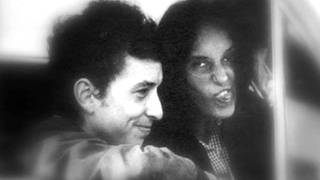
Watch the official Love Is Just A Four-Letter Word
music video
The story moves from innocence to experience
The song unfolds like a memory told in stages. That structure helps explain the meaning.
- The narrator first overhears a cynical idea about love.
- They do not fully understand it at the time.
- They leave and pass through years of restless searching.
- Only later do they realize why the line stayed with them.
- In the end, they repeat it back with new knowledge.
Early on, the speaker admits they had no words to say
. They are inexperienced, unsure, and mostly silent. That silence matters because the song is about understanding that arrives late. They hear the truth before they can grasp it.
Later, the narrator describes drifting through life, trying to lose the self, find meaning, and escape confusion. The search sounds spiritual as much as romantic. The phrase searching for my double
suggests a hunt for completion through another person, or perhaps through an ideal version of the self.
Why the chorus changes meaning each time
Each time the refrain returns, it picks up new weight. At first it sounds harsh. Then it sounds puzzling. By the end, it sounds earned.
One of the song’s smartest turns comes when the speaker admits they did not understand the woman’s words then, but they do now. The song points to hopes of permanence and purity, then shows those hopes collapsing. In that light, love is not fake, exactly. Rather, the fantasies built around it are unstable.
traps are only set by me
I do not really need to be assured
This is the emotional center of the song. The speaker stops blaming love itself and starts blaming their own need for guarantees. That shift makes the song deeper than simple heartbreak.
Images of freedom, weariness, and self-deception
Several images sharpen the song’s themes without needing long lyric quotation. The café scene suggests bohemian freedom, but also instability. The child and the absent security around that scene hint at adult consequences. Cats outside the window add a restless, nocturnal mood.
Then the song moves into drifting, disappearance, and failed searching. The narrator wants complete evaporation
, which suggests exhaustion with identity and attachment. That is not just sadness over one relationship. It is a wider crisis of meaning.
Interpretation: the song argues that people often turn love into a cure-all. When that cure fails, they may feel cheated. The repeated refrain pushes back against this by shrinking love from a grand ideal into plain language.
How Joan Baez’s performance shapes the message
Baez’s version matters because the arrangement keeps everything focused on the words. On Any Day Now, the production blends folk and country touches common to the late 1960s, but this song still feels intimate and uncluttered. Her vocal is steady, bright, and controlled rather than theatrical.
That choice changes the emotional effect. If the singer sounded angry, the line about love being only a word might come off as bitter. Baez sings it with clarity and restraint, which makes it feel considered. They sound like someone passing along a difficult truth, not trying to win an argument.
There is also a subtle tension between the beauty of the melody and the skepticism of the lyric. That contrast mirrors the song’s point: people may still be drawn to love’s beauty even after they no longer trust its slogans.
More than cynicism: a song about growing up
The final verse is especially revealing. The narrator returns to the person they once observed, now older and changed. Time has turned the tables. They have learned enough to repeat the old statement back, but not with smugness. They sound humbled.
That is why the meaning of Love Is Just a Four-Letter Word Joan Baez is not “love is meaningless.” It is closer to this: love becomes dangerous when people confuse the word with truth, permanence, or ownership. The song strips away fantasy so something more honest can remain.
What listeners can take away
For many listeners, the song endures because it captures a familiar realization. They may spend years chasing certainty in romance, only to learn that certainty cannot be forced. Love may matter deeply, but words like forever do not guarantee anything.
That is what gives the song its staying power. It is sharp, skeptical, and sad, but also self-aware. In the end, the narrator does not just judge the world. They judge their own illusions too.
Disclaimer: This interpretation is based on the lyrics, recording context, and documented credits, but song meaning can remain open to personal reading.







