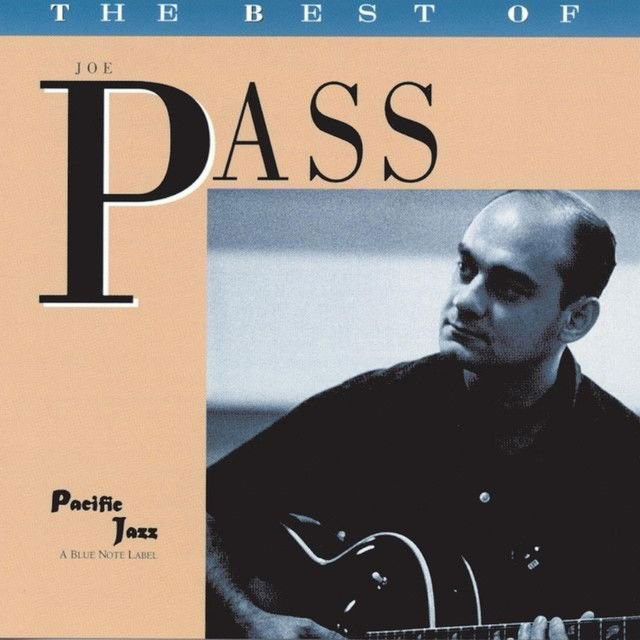
Satin Doll by Joe Pass
The meaning of Satin Doll Joe Pass starts with a playful contradiction: the song sounds smooth and classy, but the narrator is a little rattled. They are trying to act cool around a woman who seems stylish, witty, and fully in control. In Joe Pass’s version, that tension becomes even clearer because the guitar turns flirtation into pure swing.
"Satin Doll" - Joe Pass
Over her shoulder she digs me
Out cattin' that satin doll
Loading lyrics...
Unable to load lyrics
We're unable to display the lyrics at this time. Please try again later.
Even though many listeners know “Satin Doll” as a jazz standard tied to Duke Ellington, Joe Pass’s recording gives it a different shade. His 1975 version appears on Portraits of Duke Ellington, a tribute album recorded after Ellington’s death and released by Pablo Records. The album features Pass with Ray Brown on bass and Bobby Durham on drums, and it was produced by Norman Granz and Joe Pass, according to the album’s documented credits.
A Stylish Crush, Told With a Wink
At its core, “Satin Doll” is about fascination. The narrator sees a woman who is glamorous, socially sharp, and hard to pin down. Instead of sounding heartbroken or desperate, they sound dazzled.
The opening images quickly establish her as a scene-stealer. Phrases like cigarette holder
and over her shoulder
paint a portrait of someone who knows how to make an entrance. The language is light and rhythmic, but it also reveals the power balance: she is being admired, while the speaker is trying not to lose their footing.
Interpretation: the song is less about romance in a deep emotional sense and more about social magnetism. She represents polish, confidence, and a kind of urban cool that the narrator both enjoys and fears.

Watch the official Satin Doll
music video
The Narrator Wants Control but Does Not Have It
One of the clever things in the lyric is how often the speaker pretends to be calm. They insist they are playing it cool
, yet nearly every line suggests the opposite. The woman has already made an impression, and the speaker is adjusting in real time.
That self-protective stance matters. Rather than admitting total surrender, the narrator says they are not going to get caught. That idea gives the song its comic charm. They know attraction can make people foolish, and they are trying to avoid becoming one more easy admirer.
This is why the lyric still feels fresh. It captures a common social moment: someone walks in, changes the mood, and the person watching them starts performing confidence instead of actually feeling it.
Why “Satin Doll” Means More Than Fashion
The title itself does a lot of work. “Satin” suggests softness, luxury, and shine. “Doll” can sound affectionate, but it also reflects an older slang style where elegance and allure are wrapped into one nickname.
Interpretation: the phrase “satin doll” is not just about what she wears. It turns the woman into a symbol of polished sophistication. She seems almost too perfect for the room, like an icon of nightlife rather than an ordinary person.
That reading fits the lyric’s language of dancing, phone numbers, and stylish movement. When the song mentions telephone numbers
and social motion, it places the action in a fast, flirtatious world. This is not a private love letter. It is a portrait of public charm.
Joe Pass Turns Flirtation Into Swing
Joe Pass’s version matters because he performs a song with famous lyrics as an instrumental showcase. On Portraits of Duke Ellington, he revisits Ellington material with bassist Ray Brown and drummer Bobby Durham. That trio setting keeps the music light on its feet while giving Pass room to phrase the melody with elegance and wit.
Without a singer delivering every line, listeners hear the song’s character through touch, timing, and swing feel. Pass’s guitar can sound conversational, as if it is teasing the melody rather than simply stating it. That approach suits “Satin Doll” perfectly. The tune itself has poise, but the improvisation adds sparkle and a little mischief.
The Trio Sound and Its Meaning
Ray Brown’s bass gives the track its grounded pulse, while Bobby Durham’s drums keep the performance crisp and relaxed. Together, they help Pass avoid making the tune too delicate. Instead, it feels confident.
That is important for the meaning of Satin Doll Joe Pass. The song is about someone graceful but elusive, and the trio captures that by balancing polish with movement. The melody glides, but the rhythm section keeps it from floating away.
The Ellington Connection Changes the Reading
“Satin Doll” was written by Duke Ellington, Billy Strayhorn, and Johnny Mercer, and Joe Pass recorded it as part of a larger Ellington tribute. That context matters because Ellington’s music often joined sophistication with play. Pass is not just covering a standard; they are interpreting a whole musical world shaped by elegance, wit, and rhythmic ease.
Since Portraits of Duke Ellington was recorded shortly after Ellington’s death, the album also carries a sense of respect. “Satin Doll” therefore works on two levels: it is a fun, flirty tune, and it is part of a tribute to one of jazz’s defining composers.
A Short Way to Read the Song
If readers want the simplest takeaway, it is this:
- The narrator is captivated by a stylish woman.
- They try to hide that excitement behind cool talk.
- The title turns her into a symbol of class and charm.
- Joe Pass’s version emphasizes grace, swing, and playful control.
That is why the song lasts. It understands that attraction is not always dramatic. Sometimes it is social, funny, and built on admiration from a slight distance.
Final Take on the Song’s Lasting Appeal
The meaning of Satin Doll Joe Pass is not hidden in tragedy or mystery. It lives in tone. The song admires a woman who owns the room, while the narrator tries not to look too impressed. Joe Pass’s interpretation sharpens that feeling by making the melody sound both elegant and gently amused.
For many listeners, that is the real magic of “Satin Doll.” It turns a brief flirtatious encounter into something timeless, stylish, and musically alive.
Disclaimer: This interpretation is based on the song’s lyrics, jazz context, and Joe Pass’s recorded performance. As with many standards, listeners may hear different shades of meaning.








