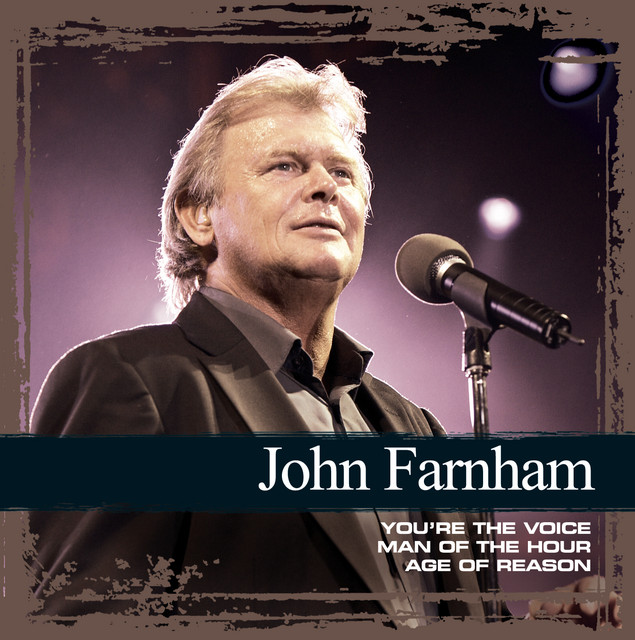
Why 'You're the Voice' Still Hits So Hard
When people look up the meaning of You're the Voice John Farnham, they usually sense two things at once: it feels personal, and it feels public. That mix is why the song has lasted. It is not just about one person finding confidence. It is about a crowd deciding they do not have to accept fear, violence, or silence.
"You're the Voice" - John Farnham
We can write what we wanna write
We gotta make ends meet, before we get much older
Loading lyrics...
Unable to load lyrics
We're unable to display the lyrics at this time. Please try again later.
Released in 1986 ahead of Whispering Jack, the single became John Farnham's signature song and a major comeback hit. It was written by Andy Qunta, Keith Reid, Maggie Ryder, and Chris Thompson, and produced by Ross Fraser. Research on the song's origin says it grew out of frustration after a large anti-nuclear rally in London's Hyde Park in 1985, giving the record a clear civic edge even before Farnham sang it.
A Protest Song Disguised as a Pop Anthem
At its core, the song tells listeners that change starts when ordinary people stop waiting for someone else to act. The opening idea about having a chance to start again frames the song as a call to responsibility, not just hope. It says the future is still open, but only if people use their voice.
That is why the chorus matters so much. When the song says You're the voice
, it shifts the focus away from leaders and toward the listener. The message is simple: people are not powerless, and silence helps fear win.
Interpretation: The song works as both a personal pep talk and a democratic statement. It tells people that speaking up is not optional when the stakes are high.
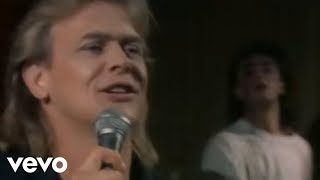
Watch the official You're the Voice
music video
The Shared-Humanity Message in the Verses
One of the song's smartest moves is how it links politics to family and human bonds. The repeated reminder We're all someone's daughter
and its paired line about sons strips away ideology and makes conflict feel intimate. Instead of talking in abstract slogans, the lyric asks listeners to remember that every person is tied to someone who loves them.
That leads to the song's most striking image: Down the barrel of a gun
. The phrase is short, but it changes the temperature of the whole song. Suddenly this is not just about being heard. It is about what happens when people fail to see each other as human.
In plain terms, the verses argue that violence begins when empathy disappears. The song answers that danger by insisting on solidarity, speech, and moral courage.
What the Chorus Really Demands
The chorus is memorable because it is direct. Phrases like Make a noise
and not gonna sit in silence
turn the song into a public pledge. These are not decorative lines. They are commands aimed at passivity.
The wording also matters. The song does not ask for perfect ideas or polished speeches. It asks for noise, clarity, and refusal. That makes the message broad enough to fit many situations: anti-war activism, civil rights, labor struggles, or even private moments when someone must finally speak up.
We're not gonna sit in silence
We're not gonna live with fear
Those lines are the emotional center of the record. They translate the whole song into a simple choice: stay quiet and afraid, or stand together and answer fear with action.
How the Sound Turns Meaning Into an Anthem
Part of the meaning of You're the Voice John Farnham comes from the arrangement, not just the words. Musically, it sits between soft rock and power ballad, but it keeps building like a rally. Farnham's vocal starts controlled, then grows more forceful, which mirrors the song's movement from reflection to collective action.
The most famous production choice is the bagpipe section. According to reporting on the song's recording history, Farnham replaced a planned bass solo with bagpipes, played by four pipers. That decision gives the song a ceremonial, almost battlefield quality. It sounds communal, proud, and urgent all at once.
Interpretation: The bagpipes make the song feel bigger than one singer. They widen the emotional space, as if the voice in the title has become a crowd.
Why the Song Became So Culturally Powerful
The single was initially a risk. Labels reportedly passed on it before manager Glenn Wheatley put it out on Wheatley Records. Instead of fading, it became a huge hit, helped revive Farnham's career, and pushed Whispering Jack into record-setting success in Australia. The song later won ARIA's 1987 Single of the Year and has remained one of Farnham's defining recordings.
Its afterlife also explains its power. It has been used in advertising, film, television, election campaigns, and public events. That wide use shows how flexible its message is. People hear it as a national anthem, a protest song, a unity song, and a motivational anthem all at once.
That flexibility can cause tension too. Because the lyrics are broad, different groups try to claim the song for different causes. Still, the original writing context points back to anti-war feeling and civic responsibility rather than empty triumph.
A Lasting Meaning That Still Feels Current
So what is the song really saying? In the clearest sense, it says that fear becomes normal when people stop speaking. It argues that public life depends on ordinary courage, and that solidarity begins by recognizing shared humanity.
That is why the song still lands decades later. Its politics are real, but its emotional logic is even stronger: people matter, silence has a cost, and a single voice can join others until it becomes impossible to ignore.
Interpretation disclaimer: Song meaning can be layered, and this reading combines documented background with lyrical interpretation rather than claiming one final or official meaning.








