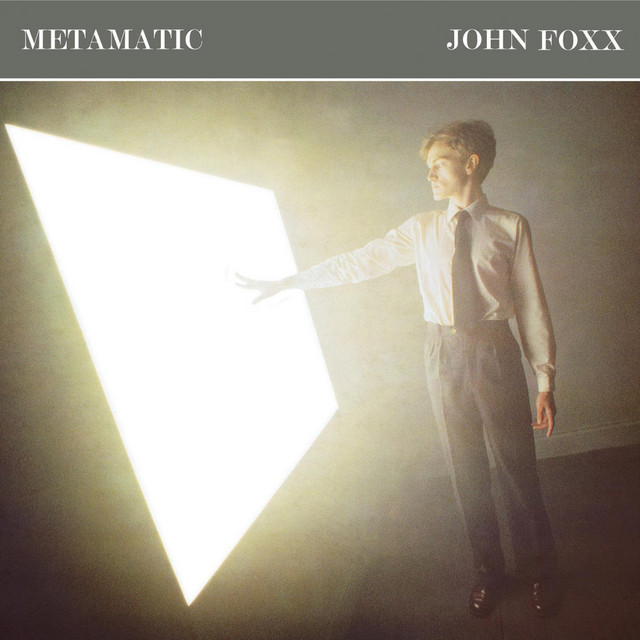
Underpass by John Foxx
A Cold Tunnel Into Modern Fear
The meaning of Underpass John Foxx starts with a simple image: a person standing in a dim urban space, cut off from others and from their own past. The song does not tell a detailed plot. Instead, it builds a mood of isolation, damaged memory, and mechanical life.
"Underpass" - John Foxx
Watching you glow
Lifting a receiver
Loading lyrics...
Unable to load lyrics
We're unable to display the lyrics at this time. Please try again later.
Released on 4 January 1980 as Foxx’s first solo single after leaving Ultravox, “Underpass” also introduced the world of Metamatic. According to the song’s release history, it was produced by Foxx and built from synthesizers and electronic percussion alone, which matters because the sound is part of the message.

Watch the official Underpass
music video
What the Song Is Really About
At the broadest level, “Underpass” is about feeling trapped in a modern environment that strips away warmth and certainty. The title word, repeated like an alarm, turns an ordinary piece of city architecture into a symbol. An underpass is meant to help people move through space. Here, it feels like a place where movement stops.
Interpretation: the song suggests that urban life can make people feel anonymous and emotionally numb. When the singer notices a figure watching you glow
and lifting a receiver, the scene hints at connection. But it quickly undercuts that hope with nobody I know
. Even when a line of contact appears, it leads nowhere.
A Narrator Lost Between Memory and Concrete
The voice in the song is first person, but it feels detached rather than confessional. They do not pour out emotion. They report images in clipped, almost stunned fragments. That distance is important.
When the lyric says I used to remember
, the song points to memory loss, but not in a private, sentimental way. It feels social and historical too. The next thought drifts toward World War something
, as if even major history is blurring into static.
Now it’s all gone...
We were somebody’s sons
This is the article’s strongest clue that the song is haunted by aftermath. The speaker seems to remember a generation shaped by conflict, then reduced to fragments. Foxx’s writing often gets called “Ballardian,” and that fits here: architecture, memory, and damaged modern life all blend together in one eerie frame.
Why the Underpass Matters So Much
The chorus is just the title, repeated again and again: Underpass
. That repetition does two things.
First, it mimics an echo in a tunnel. The song sounds like it is bouncing off concrete walls. Second, it turns the setting into a mental condition. The underpass is no longer just a location under the road. It becomes a state of mind: below ground, below daylight, below normal human contact.
Interpretation: Foxx may be using the underpass as a symbol for the underside of modern life. Public infrastructure promises efficiency, but it can also feel bleak, impersonal, and haunted.
How the Images Connect
Foxx’s images are short, but they link tightly:
- darkness and glow suggest artificial light instead of natural warmth
- the receiver suggests communication that fails
- bridges and rows of echoes suggest a city built for movement, yet full of repetition
- mist, rust, and doors suggest neglect and time passing
- the repeated mechanical sound,
click-click drone
, suggests machinery replacing speech
Taken together, these details create a world where people are present but unreachable. The city is full of structures, but thin on intimacy. Even sound itself becomes less human.
Production as Meaning, Not Decoration
One reason “Underpass” still feels striking is that its production does not simply accompany the lyric. It explains it. The track’s electronic percussion hits with hard precision, while the synths feel metallic and narrow rather than lush. Foxx’s verse vocal is cool and almost robotic, then the chorus lands like a stark sign flashing in the dark.
That design was central to Foxx’s early solo work. “Underpass” was the first single from Underpass (song), and it reached No. 31 in the UK, helping mark the shift from late-70s art rock into colder synth-pop. For listeners in the U.S., the song can sound like an early blueprint for later electronic music that treats the city itself as an instrument.
Artist Context Sharpens the Song
Context matters here. Foxx had just left Ultravox and was defining himself as a solo artist. “Underpass” sounds like a break from rock-band warmth into a more controlled, futurist style. That makes the song’s emotional chill feel intentional, not accidental.
The promo video, with basement spaces, highways, neon tubes, and a dangling phone receiver, reinforced that mood. Those visuals support the reading that the song is about urban dislocation and the strange beauty of ruined modern spaces.
Alternate Readings Worth Considering
There is more than one way to hear this song.
Reading One: Urban alienation
This is the clearest reading. The song presents a person overwhelmed by the cold systems of city life, where technology and architecture replace direct feeling.
Reading Two: Postwar memory
The reference to war and sons suggests a generation carrying trauma into modern landscapes. In this reading, the underpass is a postwar space, built over old damage but never free of it.
Reading Three: A mind in breakdown
Because the images come in fragments, the song can also sound like someone whose memory and perception are slipping. The city may reflect an inner collapse as much as an outer one.
The Lasting Meaning of Underpass John Foxx
The meaning of Underpass John Foxx lies in how perfectly its words and sound match. It is a song about disconnection, fading memory, and the cold underside of modern life. Foxx turns concrete, echo, and machinery into emotional symbols without ever overexplaining them.
That is why the song still feels vivid decades later. It captures a future that arrived: efficient, illuminated, connected by systems, yet often lonely underneath.
Disclaimer: This interpretation separates documented facts from informed reading. Like many art-pop songs, “Underpass” remains open to more than one meaning.







