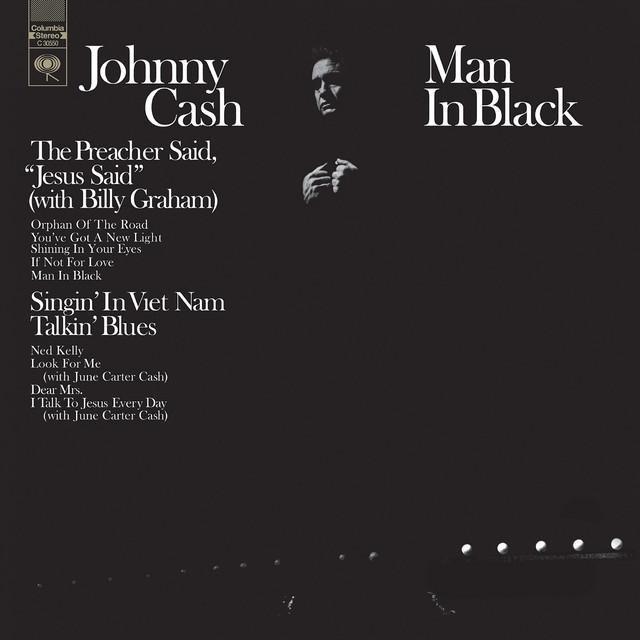
Man in Black by Johnny Cash
Why This Song Still Hits Hard
The meaning of Man in Black Johnny Cash is both simple and deep: they turned a stage image into a moral statement. Johnny Cash does not wear black in the song to look mysterious or cool. He presents it as a public reminder of suffering that comfortable people would rather ignore.
"Man in Black" - Johnny Cash
Why you never see bright colors on my back
And why does my appearance seem to have a somber tone
Loading lyrics...
Unable to load lyrics
We're unable to display the lyrics at this time. Please try again later.
Released in March 1971 as the title track of his 1971 album, the song is widely understood as one of Cash’s protest songs. It speaks for poor people, prisoners, the elderly, soldiers, and the dead of war. In under three minutes, Cash explains that black clothing is not fashion. It is witness, grief, and conscience.
Watch the official Man in Black
music video
The Core Message Behind the Black Clothes
At the center of the song, Cash answers a question people had long asked about his look. Why always black? His answer is ethical, not personal. He says he wears it for people pushed to the edge of society, including the poor and the beaten down
.
That line sets the whole song in motion. Each verse adds another group that has been forgotten or mistreated. The color black becomes a symbol of mourning, but also solidarity. He is not just grieving from a distance. He is choosing to carry that grief in public.
Interpretation: The song suggests that art and image should mean something. Cash turns celebrity branding into social testimony. Instead of using fame to escape pain, they use fame to point straight at it.
A Protest Song Built From Specific People
What makes the song powerful is how concrete it is. Cash does not speak in vague slogans. He moves through a list of real human situations.
He sings for hungry neighborhoods, for the incarcerated, and for people who never got the guidance or compassion they needed. He also points to national hypocrisy. A society may celebrate wealth and progress, but many people remain shut out of that success.
One sharp example is the prisoner who has effectively already paid but still remains trapped. Another is the mention of bright consumer culture, reduced to fancy clothes
and fast living, while others are left behind. Cash is criticizing a country that praises freedom but often withholds justice.
Faith, Morality, and Judgment
A key layer in the meaning of Man in Black Johnny Cash is faith. Cash refers to the teachings of Jesus, especially love and charity, not as church decoration but as a challenge to daily life. The point is not religious performance. The point is whether people actually care for the vulnerable.
That is why the song can feel almost sermonic. Cash is not preaching abstract doctrine. They are measuring public life against compassion. If a nation claims Christian values yet neglects the poor, sick, and imprisoned, then the song suggests that something is badly out of balance.
This moral language matters because it broadens the song. It is not only political. It is spiritual and ethical too.
Vietnam, Death, and National Mourning
The song also belongs to its moment. In 1971, the Vietnam War still cast a long shadow over American life. Cash mourns lives lost on all sides and questions the certainty with which nations justify violence.
things need changin' everywhere you go
You'll never see me wear
a suit of white
This is the emotional hinge of the song. Cash admits the world will never be fully right, but they refuse false optimism. White would symbolize innocence, purity, or celebration. Black says the work is unfinished.
Interpretation: These lines turn the song from explanation into vow. Cash is not merely describing an outfit. They are making a promise to keep mourning, noticing, and speaking until conditions improve.
How the Sound Supports the Message
Production matters here. According to available credits, Cash wrote and produced the track himself, and it runs a lean 2:52 on Columbia. The arrangement is plain, steady, and direct, which fits the message.
There is no ornate build or dramatic studio trick trying to soften the words. Instead, the song moves with a calm country-folk pulse. That restraint helps the lyrics land. Cash’s voice sounds measured rather than explosive, which gives the protest more authority. They do not shout. They testify.
The famous low register also helps. His vocal tone carries weariness, conviction, and care at the same time. That mix keeps the song from sounding self-righteous. Even when he judges society, he sounds like someone grieving with it.
Persona, Performance, and Public Meaning
Cash had long been known as the Man in Black, but this song gave the persona a formal explanation. In one early live introduction, noted in song history, Cash said conversations with Vanderbilt University students helped inspire the piece, and he reportedly revised it right before performing it. That detail fits the song’s urgency. It feels written in contact with real people and real debate.
Its reception also matters. The song reached No. 3 on Billboard’s Hot Country Songs chart, showing that a socially pointed message could still connect with a broad audience. That mix of popularity and protest is part of why the song lasts.
Final Take on Its Lasting Meaning
The meaning of Man in Black Johnny Cash is that visible style can become visible conscience. Cash turns black clothing into a sign for mourning, protest, humility, and identification with people society neglects.
The song endures because it never asks listeners to admire sadness for its own sake. It asks them to notice suffering and question comfort. When Cash says he would love to wear a rainbow every day
, the wish is sincere. But until the world is brighter, they remain the man in black
.
Disclaimer: This interpretation is based on the lyrics, historical context, and documented release details. As with any song, listeners may hear additional meanings of their own.








