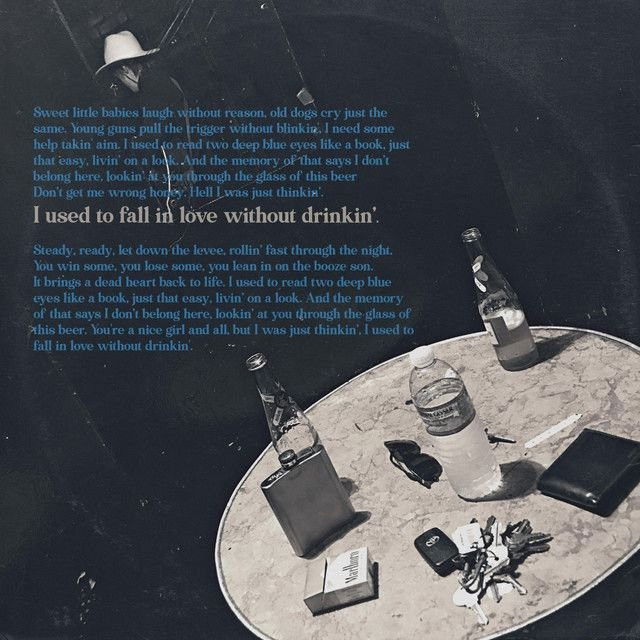
I Used To Fall In Love Without Drinkin' by Josiah and the Bonnevilles
They know the line that stops a room: the confession that once, love arrived on its own. Now, it seems to need a push. That tension—between natural feeling and liquid nerve—drives the meaning of I Used To Fall In Love Without Drinkin' Josiah and the Bonnevilles.
"I Used To Fall In Love Without Drinkin'" - Josiah and the Bonnevilles
Old dogs cry just the same
Young guns pull the trigger without blinkin'
Loading lyrics...
Unable to load lyrics
We're unable to display the lyrics at this time. Please try again later.
Love, Memory, and the Courage We Buy
At its core, the song weighs who they used to be against who they are now. The hook I used to fall in love without drinkin'
is not a boast; it’s a bruise.
Interpretation: The narrator remembers a version of themselves who trusted instinct and eye contact. Today, they reach for a bottle to bridge the gap between fear and desire. The regret is active, not passive—they see the change and wish it weren’t true.
Watch the official I Used To Fall In Love Without Drinkin'
music video
A Barstool Confession: Who’s Talking, and to Whom?
The voice is first person, speaking to someone they’re drawn to. A single image lands the scene: through the glass of this beer
. The drink is both prop and partition, revealing the setting and the standoff.
Interpretation: They’re flirting, but they’re also stalling. The direct address softens the honesty. They’re saying, “I used to do this without help,” while gently asking for grace in the present.
A Short Timeline of How It Unfolds
- The verse opens wide, scanning the world:
Sweet little babies laugh without reason
andOld dogs cry just the same
. Innocence and age mirror the narrator’s shifting heart. - A memory snaps into view: they could
read two deep blue eyes like a book
. Love once felt legible. - The present intrudes: they’re staring across a bar, drink in hand, unsure of their aim.
- A coping motto appears—
you win some, you lose some
—then the admission that sometimes they lean on alcohol to feel alive. - The chorus repeats, each time pressing the ache a little deeper.
Interpretation: The structure circles back on itself like a thought loop. The repetition mimics how regret returns each time courage fades.
Symbols That Do the Heavy Lifting
The opening triad—babies, old dogs, young guns—maps a whole life cycle in seconds. Innocence laughs; experience cries; recklessness acts. The narrator sits somewhere in the middle, aware of loss and tempted by quick fixes.
The eyes are a key motif. To read two deep blue eyes like a book
suggests former fluency in love. Now that literacy has slipped, they translate emotion through alcohol instead of intuition.
The bar glass matters too. Seeing someone through the glass of this beer
blurs vision and adds distance. Interpretation: The drink is a shield that promises courage but delivers separation. It’s a barrier they placed themselves.
How the Sound Makes the Story Land
The arrangement feels close and human. An acoustic-forward bed, steady groove, and unfussy vocal keep the story at eye level. Subtle lift around the chorus lets the title line sit on top without turning it into an anthem.
Interpretation: The calm pacing matches a narrator who is not drunk on drama, just quietly wounded. Any light percussion or bass thump acts like a heartbeat—present, insistent, but never flashy—mirroring the return of the same troubled thought.
What the Chorus Really Tells Us
The line I used to fall in love without drinkin'
reframes each verse image. It keeps measuring now against then. Interpretation: The refrain is a boundary marker; every time it returns, it redraws the line between self-reliance and self-medication.
Why That First Verse Matters So Much
By starting with the world outside the narrator—babies, dogs, and guns—the song avoids a diary entry vibe. It says, “This isn’t just me.” It’s a landscape of feeling where innocence fades and risk grows. That scope gives the confession moral weight.
Interpretation: The contrast suggests they fear becoming the “old dog,” crying from scars. So they chase the “young gun” jolt with a drink, even if it backfires.
Alternate Readings You Might Hear
- Interpretation: Social anxiety. The drink isn’t about lust; it’s about speaking at all. The song becomes a portrait of someone who needs a crutch to be present in public.
- Interpretation: A mourning song. The “dead heart” revived by booze hints that a past breakup or loss numbed them. Alcohol simulates the spark that used to arrive from connection.
Both paths end in the same place: the wish to feel naturally again.
Takeaway
For listeners searching the meaning of I Used To Fall In Love Without Drinkin' Josiah and the Bonnevilles, the message is sober even when the glass isn’t. It’s about the cost of courage on tap, and the hope that one day, the heart won’t need it.
Disclaimer: This analysis reflects interpretation of the recording and publicly known credits (song written by Josiah Leming). Individual experiences with the song may differ.








