Why ‘Painkiller’ Is Judas Priest at Full Power
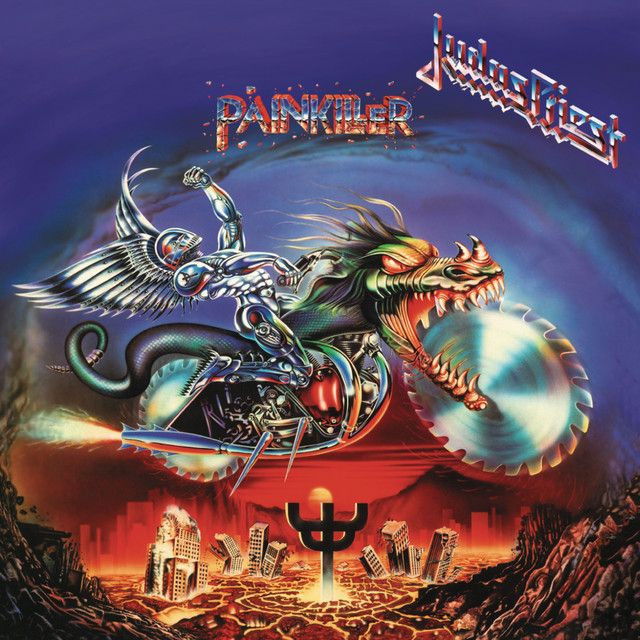
The meaning of Painkiller Judas Priest starts with a wild image: a machine-like savior drops into a broken world and wipes out evil. On the surface, it is a comic-book apocalypse story. Under that surface, it is also Judas Priest making a statement about what heavy metal can feel like when it is pushed to the limit.
"Painkiller" - Judas Priest
Terrifying scream
Enraged and full of anger
Loading lyrics...
Unable to load lyrics
We're unable to display the lyrics at this time. Please try again later.
Released in 1990 as the title track and opener of Painkiller, the song became one of the band’s signature recordings and a major late-career reset for them. It was written by Rob Halford, K. K. Downing, and Glenn Tipton, and produced by Chris Tsangarides. It also introduced drummer Scott Travis on record, whose opening pattern became famous almost instantly. These facts are widely noted in reference sources and song histories, including Wikipedia and Songfacts.
A Metal Messiah in a Ruined World
At the most direct level, the lyrics tell a simple story. Humanity is near collapse, the world is under attack, and a supernatural defender appears in response. The song describes that figure as half man and half machine
, which turns him into a cyborg hero rather than a normal person.
That matters because the song does not present rescue as gentle or peaceful. This savior arrives with force, speed, and violence aimed at evil. The imagery of engines, steel, smoke, and fire makes the rescue feel mechanical and militarized. When the chorus names the Painkiller
, it sounds less like a person’s name and more like a title earned through destruction.
Interpretation: They can hear this figure as a fantasy hero, but also as a symbol of metal itself—hard, loud, relentless, and built to overpower darkness.

Watch the official Painkiller
music video
How the Lyrics Build the Character
The opening lines move fast and stay fast. Phrases like faster than a bullet
and terrifying scream
do not give much plot, but they do give immediate sensation. The song wants listeners to feel speed before they fully understand the character.
Then the verses add scale. The world is devastated, mankind is desperate, and a rescuer comes from above. That shift makes the Painkiller more than a warrior. He becomes a last answer to a last problem.
One short passage captures that turning point:
A savior comes from out the skies
In answer to their pleas
Even here, the writing stays broad and mythic. There are no named villains, cities, or details. That vagueness helps the song feel universal. Evil is simply evil, and rescue is absolute.
The Chorus Turns the Hero into a Myth
The chorus keeps repeating the central name instead of explaining it. That is important to the meaning of Painkiller Judas Priest. Repetition makes the figure feel legendary. Listeners are not asked to study him; they are asked to believe in him.
This is part of why the song works so well live. Rob Halford told Kerrang! in 2013 that it embodied what metal should be: fast, melodic, and overwhelming, with crowds chanting the title line. That brief comment fits the structure of the song. The chorus is not really conversation. It is invocation.
Interpretation: They can hear the hook as a ritual chant. By repeating the title, the band turns the Painkiller into a symbol of release, revenge, and survival.
Sound First, Story Second
A big reason the song feels so powerful is that its music tells the story before the words do. Scott Travis’s drum intro, according to Songfacts, began as a studio warm-up while microphones were being tested. That bit of chance became one of metal’s great opening statements.
The drumming sounds like an alarm going off. After that, the guitars arrive at full speed, and Halford sings at the edge of control. The performance is precise, but it is meant to feel dangerous.
There is also a sharp sense of motion in the arrangement. The riffs race forward, the vocals soar above them, and the twin guitar solos make the song feel airborne. Glenn Tipton has named the solo among his favorites to play, which makes sense: it is not just technical display, but part of the song’s heroic arc.
Why the Production Matters
Produced by Chris Tsangarides, Painkiller sounded heavier and more modern than much of Judas Priest’s late-1980s work. Reference sources also note that Don Airey contributed Minimoog bass parts during the sessions, adding to the album’s thick, metallic punch.
That production choice fits the lyrics. The song is about chrome, thunder, impact, and rebirth. The recording itself feels plated in steel. Even when the melody remains clear, everything is sharpened into attack.
A Comeback Statement for the Band
Context also helps explain the song’s meaning. In 1990, Judas Priest were not a new band chasing attention. They were veterans proving they could still sound extreme. Critics later treated the track as a major triumph; Loudwire ranked it among the band’s very best songs, and Louder Sound placed it at No. 1 on its Judas Priest list.
That reception makes the song feel almost self-referential. Just as the Painkiller comes to resurrect mankind, Judas Priest seemed to reassert their own power with this release. The lyric idea of being brought back from defeat lines up neatly with the band’s renewed intensity.
Interpretation: They may not have written it as a direct self-portrait, but the song can still be heard as Judas Priest announcing their own rebirth.
The Lasting Meaning of “Painkiller”
In the end, the meaning of Painkiller Judas Priest is both simple and huge. It is about a metal savior who destroys evil and revives the fallen. But it is also about what extreme music can provide emotionally: adrenaline, escape, power, and the fantasy that something unstoppable can break through despair.
That is why the song still lands. Its story is exaggerated on purpose, and its sound is even bigger than its plot. Together, they create not realism, but pure heavy metal myth.
Disclaimer: This interpretation combines documented song context with informed analysis of the lyrics, performance, and reception. As with most songs, listeners may reasonably hear different meanings in it.








