
Why Kate Bush Wanted to Swap Places
The meaning of Running Up That Hill (A Deal With God) Kate Bush starts with a simple but powerful wish: two people in conflict could truly understand each other if they could exchange lives for a moment. Instead of writing a breakup song or a blame song, Kate Bush imagines empathy as something almost supernatural.
"Running Up That Hill (A Deal With God)" - Kate Bush
Be running up that hill
If I only could
Loading lyrics...
Unable to load lyrics
We're unable to display the lyrics at this time. Please try again later.
Released in 1985 on Hounds of Love, the track became one of Bush’s signature songs and later reached a new generation after its use in Stranger Things. Its lasting power comes from how clearly it turns emotional pain into a vivid image. They hear struggle, longing, and love all at once.
The Core Idea Hiding in Plain Sight
At its heart, the song is about misunderstanding inside a close relationship. The speaker is not asking to win an argument. They are asking to erase distance. When Bush sings about making a divine bargain and being running up that hill
, she turns emotional effort into physical motion.
The central line about swap our places
gives the song its meaning. The wish is that each person could feel the other’s fears, wounds, and pressure from the inside. If that happened, the song suggests, much of the hurt between them would disappear.
Interpretation: This is why the song feels so intense but not hopeless. It is driven by frustration, yet it still believes understanding is possible.
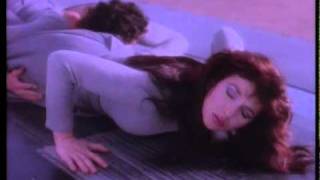
Watch the official Running Up That Hill (A Deal With God)
music video
More Than Romance, Less Than a Fight
Bush has explained in interviews that the song was inspired by the idea of a man and a woman trading places in order to understand each other better. That makes the song specifically about emotional difference, but not in a narrow way. Even listeners who do not hear it as a gendered song can recognize its bigger truth: love often fails when people cannot fully translate their inner world.
That is why lines about pain matter so much. When the song asks whether someone wants to know how something feels, it frames love as an act of imagination. The conflict is not only about cruelty. It is also about blindness.
The Tension in the Verses
The verses describe a bond where nobody may mean to cause damage, yet damage still happens. The image of a hidden wound and the phrase thunder in our hearts
suggest feelings that are powerful, buried, and hard to control.
Bush also asks whether there is so much hate
for the ones people love. That line does not mean the relationship is built on hatred. It points to the strange way intimacy can turn fear, pride, and pain into aggression.
Why the “Deal With God” Matters
The title phrase makes the song larger than ordinary conversation. A normal apology would not be enough. A normal argument would not solve it. Only something impossible, like a deal with God, could create the total exchange of feeling the speaker wants.
That dramatic idea is why the chorus lands so hard. It is not fantasy for fantasy’s sake. It shows how desperate the need for empathy has become.
If I only could
make a deal with God
swap our places
In just a few words, Bush compresses the whole emotional argument of the song. If each person could live inside the other’s body and mind, the running, the climbing, and the resistance might finally ease.
How the Sound Turns Emotion Into Motion
A big part of the meaning of Running Up That Hill (A Deal With God) Kate Bush comes from its production. The song does not drift like a dream ballad. It pushes forward with a pulsing rhythm, gated drum sound, and bright synthesizers that create tension rather than comfort.
Produced by Kate Bush herself, the track reflects the adventurous studio style heard across Hounds of Love. The beat feels steady but urgent, almost like a body under pressure. That matters because the song’s main image is physical effort. They do not just hear emotional strain; they feel the uphill push in the music.
Bush’s vocal also shapes the meaning. She sounds controlled, but never cold. There is yearning in the performance, yet also force. That balance matches the lyric’s core idea: tenderness and frustration living in the same breath.
The Images That Keep the Song Open
One reason the track has lasted so long is that its images are broad enough to fit many lives. A hill can mean relationship strain, emotional labor, gender misunderstanding, trauma, or any difficult gap between two people. A road suggests a journey. A building makes the struggle feel modern and man-made, not just natural.
Interpretation: Because the images are flexible, listeners can map their own story onto them. Some hear a plea between lovers. Others hear a broader cry for empathy in families, friendships, or society itself.
Why It Still Connects
The song remains fresh because its question never gets old: what if people could stop defending themselves long enough to truly feel what the other person feels? That idea is both deeply personal and widely human.
Its revival in recent years did not change the song’s meaning so much as reveal how timeless it already was. New audiences responded to the same ache older listeners heard in 1985.
The Lasting Meaning of the Climb
In the end, the meaning of Running Up That Hill (A Deal With God) Kate Bush is not really about religion or escape. It is about the near-impossible work of mutual understanding. The “deal” is a metaphor for perfect empathy, and the “hill” is the hard climb required to reach it.
That is what gives the song both pain and hope. It admits how badly people can miss each other, but it also imagines a way through.
Disclaimer: This interpretation draws on the lyrics, Kate Bush’s public comments, and the song’s production context. Like all art, the song can support more than one valid reading.








