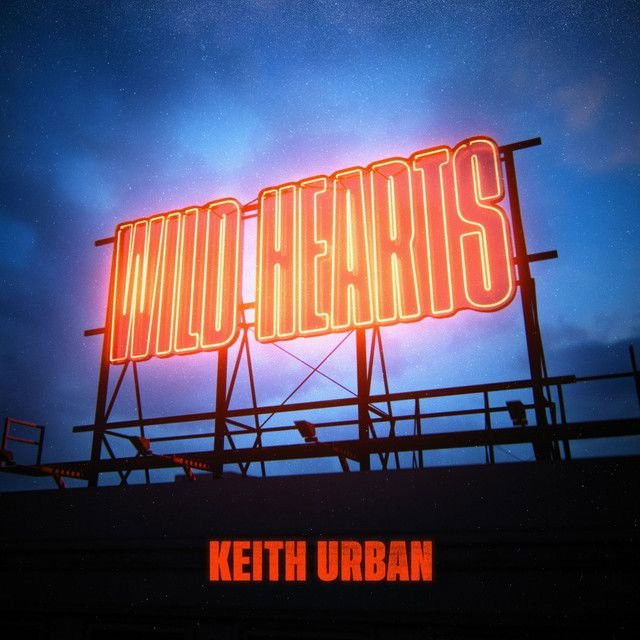
Why 'Wild Hearts' Hits So Hard
The meaning of Wild Hearts Keith Urban comes down to one big idea: this is a song for people who feel restless, underestimated, and deeply called toward something bigger. It turns a personal memory into a group anthem. Rather than focusing on heartbreak or regret, Keith Urban’s recording celebrates ambition, risk, and the stubborn hope that keeps artists and outsiders moving.
"Wild Hearts" - Keith Urban
Heard a thousand screams, I saw my daddy stare
Feel like I've been runnin' since the day that I was born
Loading lyrics...
Unable to load lyrics
We're unable to display the lyrics at this time. Please try again later.
The song was released in 2022 as a stand-alone single from Urban, with writing credited to Brad Tursi, Eric Paslay, and Jennifer Wayne. According to UMG Nashville and Keith Urban, it arrived as a major new release in his catalog and fits his long-running mix of country storytelling and arena-rock lift.
A Childhood Spark Becomes a Mission Statement
The opening verse begins with a vivid memory. The narrator sees a star onstage, hears the crowd, and notices a father reacting in awe. That scene matters because it explains where the dream starts. In a few lines, the song connects childhood wonder with a life spent chasing purpose.
Two images stand out right away: man in black
and my daddy stare
. The first strongly suggests Johnny Cash, a giant symbol of outlaw cool and musical destiny. The second grounds the scene in family. This is not just fandom. It is a moment where a child sees what music can do to a room and realizes they want that same fire.
Interpretation: the song treats inspiration like a turning point. It suggests that one live moment can shape a whole identity.
Watch the official Wild Hearts
music video
The Chorus Turns One Story Into Everyone’s Story
If the verse is personal, the chorus opens the gates. The song addresses the drifters
, all of the dreamers
, and people who feel like outsiders but still carry hope. That is why the chorus lands so hard: it widens the story from one singer’s memory to a larger community.
The key emotional move is in the line about those who seem lost but are not truly lost. The song argues that wandering and searching are not failures. They may actually be signs of growth. Instead of shaming uncertainty, it treats it as part of becoming.
That makes the chorus feel generous. It does not only praise future stars. It also speaks to anyone who has been told their dream is unrealistic. The phrase wild hearts
becomes shorthand for people who feel too intense, too different, or too determined to fit into ordinary plans.
The Real Conflict Is Doubt
The second verse introduces the song’s central obstacle: discouragement. It imagines someone hearing they will never amount to much, that they are wasting time on impossible goals. This part gives the anthem a target. The enemy is not another person in a literal sense. It is the voice of limitation.
That is why the answer is not revenge. It is belief. The song pushes back by saying that a dream can become real if someone has passion and an inner spark. The writing does not pretend success is easy. Instead, it frames perseverance as a spiritual and emotional force.
A Brief Lyric Snapshot
The song’s message is summed up in this short passage:
This goes out to the drifters
And all of the dreamers ready to fly
All those born to be rock stars
Even here, the point is bigger than fame. “Rock stars” works as a symbol for anyone trying to live boldly and create something lasting.
Symbols That Give the Song Its Lift
Several images keep the meaning vivid without making it complicated.
- The eagle suggests freedom, height, and vision.
- The phoenix points to rebirth and endurance.
- Guitars stand for creative expression and identity.
- The sky suggests limitless possibility.
These are simple symbols, but they are effective because they all point upward. The song is always reaching higher. Even the action of “lifting” guitars carries that motion. Nothing in the imagery feels trapped or still.
Interpretation: this upward movement mirrors the emotional goal of the song. It wants listeners to rise above fear, labels, and low expectations.
How the Sound Supports the Meaning
A big reason the meaning of Wild Hearts Keith Urban connects with listeners is the production. The track is built like an arena anthem. It has a driving beat, strong guitar presence, and a chorus arranged to feel communal rather than private.
Urban has often worked in the space between country and rock, and this song leans hard into that crossover energy. The guitars do not just decorate the message; they embody it. When the chorus expands, the sound creates the feeling of open space and motion. That sonic lift reinforces the lyrical focus on freedom and self-belief.
Their vocal delivery matters too. Instead of sounding delicate or reflective, the performance is urgent and inviting. They sing as if calling people into the song. That helps explain why the track works both as autobiography and as encouragement.
Why the Song Resonates Beyond Music Careers
Even though the lyrics mention rock stars and guitars, the song’s message is broader than the music business. It can speak to athletes, students, artists, and anyone trying to choose passion over safety.
That wider meaning comes from the way the song frames dreamers. It does not say they already have everything figured out. It says they are still reaching, still searching, still trying to shine. For many listeners, that feels more honest than a simple victory song.
Final Take on 'Wild Hearts'
At its core, “Wild Hearts” is about the people who cannot ignore the pull of a dream. It honors the first spark of inspiration, the pain of being doubted, and the thrill of keeping faith anyway. Keith Urban’s performance turns those ideas into something loud, bright, and communal.
Interpretation: the song’s deepest message is that being a misfit can be a source of power, not shame. What looks reckless from the outside may actually be the beginning of a life with meaning.
Disclaimer: This interpretation is based on the song’s lyrics, recording, and public release context. As with any song, listeners may hear meanings that differ from this reading.







