Why Keith Whitley's Quiet Love Song Still Lasts
The meaning of When You Say Nothing at All Keith Whitley comes down to a simple but powerful idea: real closeness does not always need speech. In this song, they describe a relationship where love is understood through expressions, touch, and calm presence rather than long declarations.
"When You Say Nothing at All" - Keith Whitley
Without saying a word, you can light up the dark
Try as I may, I could never explain
Loading lyrics...
Unable to load lyrics
We're unable to display the lyrics at this time. Please try again later.
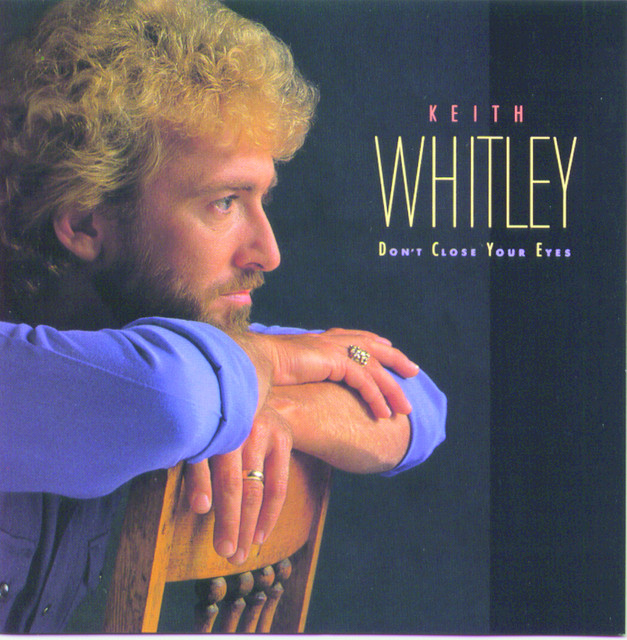
Released in 1988 on Don't Close Your Eyes, Keith Whitley’s version became his second No. 1 on the Billboard Hot Country chart that year. It was written by Paul Overstreet and Don Schlitz, and produced by Garth Fundis and Whitley. Those facts matter because the song’s lasting power comes from both smart writing and a deeply felt performance.
The Heart of the Message
At its core, the song says that silence can carry meaning. The singer is not praising emptiness or distance. They are describing a relationship so emotionally clear that small gestures say more than a conversation could.
The opening thought makes that clear. Instead of focusing on spoken promises, the lyric points to someone who can speak right to my heart
without using words. That idea sets up the whole song: intimacy is felt, not explained.
This is why the chorus lands so strongly. When the singer says you say it best
, they mean the other person communicates love most honestly through presence. The title phrase, nothing at all
, is not really about “nothing.” It is about nonverbal truth.

Watch the official When You Say Nothing at All
music video
How the Verses Build the Meaning
The verses work by listing small signals and showing how each one carries emotional weight. A smile suggests need. Eyes suggest loyalty. A hand suggests safety. None of these are grand dramatic moments. That is the point.
One of the most memorable details is the smile on your face
. In plain terms, the singer sees reassurance in a simple expression. The next image moves deeper, pointing to truth in someone’s eyes. Then the song adds touch, showing that physical closeness can promise support.
A touch of your hand
if ever I fall
That brief moment sums up the song’s emotional world. Love is not presented as flashy passion. It is presented as steadiness, comfort, and trust.
More Than Romance: Noise Versus Connection
Another key idea in the song is the contrast between public noise and private understanding. One verse mentions people talking all day, yet none of that chatter matters when the loved one comes close. The world is loud, but meaningful connection is quiet.
That contrast gives the song more depth than a standard love ballad. It suggests that words are often cheap or overwhelming. In comparison, the bond between two people feels rare because it cuts through distraction.
There is also a clever line about Old Mister Webster
. The lyric suggests that even a dictionary cannot fully define what passes between two hearts. Factually, co-writer Paul Overstreet later said he always liked that image, because it captured the limits of language itself. In other words, the song knows words are useful—but not enough.
Why Keith Whitley Sells It So Well
Whitley’s performance is a huge part of why the song became a classic. According to reporting collected by sources like American Songwriter and Songfacts, the writers brought the song to Whitley early because he loved it right away. Don Schlitz later said Whitley sang it “from the heart,” and that description fits.
Their vocal approach is restrained. They do not oversing the melody. That matters because a song about quiet communication would lose its meaning if performed too theatrically. Whitley sounds warm, intimate, and close to the listener, which mirrors the lyric’s emotional world.
The production helps too. The arrangement is smooth and gentle, with classic country polish rather than heavy drama. The tempo is relaxed, the instrumentation stays supportive, and nothing gets in the way of the melody. That softness gives the song room to breathe.
The Song's Origin and Long Legacy
The writing story adds another layer to the meaning of When You Say Nothing at All Keith Whitley. Overstreet explained that he and Don Schlitz were struggling through an unproductive writing day when the idea arrived. As he put it briefly, they were trying to find another way to say nothing, and that became the song.
That origin fits the theme perfectly. A song about the limits of language came from writers wrestling with language itself.
Its success was immediate. Whitley’s recording hit No. 1 in late 1988 and became one of his defining songs. After his death in 1989, the song kept growing in stature. Alison Krauss & Union Station revived it in 1995 with a celebrated cover that won CMA Single of the Year, and Ronan Keating later turned it into a major international pop hit in 1999.
That wide appeal says a lot. The song works in country, bluegrass, and pop because its message is universal.
Final Take: What the Song Really Means
So what is the song really saying? The best reading is also the simplest one: love is most convincing when it feels safe, clear, and unforced. The singer does not need big speeches. They only need proof in the way the other person looks, touches, and stays.
Interpretation: some listeners may hear it as a romantic ideal, while others may hear it as a lesson about emotional maturity. Either way, the song values sincerity over performance.
That is why it lasts. It turns silence into something warm, not empty.
Disclaimer: This interpretation blends widely reported facts about the song’s writing and release history with critical reading of its lyrics and performance. Meaning can vary from listener to listener.








