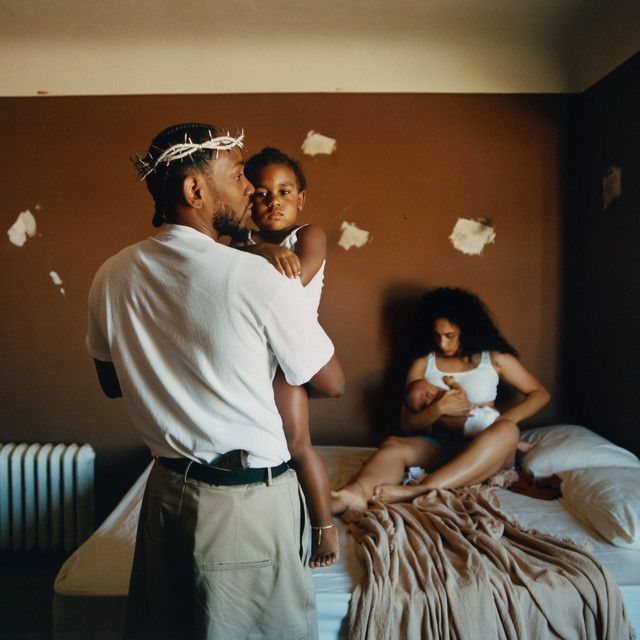
Mother I Sober by Kendrick Lamar, Beth Gibbons
The Quietest Song With the Biggest Weight
The meaning of Mother I Sober Kendrick Lamar, Beth Gibbons centers on trauma that does not stay in one generation. On this late-album centerpiece from Mr. Morale & the Big Steppers, they trace how fear, shame, violence, and silence can shape a family for years. The song was released on May 13, 2022, as track 17 on Kendrick Lamar's fifth studio album, with Beth Gibbons featured on vocals. It is widely described as one of the album's most vulnerable moments.
"Mother I Sober" - Kendrick Lamar ft. Beth Gibbons
One man standin' on two words, heal everybody
Transformation, then reciprocation, karma must return
Loading lyrics...
Unable to load lyrics
We're unable to display the lyrics at this time. Please try again later.
Factually, the song deals with family pain, false suspicions of abuse placed on Kendrick, his mother's own unresolved trauma, and his admission that destructive sexual behavior hurt his relationship. Interpretation: the title's idea of being "sober" is bigger than alcohol or drugs. It suggests facing pain without numbing it, seeing the truth clearly, and sitting with it long enough to change.

Watch the official Mother I Sober
music video
A Story Told in Layers of Pain
Childhood guilt and inherited fear
The first verses move back to childhood. They describe Kendrick as a boy hearing about violence against his mother and feeling guilty that he was too young to stop it. That early helplessness becomes a lifelong burden. When he says he has not felt grief until it is felt sober
, the point is that pain becomes sharper when a person no longer hides from it.
The next major layer is even more painful. His family repeatedly asks whether a cousin harmed him, and he says no, but he is not believed. The song makes clear that this suspicion came from his mother's fear after her own violation. In other words, her trauma spills into his life. Interpretation: one of the song's hardest truths is that love and damage can come from the same place. A parent may try to protect a child and still pass down fear.
The chorus as emotional collapse
Beth Gibbons' refrain gives the song its haunted center. The repeated wish to be anybody but myself
turns the verses into something universal: trauma can make a person feel trapped inside their own body and history. Her voice does not argue with Kendrick's story. It deepens it.
I wish I was somebody
Anybody but myself
Because that hook is so plain, it hits harder. It sounds less like poetry than a raw thought someone finally says out loud.
Why the Final Verse Changes Everything
By the third verse, the song shifts from family memory to adult accountability. Kendrick admits that he hurt Whitney Alford through infidelity and frames that behavior as part of a larger emotional fracture. He does not excuse himself. Instead, they present therapy and confession as the start of repair.
This is where the song grows beyond autobiography. Kendrick links private pain to wider Black historical trauma, including sexual violence and silence inside families and communities. That does not mean every line should be read as documentary fact about everyone. Interpretation: it is a personal testimony that opens into a social argument. They suggest that cycles of misogyny, secrecy, and self-destruction do not appear from nowhere; they often grow from unhealed wounds.
Near the end, the key phrase is this is transformation
. That line matters because the song refuses to stop at exposure. It aims for release. When Whitney's voice later says You broke a generational curse
, the track frames healing as difficult, incomplete, but real.
How the Sound Carries the Meaning
One reason the song lands so hard is its production. Critics noted its sparse piano, swelling strings, and a subtle bass pulse that feels like a heartbeat. Producer Sounwave has said, briefly, that The piano is a character too
. That is exactly how it feels here: the piano does not just support the confession; it seems to witness it.
Kendrick also changes his delivery. For much of the track, they speak in a hush, almost like someone sharing a secret in therapy. That restraint matters. On an album with louder, more chaotic moments, this near-whisper asks the listener to lean in. Then the song expands into a cry, creating catharsis without sounding triumphant.
Beth Gibbons is crucial in that design. Her voice is ghostly and human at once, which fits a song about memory, inheritance, and the wish to escape oneself. The feature is not decorative. It gives the record a second emotional language.
Context Makes the Meaning Stronger
The song's place on Mr. Morale & the Big Steppers matters. The album arrived five years after DAMN. and was framed by Kendrick as a work of deep personal excavation. In later comments, he said making "Mother I Sober" was emotionally overwhelming, and at the 2023 Grammys he thanked "the culture" for letting him evolve enough to create it. That context supports the idea that this track is not just confession for shock value. It is the album's emotional thesis.
Critical reception reinforced that reading. Reviewers treated it as one of the strongest songs in his catalog because of its honesty, restraint, and scope. It even reached the Billboard Hot 100, peaking at No. 59, despite being a heavy, nearly seven-minute song with no easy commercial hook.
What the Song Ultimately Means
At its core, "Mother I Sober" is about what happens when people finally tell the truth about pain. Not just the pain they suffered, but the pain they caused while trying to survive it. The song argues that healing begins when shame is named, responsibility is accepted, and silence is broken.
For many listeners, the lasting message is hope. Not a simple hope, and not a happy ending, but the possibility that honesty can interrupt what families pass down. Interpretation: that is why the song feels devastating and freeing at the same time. They do not erase trauma. They show what it might mean to stop handing it forward.
Disclaimer: This article offers an interpretation of the song based on lyrics, artist commentary, and critical context. Meaning can vary from listener to listener.








