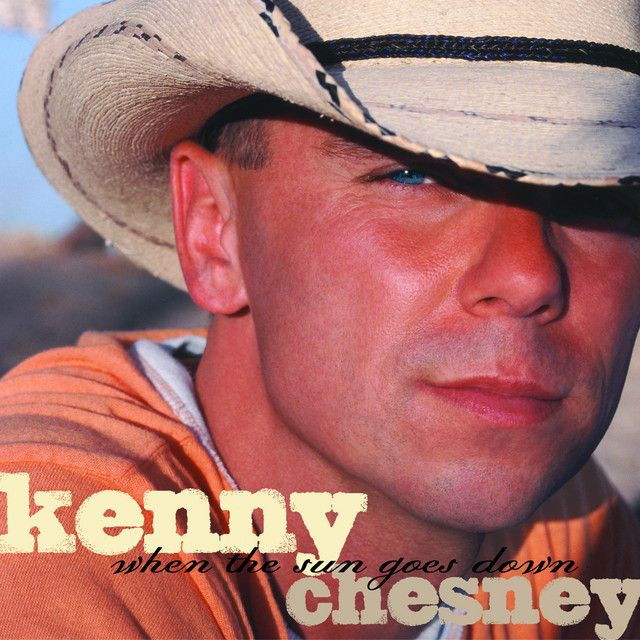
How Kenny Chesney Turns Songs Into Time Machines
The meaning of I Go Back Kenny Chesney centers on a simple idea: music does not just entertain people, it stores their lives. In this 2004 country hit, Chesney shows how one familiar song can unlock a whole season of memory, from teenage freedom to adult loss.
"I Go Back" - Kenny Chesney
Suddenly this crazy world made more sense to me
Well, I heard it today and I couldn't help but sing along
Loading lyrics...
Unable to load lyrics
We're unable to display the lyrics at this time. Please try again later.
Released as the third single from When the Sun Goes Down in May 2004, the track was written by Chesney and produced by Chesney with Buddy Cannon, according to Wikipedia. It spent seven weeks at No. 2 on Billboard’s Hot Country Songs chart, which fits its lasting appeal. The song feels personal, but it also speaks to almost anyone who has ever heard an old favorite and been pulled backward in time.
More Than Nostalgia, Less Than Regret
At first, the song sounds like pure nostalgia. The narrator hears old records and is suddenly back in a truck, at a football field, on a beach, or in a church pew. Chesney uses details like two toned short bed Chevy
and fifty yard line
to make those memories feel physical and local, not vague.
But the song is not just about missing the past. It is about how memory works. A hit from another artist becomes a trigger, and that trigger reconnects the narrator to who they were at a certain age. In other words, the past is not gone; it is waiting inside sound.
Interpretation: That is why the chorus feels bigger than a personal scrapbook. Chesney is suggesting that people carry their identity in fragments, and songs are one of the fastest ways to reassemble it.

Watch the official I Go Back
music video
Why the Referenced Songs Matter
One of the smartest parts of the writing is the way Chesney names other songs instead of only describing his own memories. The mention of Jack & Diane
signals small-town youth and dreaming beyond the present. Keep On Rockin' Me Baby
brings in rowdy college energy. And Only The Good Die Young
changes the emotional color of the song by tying music to grief.
Those references matter because they map different life stages. The listener moves from teenage romance to college confidence, then toward faith, loss, and adulthood. The song’s structure makes memory feel cumulative. One track leads to another, and a life begins to form.
We all have a song
stamped our lives
that takes us back in time.
That brief idea is the song’s thesis. Chesney shifts from “my memories” to “our memories,” turning a personal story into a shared American experience.
The Chorus as the Emotional Engine
The repeated phrase I go back
is plain, but that plainness is the point. Chesney does not dress up the hook with complicated language. He keeps returning to a direct statement, almost like a reflex.
That simplicity mirrors the experience the song describes. When people hear a meaningful song, they do not usually analyze first. They feel first. The chorus captures that instant jump from the present into a vivid past.
The images inside the refrain also do careful work. A truck, a blanket, wine, a shoreline, an old gym floor: these are ordinary objects and places. Yet in the song, they become emotional landmarks. The message is that everyday scenes often become the biggest memories later.
From Summer Freedom to Sudden Loss
The song becomes deeper in its final verse. After scenes of youth and freedom, Chesney returns to church, family routine, and then the line about losing a close friend. According to the song’s documented background, that friend was Lance Wilson, who died in a car accident at 17; one version of the official video is dedicated to him, as noted in the same Wikipedia entry.
This context matters because it sharpens the meaning. The earlier memories are sweet, but the ending reminds listeners that going back is not always comfortable. Music can return people to joy, but it can also stop them in their tracks and force them to feel grief again.
Interpretation: That is the song’s most human insight. The past is not divided into happy and sad boxes. One remembered song can carry both the best days and the hardest absence.
How the Sound Supports the Story
Musically, “I Go Back” is a mid-tempo country song with a warm, steady pulse. It avoids heavy drama. That production choice is important because the memories arrive naturally, not like flashbacks in a crisis.
The guitars, rhythm section, and Chesney’s relaxed vocal delivery create a conversational tone. He sounds less like someone performing a grand statement and more like someone realizing, in real time, why a song still hits so hard. That restraint keeps the track believable.
There is also a strong balance between movement and reflection. The beat keeps the song rolling forward while the lyrics keep looking backward. That tension gives it life: the body stays in the present, while the mind keeps revisiting old rooms.
Why the Music Video Strengthens the Meaning
The video, directed by Shaun Silva, was filmed at Gibbs High School in Tennessee, where Chesney grew up. It includes family, church, and hometown imagery, along with scenes in an empty gym and memory-like home footage.
Those visuals reinforce the song’s central claim that place and music are tightly linked. The empty gym in particular matches the lyric about the old gym floor
. It turns memory into architecture. A room can hold a younger version of a person just as powerfully as a melody can.
Why “I Go Back” Still Connects
Part of this song’s staying power is its honesty. It does not pretend memory is neat. It shows that a life is made of crushes, parties, beaches, church dinners, football fields, and funerals. All of it belongs together.
For listeners in the United States especially, the song also taps into recognizable rituals of growing up: high school sports, first loves, summer endings, and hometown friendships. That broad cultural familiarity helps explain why the song became a major hit and later earned double-platinum certification in the U.S.
In the end, the meaning of I Go Back Kenny Chesney is about the way songs become emotional bookmarks. They let people revisit not only what happened, but how it felt to be alive in that moment.
Disclaimer: This interpretation is based on the lyrics, recording context, and documented background. As with any song, individual listeners may hear different meanings in it.








