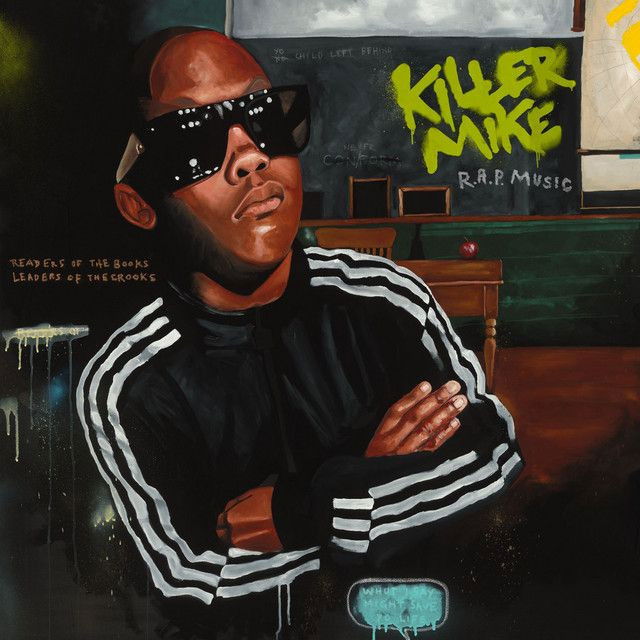
Why 'Reagan' by Killer Mike Still Hits Hard
The meaning of Reagan Killer Mike starts with a blunt idea: this is not just a song about one president. It is a song about systems that outlive presidents, and about how those systems shape Black life, hip-hop, policing, prisons, and public truth.
"Reagan" - Killer Mike
Will we ever do it big, or keep just settling for little shit
We brag on having bread, but none of us are bakers
Loading lyrics...
Unable to load lyrics
We're unable to display the lyrics at this time. Please try again later.
Released on R.A.P. Music in 2012 and produced by El-P, “Reagan” arrived as a single on Election Day that year, which made its message even sharper. Factually, it is widely described as a protest song aimed at Ronald Reagan’s legacy and the long shadow of Reagan-era policy. But the track is also more personal than that. Killer Mike does not only blame the state. They also turn the lens back on rappers and the culture around them.
More Than an Anti-Reagan Song
At first listen, the title points to Ronald Reagan. The lyrics do attack Reaganomics, the War on Drugs, and U.S. foreign policy. Yet the song opens by questioning the choices Black communities are offered and the false ideas of success sold to them.
Early on, Killer Mike challenges empty status symbols. When they say none of us are bakers
, the point is not really about bread. It is a critique of bragging about wealth without owning production, land, or power. Likewise, none of us on acres
points to a deeper lack of control over food, property, and economic survival.
That first verse matters because it sets up the song’s core claim: harm does not only come from presidents or police. It can also come from the stories a culture repeats. Killer Mike even says rappers should be held responsible for the messages they spread. That self-criticism keeps the song from becoming a simple political rant.
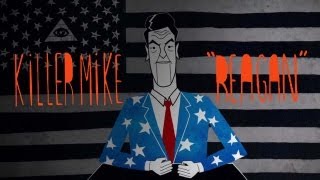
Watch the official Reagan
music video
The Central Argument: Reagan as a Symbol
The second verse widens the frame. Reagan becomes a symbol for modern American power, not just a single man. In interviews, Killer Mike said Reagan was like a salesman used by bigger interests, not the true source of power. That idea matches the line describing him as not at all a factor
.
Interpretation: the song suggests that presidents are public faces for deeper structures—corporate, military, and economic forces that keep moving no matter who is elected.
This is why the verse links Reagan to later presidents, including Democrats and Republicans. The point is not that every administration is identical in every way. The point is that the same habits of power—war, surveillance, punishment, and protection of wealth—continue across party lines.
How the Song Connects Race, Drugs, and Prison
One of the strongest parts of the song is how clearly it ties policy to lived experience. Killer Mike argues that the War on Drugs was sold as public safety but functioned, in practice, as a way to target Black communities. When they say police could terrorize whoever
, they are describing a system of fear and control, not isolated misconduct.
The song then connects that policing to prison labor. Killer Mike points listeners to the 13th Amendment’s exception for punishment after conviction. Their argument is that mass incarceration can become economically useful to the state and to private interests.
free labor is the cornerstone
of U.S. economics
This is the article’s only extended lyric quote, and even here the song is making a historical argument, not just a shocking one-liner. It links slavery, prison, and profit into one long story about how exploitation changes form without fully disappearing.
Why the Sound Feels So Heavy
The production helps carry that message. El-P builds the track around dark drums, tense synths, and gloomy piano touches. Critics at the BBC described it as an ominous mix of piano and deep synths, and that is exactly why the song feels less like a speech and more like a warning.
There is also a Reagan speech sample in the song, including material tied to Iran-Contra. That choice matters. It places official denial next to street-level consequences. The contrast makes the song’s argument stronger: people in power speak in calm, polished language while communities live with the damage.
Killer Mike’s delivery is just as important. They sound controlled, not chaotic. That restraint gives the song credibility. Instead of yelling every point, they stack arguments one after another until the track feels overwhelming by design.
Why It Landed So Strongly in 2012
“Reagan” came out on R.A.P. Music, the 2012 album that helped define Killer Mike and El-P’s creative partnership before Run the Jewels fully took off. Reviewers noticed that “Reagan” was a centerpiece. Pitchfork named it Best New Track, and many outlets later treated it as one of the standout political rap songs of the decade.
That reception makes sense. The song arrived during an election year, but it refused easy campaign logic. It did not ask listeners to trust a candidate. It asked them to question the whole frame.
The animated video pushed this further by showing Reagan as a puppet. Interpretation: that image supports the song’s claim that visible leaders may be controlled by larger forces behind the curtain.
The Ending and Its Shock Value
The final line is famous because it is so direct. It is meant to provoke. But its function is larger than insult. It is the emotional release after a song full of evidence, memory, and frustration.
By the time the song reaches that ending, Killer Mike has moved from self-critique, to policy critique, to historical critique. The anger feels earned because the track has built a case step by step.
What “Reagan” Ultimately Means
The meaning of Reagan Killer Mike is that political damage is not abstract. It shows up in culture, policing, prisons, and the stories a nation tells about itself. The song argues that Reagan helped shape that world, but it also says the problem did not end with Reagan.
Its smartest move is refusing innocence. The government is guilty, but the culture is not off the hook either. That is why “Reagan” still feels urgent: it is a protest song, a history lesson, and a confession at the same time.
Disclaimer: This interpretation separates documented facts about the song’s release and reception from critical reading of its lyrics and themes. Meaning can vary from listener to listener.








