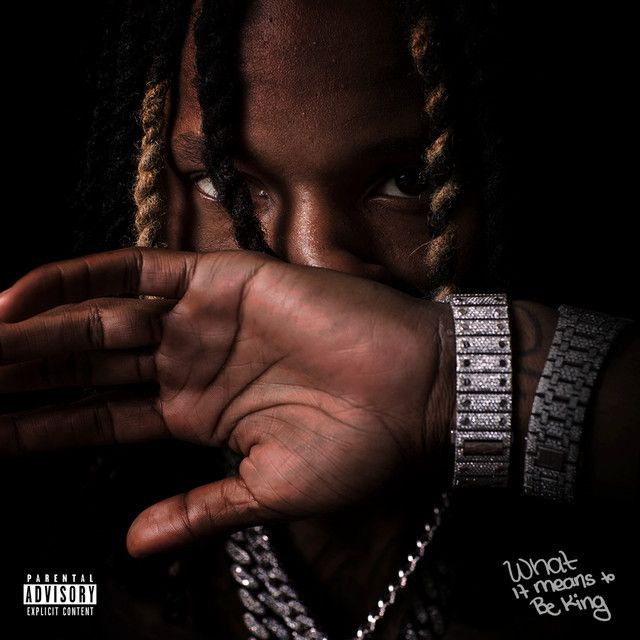
Why "Go N Get Em" Feels So Unforgiving
The meaning of Go N Get Em King Von, Boss Top starts with its bluntest idea: this is a song about retaliation treated like duty. Rather than hiding behind metaphor, the track speaks in direct threats and neighborhood loyalty. That makes it less a reflective confession and more a statement of how power is claimed, protected, and performed.
"Go N Get Em" - King Von ft. Boss Top
(Ayy, pull up, Lam)
Von
Loading lyrics...
Unable to load lyrics
We're unable to display the lyrics at this time. Please try again later.
King Von and Boss Top both came out of Chicago's drill scene, a style known for stark street detail, aggressive delivery, and heavy low-end production. In that context, “Go N Get Em” fits a familiar drill frame, but it also stands out for how little emotional distance it keeps from its subject. The song does not step back. It presses forward.
The Core Message Beneath the Threats
At the center of the song is a group mentality. The hook repeats a promise to pursue an enemy, and that repetition turns revenge into policy. When they say we gon' go and get him
, they are not describing one burst of anger. They are describing a code.
That code is reinforced by other lines that question whether rivals are real shooters or just pretending. A phrase like what you doin' with that pistol?
mocks fake toughness while also drawing a line between image and action. In this world, reputation matters, but action matters more.
Interpretation: The song is not only about one target. It is about proving authenticity in a setting where any sign of weakness can be exploited. The threats become a way to protect status.
Watch the official Go N Get Em
music video
King Von's Verse: Survival as a Street Rulebook
King Von's verse gives the track its bleakest logic. He lays out a world where trust is thin, betrayal is common, and every movement requires caution. When he references money on someone's head and a friend turning killer, the point is not surprise. The point is that betrayal has become normal.
He also frames this mindset as something learned early. The idea that he stayed armed even as a student turns violence into environment, not exception. A short line like grew up in the zoo
works as compressed imagery for chaos, danger, and constant threat.
That is why one of the verse's most important ideas is the song's harsh binary: Either you eat or you food
. Paraphrased, the message is simple and cold—someone dominates, or someone gets consumed. There is no stable middle ground.
A Narrator Who Sounds Certain
Von's delivery matters here. He raps with the calm certainty that made many listeners connect with his storytelling on songs like “Crazy Story.” According to coverage from outlets like Billboard and Pitchfork, his appeal often came from vivid, cinematic street narratives. Even when this track is less story-based than some of his best-known work, that same confidence gives the threats weight.
Boss Top's Verse: Status, Territory, and Drill Swagger
Boss Top extends the same world but shifts the focus slightly. His verse spends more time on weapon preference, money, fashion, and neighborhood identity. That does not soften the violence; it ties violence to status.
In drill, luxury details often sit beside brutal lines. Here, designer brands and jewelry are not random flexes. They show what power looks like after survival: money, visibility, and fear. He also pushes territorial pride hard, ending with a line that frames O'Block as the city's real center of authority.
Interpretation: Boss Top's verse suggests that in this world, image is not separate from danger. Drip, weapons, and neighborhood loyalty all become parts of the same public identity.
Why the Hook Hits So Hard
The hook is the song's engine. It repeats the mission, raises the stakes, and adds funeral imagery that makes the threat feel immediate. Even the insult about showing up with a tissue pushes the song's cruelty beyond revenge into humiliation.
That matters because the chorus does not express grief, doubt, or conflict. It expresses momentum. The repetition keeps listeners trapped in the same loop of pursuit, attack, and aftermath.
On my mama, I'm official
Magazines for that issue
Those short phrases connect personal oath and weapon imagery. One claims legitimacy; the other supplies the means. Together, they make violence sound like proof of identity.
How the Production Supports the Meaning
The beat supports all of this by leaving plenty of space for the rappers' voices to feel close and forceful. Like much Chicago drill, the production relies on dark synth tones, hard drums, and a repetitive structure that emphasizes threat over melody. The opening producer tags and ad-libs create a live-wire feel before the verses even begin.
Because the instrumental is not overly busy, the listener's attention stays on cadence and menace. Each repeated phrase lands harder. The result is a track that feels less like a dramatic narrative arc and more like a pressure chamber.
The Bigger Context Around the Song
King Von, born Dayvon Bennett, built a reputation as one of drill's clearest storytellers before his death in 2020, a fact widely documented by major outlets such as The New York Times and Rolling Stone. Boss Top comes from the same O'Block orbit, so their pairing adds real scene context to the song's claims about loyalty and territory.
That context shapes the meaning of Go N Get Em King Von, Boss Top. Listeners do not hear these verses as fantasy detached from place. They hear them as part of drill's broader tradition of turning neighborhood conflict, memory, and identity into hard-edged performance.
Final Take on "Go N Get Em"
In the end, “Go N Get Em” is about revenge as identity, not just revenge as action. Its verses build a world where trust collapses, power must be displayed, and reputation is guarded with force.
Interpretation: The song's harshest point may be that nobody sounds free inside this code. They sound committed to it, trapped by it, and determined to survive through it.
Disclaimer: This interpretation is based on the lyrics, performance, and drill context. Song meanings can vary from listener to listener, and not every reading reflects confirmed artist intent.








