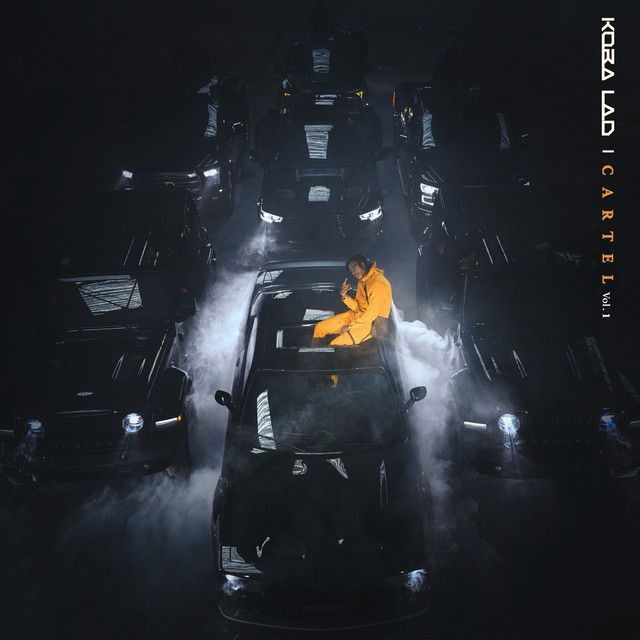
What 'Daddy chocolat' Really Flexes
The meaning of Daddy chocolat Koba LaD, Gazo is not hard to hear on the surface: it is a flex-heavy rap song about desire, image, money, and power. But beneath that blunt exterior, the track also hints at something less stable. Their verses keep circling back to fame, distrust, and the strange mental drift that comes after “making it.”
"Daddy chocolat" - Koba LaD, Gazo
La mala est gangx (hey)
Koba, grr
Loading lyrics...
Unable to load lyrics
We're unable to display the lyrics at this time. Please try again later.
Koba LaD and Gazo are major figures in French rap, each known for hard delivery and street-centered storytelling. The song brings those personas together in a way that feels both playful and aggressive. Even without needing every line to be literal, listeners can hear a world where status is everything, and peace is hard to hold onto.
More Than a Provocative Hook
At first, the song seems built around shock value. The chorus uses a sexual scenario and the nickname Daddy chocolat
to create an instant image of seduction, control, and swagger. Paraphrased simply, they present themselves as so desired and so established that other people orbit around them.
But the hook is not only about lust. It also turns attraction into proof of status. In that sense, romance barely matters. Desire is treated like another luxury item, right next to cars, brands, and public respect.
That is why the line about critics wanting an embrace after attacking them matters. When they mention people who once judged them now wanting closeness, they frame success as something that rewrites social relationships. The song is not about intimacy in a soft sense. It is about how power changes who comes near.

Watch the official Daddy chocolat
music video
Fame Here Feels Loud, Not Peaceful
One of the most revealing moments is when they say on a percé
and then admit they sometimes forget who they are. That is a sharp turn. Instead of sounding fully satisfied, they sound briefly disoriented.
Interpretation: this suggests that success has not made them calm. It has made life faster, noisier, and more fragmented. They recover their identity not through reflection, but through external signs: attention, lust, Paris street imagery, and visible wealth.
That pattern matters. The song keeps showing identity as performance. They know who they are when others react to them, envy them, or desire them. This gives the track an unstable core. The flex sounds strong, but it also sounds like something that must be repeated to stay real.
Enemies, Fake Friends, and a Cursed Mood
Another key part of the meaning of Daddy chocolat Koba LaD, Gazo is distrust. They mention conflict, failed loyalty, and people switching sides once fame arrives. A phrase like on est maudit
pushes that further. Even while surrounded by designer labels and expensive cars, they talk as if bad luck or damage still follows them.
That contrast is central to the song. Luxury does not erase danger. They can arrive in a Ferrari, but the emotional climate still feels defensive. Their world is full of rivals who cannot afford to compete and friends who may betray them anyway.
There is also a telling line about wanting to fix a situation but instead choosing chaos. That moment makes the narrator seem impulsive rather than in control. They often sound dominant, yet their choices also keep creating more disorder.
How the Duo Split the Energy
Koba LaD brings a more erratic, combustible feel. His presence makes the song sound messy in a useful way, like the flex could tip into trouble at any second. Gazo, by contrast, sounds colder and more economical, turning lines about money and retaliation into something almost routine.
Together, they create two shades of the same persona: one impulsive, one calculated. That balance gives the track momentum. It does not feel like a confession, but it does feel revealing.
Why the Sound Matters So Much
Production-wise, the beat leans into modern French rap with drill-friendly weight: hard low end, clipped rhythm, dark space, and ad-lib punctuation. The opening tag and repeated vocal cues make the song feel instantly branded, as if identity itself is part of the beat design.
That matters because the instrumental leaves little room for warmth. It pushes forward, creating the sense of a night drive, a threat, or a flex delivered from behind tinted glass. When they mention lowering the window in Paris, the sound already feels like motion through the city.
Interpretation: the production turns bragging into atmosphere. The darkness in the beat suggests that money and sex are not shown as joy alone. They are shown as part of a tense survival script.
A Few Symbols That Carry the Song
Several motifs repeat across the track:
- Cars and movement: symbols of control, escape, and visibility.
- Luxury brands: proof of arrival, but also armor.
- Sexual boasting: less about romance than dominance.
- Paris imagery: a stage where success gets displayed.
- Violence and revenge language: reminders that status still feels contested.
Even the phrase racks sur racks
is less about simple celebration than accumulation as self-defense. The same goes for faire l'accolade
: closeness is framed as opportunistic, not sincere.
So What Is the Song Really Saying?
At its core, this is a song about how success looks from inside a hardened rap persona. It looks flashy, sexual, rich, and victorious. But it also looks repetitive, suspicious, and emotionally numb.
The meaning of Daddy chocolat Koba LaD, Gazo is not that fame solved anything. If anything, the song suggests that fame intensified what was already there: appetite, rivalry, ego, and distrust. The hook makes that message sound catchy. The verses make it sound costly.
Final takeaway
Their track works first as a raw flex anthem, but its strongest subtext is instability. They present power as something visible and loud, yet never fully secure.
Disclaimer: This interpretation is based on the lyrics, performance, and musical context, and other listeners may reasonably hear different meanings.







