Enemy of God by Kreator Meaning Explained
The meaning of Enemy of God Kreator comes through fast: this is a song about war, fanaticism, and the collapse of moral order. It does not sound like a personal story. Instead, they frame a whole world sliding into chaos, where corrupt rulers, broken systems, and violent belief turn society against itself.
"Enemy of God" - Kreator
Gather united in grief
Nothing is left from the world they have known
Loading lyrics...
Unable to load lyrics
We're unable to display the lyrics at this time. Please try again later.
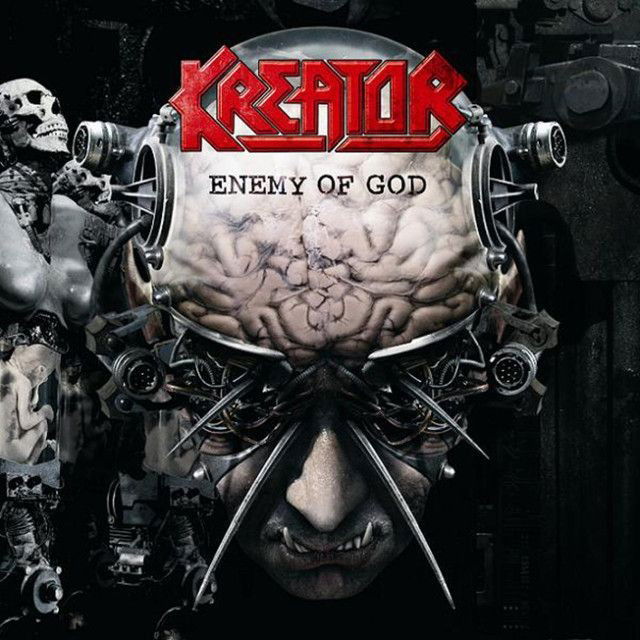
Kreator have long been known as a German thrash metal band with political and social themes in their work, and "Enemy of God" fits that pattern. The song is the title track of the band's 2005 album Enemy of God, written by Mille Petrozza, Kreator's frontman and principal songwriter. Those factual details are widely documented in standard band and album references.
A World After the Rules Break
At the start, the lyrics describe a society that has already been shattered. They picture grief, failed institutions, and leaders brought down too late to save the public. When the song mentions systems have failed
, it is pointing to a collapse bigger than one government. They suggest that politics, religion, and social structures have all stopped protecting people.
That broad scope matters. This is not just a battlefield song. It is about the conditions that make endless conflict possible. The lines about lies from priests and the trust of the blind push the idea that people can be manipulated by authority figures who claim moral power while feeding violence.
Interpretation: They seem to argue that war is not random. It grows when institutions become hollow and when faith, power, and fear are used together.

Watch the official Enemy of God
music video
The Chorus Turns War Into a Moral Verdict
The chorus is blunt and memorable. The title phrase Enemy of God
works like a judgment, not just a description. The next idea, purity and innocence is killed
, shows what is truly under attack: ordinary life, moral clarity, and the vulnerable.
This is one reason the song lands so hard. Rather than focusing on military glory, the chorus frames violence as something spiritually bankrupt. Peace is not simply interrupted; it is described as something that died long before the fighting reached its peak. That gives the song a hopeless, end-stage feeling.
Interpretation: The title may not point to one literal person. It can represent any force that destroys human dignity in the name of ideology, revenge, or power.
Religion, Power, and Fanaticism
One of the song's strongest themes is religious extremism. The phrase clash of demonic religions
is not subtle. They are not attacking one faith tradition so much as the way religion can be twisted into a weapon.
The song also connects that fanaticism to state violence. Despots, aggressors, and elites all appear in the same dark picture. Later, when they describe the fall of palaces and ruling halls, the message becomes clearer: those in power helped create this nightmare, and eventually their own world burns too.
This is part of what makes the song feel political as well as spiritual. It sees war as a system, not just an event. Fanatics do damage on the ground, but rulers and institutions help build the machine.
How the Lyrics Move From Warning to Ruin
The song follows a rough timeline:
- Society breaks down under corruption and failed control.
- Peace ends and a new age of revenge begins.
- Religious and political violence spread outward.
- Civilization reaches open collapse.
- Even the powerful lose control of what they unleashed.
That structure gives the track momentum. By the time they arrive at imagery like the palace falls
and a thousand fires burn
, the song sounds less like a warning and more like a vision of total ruin.
Why the Music Feels So Merciless
The meaning of Enemy of God Kreator is not carried by lyrics alone. The music matters just as much. The song uses fast thrash riffs, relentless drumming, and a hard, sharpened guitar tone to create pressure from the first seconds. Petrozza's vocal delivery is harsh and commanding, which keeps the message from sounding abstract.
There is very little softness in the arrangement. The riffs feel like a constant push forward, almost like marching into disaster. That mirrors the lyric content: once revenge and fanaticism are unleashed, nothing slows the descent.
The production also helps. The sound is clean enough for the riffs to hit with precision, but still aggressive enough to feel dangerous. That balance keeps the song from becoming muddy. Instead, it feels focused, like an accusation delivered at full volume.
Two Strong Ways to Read the Song
A direct anti-war statement
The most grounded reading is that the song condemns war and the ideologies that fuel it. The references to genocide, collapsing freedom, and dead innocence support that clearly. In this reading, the title names war itself as the true enemy.
A wider attack on moral corruption
A second reading is broader. Here, the song is about any system that turns people away from empathy and toward cruelty. Under that view, the "enemy" includes corrupt religion, blind obedience, elitist power, and the human hunger for revenge.
Both readings can be true at once. That is part of the song's strength.
Why It Still Hits
What keeps "Enemy of God" powerful is its scale. They are not singing only about one place or one year. They describe a cycle that listeners can recognize in many eras: fear becomes ideology, ideology becomes violence, and violence destroys the innocent first.
That is why the track still feels urgent. Its anger is huge, but its target is clear.
Disclaimer: This article offers interpretation based on the lyrics, the band's style, and the song's musical context. Song meaning can remain open to different listener views.








