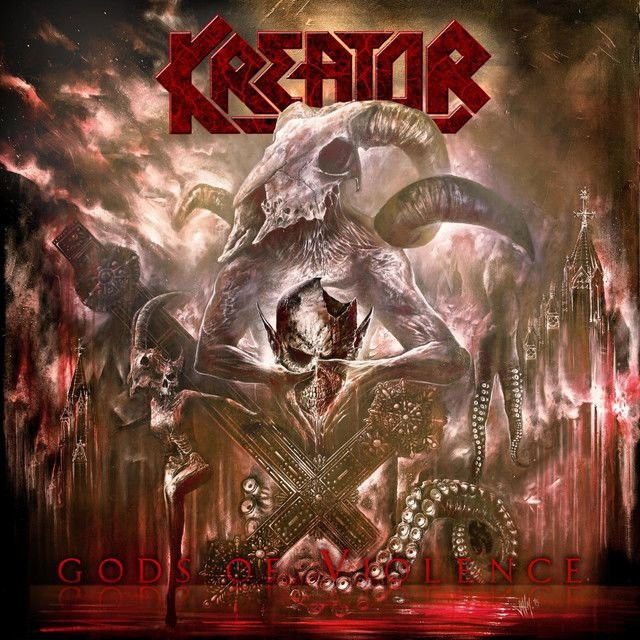
Totalitarian Terror by Kreator
The meaning of Totalitarian Terror Kreator centers on resistance. The song imagines a world warped by fear, prejudice, and state-like violence, then answers that darkness with collective defiance. It is not subtle, and that is part of its power: Kreator turn political anxiety into a battle cry.
"Totalitarian Terror" - Kreator
Spreading from the fallen Tower of Babel
Bread and circuses means
Loading lyrics...
Unable to load lyrics
We're unable to display the lyrics at this time. Please try again later.
Kreator are one of Germany’s most important thrash metal bands, formed in Essen in the 1980s, and their long career has often mixed extreme music with social and political themes, as noted in the band’s official history and major music references like Britannica and AllMusic. In this song, they use that tradition to attack oppression and celebrate organized resistance.
A Thrash Song About Power and Pushback
At its core, the track is about what happens when a society is ruled by manipulation and cruelty. The opening lines throw the listener into a climate of hate, then suggest that spectacle and distraction keep people from seeing the truth. When the lyric mentions Bread and circuses
, it points to an old idea: leaders can control people by feeding them entertainment instead of honesty.
Interpretation: The song presents totalitarianism as more than one dictator or one regime. It describes a wider system of fear, prejudice, and public numbness. That makes the message feel broader and more modern.
The title phrase, Totalitarian Terror
, works like both diagnosis and warning. It names a political condition where freedom is choked by violence, propaganda, and force.
Watch the official Totalitarian Terror
music video
The “We” Voice Makes It a Collective Anthem
One of the most important parts of the song is its point of view. The speaker keeps returning to we
, especially in lines like We're not afraid to live
and We're not afraid to die
. Instead of following one victim or one hero, the song speaks as a group.
That choice matters. It turns the lyrics into the voice of a movement, not a diary entry. The people in the song are not passive observers. They see themselves as an answer to radicalization and as a force that can outlast bloodshed.
How the chorus sharpens the theme
The chorus condenses the whole message into one hard idea: when liberty is crushed, resistance becomes necessary. The phrase Resistance must rise
is simple, but it gives the song its moral center. Terror may feed the oppressor, but it also creates the conditions for rebellion.
Images of Collapse, Control, and Survival
The lyrics use heavy symbolic language to show social breakdown. The reference to the Tower of Babel suggests failed human unity and confusion. Cities drowning in violence turn politics into nightmare imagery. Later, the song imagines flags turning red and hearts turning black, which paints ideology and emotion in extreme colors.
There is one especially important moment near the end:
When all the flags turn red
And all the hearts turn black
The bridges have collapsed
The darkness light the stars
These lines picture a world where connection has failed. Bridges collapse, hearts darken, and public life becomes morally damaged. Yet even here, there is a strange spark: stars still appear in darkness. That suggests hope can survive ruin.
Interpretation: The song’s apocalyptic images are less about literal end-times than about political and moral collapse. It sounds like the world is breaking so that people finally wake up.
Revolution, But With a Moral Focus
The lyrics do not only describe horror. They also argue for response. The song says hate campaigns are ending and speaks of dethroning rulers through civil disobedience. That phrase is important because it gives the track a sharper political edge. It is not pure chaos for chaos’s sake.
Instead, the song imagines resistance as necessary, even redemptive. A line like keep the spark alive
suggests that hope must be maintained on purpose. The people in the song stay connected across generations, with the old and young sharing the same fight.
That detail gives the track more depth than a simple revenge fantasy. It is about memory, solidarity, and persistence.
How the Music Carries the Message
Kreator’s sound is crucial to the meaning of Totalitarian Terror Kreator. The song’s fast riffing, sharp rhythmic attack, and aggressive vocal delivery make the message feel immediate. Thrash metal has always been good at expressing panic, anger, and urgency, and this track uses all three.
The guitars hit like alarms. The drums push forward with a militarized feel, which fits a song about power and resistance. Mille Petrozza’s vocal style does not soften the words; it spits them out with command and tension. Even without studying every lyric, a listener can hear confrontation in the performance.
Songwriting is credited here to Mille Petrozza and Jürgen Reil, two core Kreator figures whose work helped define the band’s sound over decades. That history matters because the track does not feel like a one-off political statement. It sounds like part of a longer artistic mission.
Why the Song Still Lands
What makes the song effective is its directness. It does not hide behind vague poetry. It names oppression, shows how people are distracted, and insists that survival depends on resistance.
For U.S. listeners, that message can connect beyond any one country or headline. The song speaks to any moment when fear is used to control public life. Its language is extreme, but that is common in thrash metal: exaggeration becomes a tool for moral clarity.
In the end, “Totalitarian Terror” is about refusing surrender. It says systems of cruelty may look overwhelming, but they are not final. The song’s world is full of blood, darkness, and broken institutions, yet it keeps returning to endurance. That is why it feels less like a lament and more like a warning siren turned into an anthem.
Disclaimer: This interpretation is based on the released lyrics, known artist context, and the song’s musical style. As with any art, listeners may hear different meanings in it.








