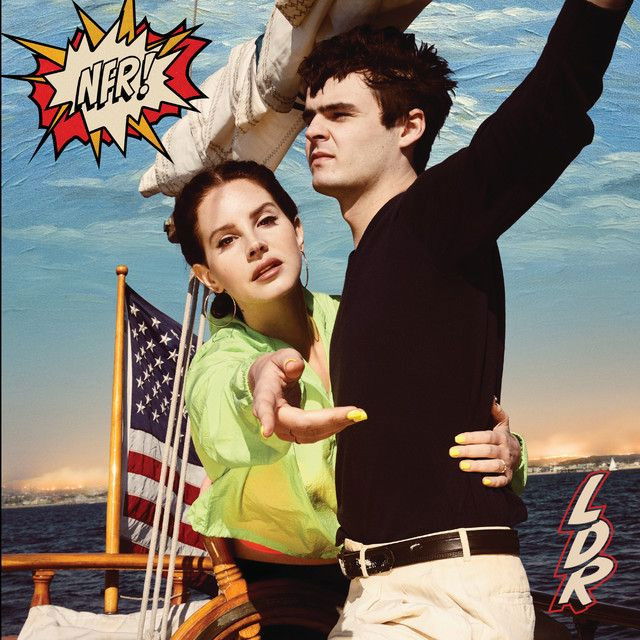
Norman fucking Rockwell by Lana Del Rey
A piano sighs, the voice leans in, and the first line stings. If you’ve wondered about the meaning of Norman fucking Rockwell Lana Del Rey, this track is a sharp, funny, and tender portrait of a relationship that looks cool on the surface but keeps breaking underneath. It’s also a side-eye at the American dream itself, wrapped in a soft-rock lullaby.
"Norman fucking Rockwell" - Lana Del Rey
You fucked me so good that I almost said, "I love you"
You're fun and you're wild
Loading lyrics...
Unable to load lyrics
We're unable to display the lyrics at this time. Please try again later.
A postcard with bent corners
At heart, the song is about falling for someone who is dazzling but undercooked. She admires his spark, yet she’s stuck with the fallout of his moods and vanity. When she throws out You're just a man
, it sounds resigned, not cruel. The line shrinks his grand persona down to ordinary habit—another guy who loves the romance of being a genius but can’t meet the moment.
Interpretation: The title flips Norman Rockwell’s glossy Americana into a modern complaint. Del Rey isn’t rejecting nostalgia outright; she’s noting how the cultural picture—clean, confident, heroic—doesn’t match the real partner she’s dealing with.

Watch the official Norman fucking Rockwell
music video
Who’s speaking, and why it stings
The narrator speaks directly to a lover who’s both irresistible and exhausting. The opener Goddamn, man child
sets the tone: amused, fed up, and still somehow affectionate. She calls him a self-loathing poet
, which frames his sadness as part performance, part shield. The joke lands because she knows the type, and because she’s still there—caught between eye-rolls and empathy.
Interpretation: The song critiques masculinity-as-performance. He wears the pose of the tortured artist, but his partner pays the tax—waiting out mood swings, propping up ego, carrying the relationship’s emotional labor.
Story beats in slow motion
- She clocks the behavior early with
Your poetry's bad
, but the barb hides care—she’s honest because she’s invested. - He’s a scene fixture, a
Laurel Canyon know-it-all
, chasing legacy by association. She sees through it yet stays. - The chorus’s image—
you color me blue
—marks the cost: his dramas tint her whole world. - She chooses presence over fantasy, doubling down even as she recognizes the gap between promise and delivery.
These beats loop like the song’s gentle progression, making the cycle feel inescapable and familiar.
The hook’s quiet verdict
You're just a man
isn’t a blanket insult; it’s an x-ray. The phrase shrugs at grand excuses and names the pattern. Pairing it with you color me blue
turns diagnosis into mood—the sadness is constant, but it’s also aesthetic, almost pretty. That tension—hurt, made beautiful—is classic Del Rey. It lets listeners feel both the bruise and the bloom.
Pianos, pastels, and a sigh: how it sounds
Musically, this is a piano-led ballad with soft-rock hues. Jack Antonoff’s production keeps it spacious: close-mic’d vocal, warm keys, understated strings, and little percussion. The arrangement resists drama, letting small details carry weight—the lingering chord, the breath before a line. That restraint mirrors the lyric’s tone: not a blowout fight, but the long exhale after one.
Interpretation: The quiet mix acts like a camera zoomed in on a face. With fewer distractions, every quip and confession lands. The nostalgic palette nods to mid-century pop, strengthening the Rockwell contrast—pretty surfaces, complicated lives.
America in the mirror
Why invoke Norman Rockwell? He’s shorthand for ideal American scenes—porches, flags, smiling families. By adding an f-bomb, Del Rey punctures the frame. The lover becomes a symbol for a country that tells a heroic story while dodging hard work. She’s charmed by both myths, yet too self-aware to keep pretending. The relationship critique doubles as a cultural one: charisma without accountability leaves people blue.
Alternate angles worth holding
- Interpretation: It’s satire of the L.A. art-boy archetype. The references—poet, Laurel Canyon—aim at a specific scene and its self-myths.
- Interpretation: It’s empathy for a depressive partner. Her teases are love language; the song documents care-taking fatigue more than condemnation.
Both readings fit because the writing balances bite with warmth. She names the flaw but also the ache of staying.
Takeaway and listener note
The meaning of Norman fucking Rockwell Lana Del Rey lands here: it’s a beautiful shrug at a man, a scene, and a country that promise greatness but deliver moodiness. The piano glows, the jokes slip in, and the sadness paints the room a familiar shade of blue.
Disclaimer: Song meanings are interpretive. This reading draws on the lyrics, artist context, production choices, and public commentary; your own experience may lead to a different view.
Sources
- https://www.rollingstone.com/music/music-features/lana-del-rey-cover-story-2019-871568/
- https://pitchfork.com/reviews/albums/lana-del-rey-norman-fucking-rockwell/
- https://www.nytimes.com/2019/08/29/arts/music/lana-del-rey-norman-fucking-rockwell-review.html
- https://www.npr.org/2019/08/30/755408147/first-listen-lana-del-rey-norman-f-cking-rockwell









