Why 'Moving On' Refuses Easy Closure
The meaning of Moving On Leonard Cohen comes into focus through a simple but painful contradiction: the song is titled as if healing has happened, yet its words keep doubting that healing is real. Rather than offering neat closure, Leonard Cohen presents love as something that lingers, confuses, and keeps rewriting the past.
"Moving On" - Leonard Cohen
Your T-shirts and your evening wear
As for the world, the job, the war
Loading lyrics...
Unable to load lyrics
We're unable to display the lyrics at this time. Please try again later.
For many listeners, that is why the song hits so hard. It sounds like a farewell, but it also sounds like a person catching themselves in a lie.
A Love Song That Doubts Its Own Ending
At its core, "Moving On" is about a speaker looking back on a lost relationship and realizing that memory is stronger than any tidy story about recovery. They remember the lover's style, moods, beauty, and emotional power. The details are intimate and ordinary, which makes the loss feel lived-in rather than dramatic.
The key emotional turn comes in the refrain, where Cohen asks Who's moving on?
and Who's kidding who?
Those questions matter more than any statement in the song. They imply that both people may pretend to be fine, but the bond still has force.
Interpretation: the song is less about successfully letting go than about exposing the performance of letting go.

Watch the official Moving On
music video
The Personal Context Behind the Song
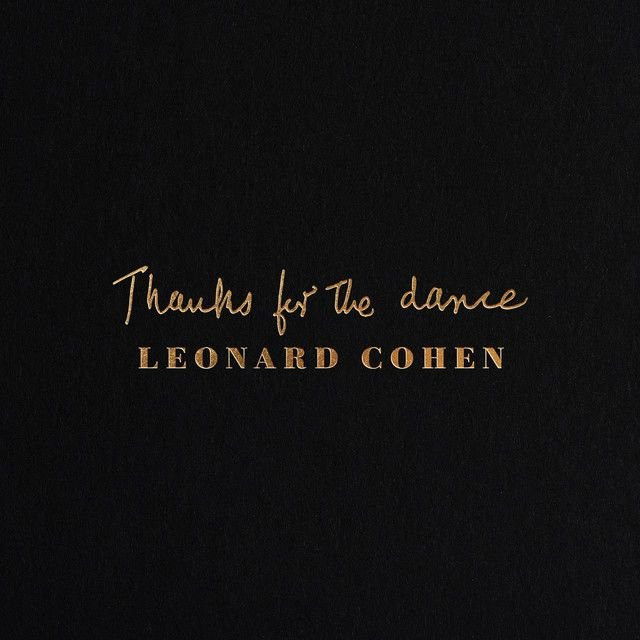
Factually, "Moving On" appeared on Thanks for the Dance in 2019, a posthumous Leonard Cohen album completed by his son Adam Cohen after Leonard's death (Songfacts). That context matters because the song already carries the weight of final messages and last reflections.
Songfacts also reports that when Leonard recorded the vocal, he had just learned that Marianne Ihlen had died. Adam Cohen said the session felt like a "postscript" to "So Long, Marianne" and described trying to revive a Mediterranean atmosphere around the performance (Songfacts).
That does not prove the song is only about one person. But it strongly supports reading it as a late-life return to a formative love.
How the Verses Build a Complicated Portrait
One of the sharpest things in the song is how Cohen balances affection with realism. The speaker recalls loving a partner's everyday look, including Your T-shirts
and finer clothes too. That pairing suggests devotion to the whole person, not just an idealized image.
But the song also remembers volatility. When the narrator says they loved the moods that threatened every single day
, the relationship becomes more complicated. This was not peaceful romance. It had instability, emotional weather, and maybe even a sense of danger.
Then comes another classic Cohen move: dry wit mixed with desire. He undercuts beauty by calling it more hormonal than the view
. In plain terms, he admits that lust, chemistry, and projection shaped the relationship. That honesty keeps the song from turning sentimental.
What the Chorus Really Reveals
The chorus is where the song's title becomes almost ironic. The line now you're gone
sounds final, but the repeated questioning makes absence feel unreal. The narrator even speaks as if the lost person has faded into myth, as though memory itself is unstable.
Who broke the heart
and made it new
This brief moment captures the song's central paradox. Love damaged the speaker, but it also transformed them. The same person who caused pain also renewed life.
That is a major clue to the meaning of Moving On Leonard Cohen: the song treats heartbreak not just as injury, but as a form of remaking.
Sound, Arrangement, and the Ghost of Romance
The production deepens that feeling. Songfacts notes that Javier Mas, a longtime Cohen collaborator, plays Spanish nylon-string guitar, while Avi Avital contributes mandolin (Songfacts). Those details matter because the arrangement gives the song warmth without making it comfortable.
The guitar suggests an old-world, Mediterranean romance, which fits Adam Cohen's own description of trying to bring back a Greek taverna atmosphere during the session (Songfacts). The mandolin adds light and shimmer, but there is also fragility in the sound.
Instead of swelling into big drama, the music stays poised and reflective. That restraint mirrors the lyric: grief is present, but it is spoken with weary intelligence rather than collapse.
Two Strong Interpretations
A Farewell to a Specific Muse
Interpretation: the song can be heard as Cohen addressing Marianne Ihlen, the great early love linked to "So Long, Marianne." The research support is strong, especially Adam Cohen's comments about the recording context.
In this reading, the song is a late reply from an older man to a woman who shaped his life and art.
A Wider Meditation on Memory
Interpretation: even if listeners set biography aside, the song still works as a universal reflection on how people rewrite old relationships. The repeated questions challenge the common breakup script that one person leaves, the other heals, and life cleanly continues.
Cohen suggests memory does not work that way. Love remains active inside the self.
Why the Song Still Lands
What makes "Moving On" memorable is its refusal to simplify. It honors attraction, mocks illusion, admits dependency, and questions closure all at once. That layered approach is classic Cohen: emotionally direct on the surface, philosophically unsettled underneath.
For U.S. listeners discovering the song through Cohen's final era, it can feel like both a breakup ballad and a meditation on mortality. Loss in the song is romantic, but it is also spiritual. The missing person becomes part of the speaker's identity, and that makes true separation hard to imagine.
In the end, the meaning of Moving On Leonard Cohen lies in that uneasy honesty. The song says people may announce that they are past an old love, yet their memories keep answering back.
Disclaimer: This interpretation blends documented context with critical reading. Like many Leonard Cohen songs, "Moving On" remains open to more than one meaning.








