Why 'The Lady Of Shalott' Still Haunts Us
The meaning of The Lady Of Shalott Loreena McKennitt begins with a woman cut off from life. In Loreena McKennitt’s adaptation, that old story does not feel dusty or distant. It feels immediate: a portrait of someone who can see the world, want it deeply, and still be unable to enter it without paying a terrible price.
"The Lady Of Shalott" - Loreena McKennitt
Long fields of barley and of rye,
That clothe the world and meet the sky;
Loading lyrics...
Unable to load lyrics
We're unable to display the lyrics at this time. Please try again later.
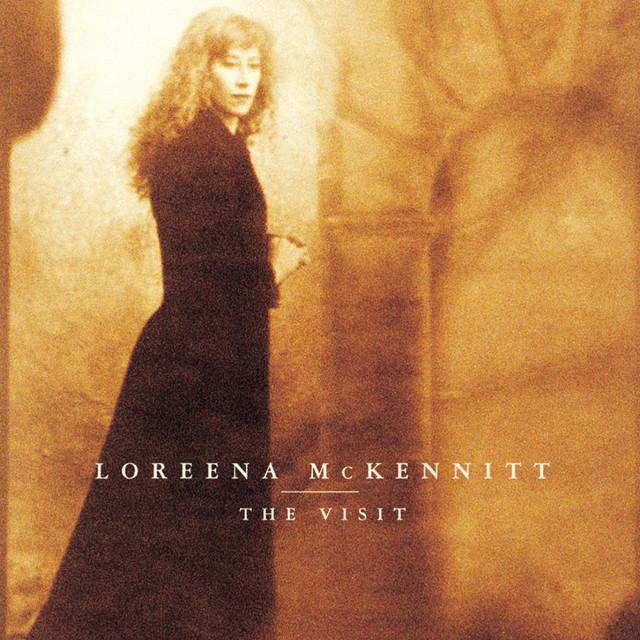
McKennitt’s version appears on The Visit (1991), an album known for blending Celtic, folk, and world-music textures. The song adapts Alfred Tennyson’s famous ballad, first published in 1832 and revised in 1842, one of the poet’s best-known Arthurian works. Factually, the poem centers on a woman isolated near Camelot, forbidden to look directly at the world, and forced to experience life through a mirror.
A Woman Living Through Reflections
At its core, the song is about separation from real life. The Lady is surrounded by beauty, yet she cannot join it. Fields, river, road, and Camelot all move around her, but she remains fixed in place.
She works at a loom and watches reality through a mirror, where only shadows of the world
appear. That phrase matters because it reduces life to copies, not contact. She sees movement, romance, ceremony, and death, but only as images.
Interpretation: this makes the Lady more than a fairy-tale victim. They can hear her as a symbol of anyone who feels trapped behind glass: an artist, a lonely person, or someone stuck watching life instead of living it.
Watch the official The Lady Of Shalott
music video
The Line That Unlocks the Whole Song
One of the most important moments comes when she says, half sick of shadows
. Before that, she has endured the curse without rebellion. After that, the story starts turning.
That short line reveals emotional exhaustion. She is not simply curious. She is starved for reality. The song suggests that routine, safety, and distance have become unbearable.
Why Lancelot Changes Everything
Then Sir Lancelot appears, bright and alive, almost unreal in his beauty. He is not important only as a man or romantic object. He represents the pull of the outside world at its strongest: color, desire, danger, and motion.
When he flashes through the mirror singing Tirra Lirra
, he becomes the sound of life itself. He does not know the Lady is watching, which makes the moment even sadder. For him, the world is open. For her, it is forbidden.
The Curse, the Mirror, and the Cost of Choice
The Lady finally turns toward Camelot. That is the decisive act. The song then gives its most famous image: The mirror cracked
. In plain terms, the barrier between image and reality shatters.
This moment can be read in two ways:
- Factual plot level: she breaks the rule and triggers the curse.
- Interpretation: she chooses reality over illusion, even though it destroys the life she has known.
The web flying apart also matters. Her weaving has been both work and prison. If the web stands for art, then the song asks a painful question: what happens when a person can no longer survive by representation alone?
A Ballad About the Artist — and About Women
Critics have often read Tennyson’s poem as a story about the isolated artist, and that reading fits McKennitt’s version well. The Lady observes, transforms, and weaves experience rather than living it directly. She is creative, but she is also sealed away.
There is also a gendered reading. The Lady is confined, watched from afar, and only fully noticed after she is lost. That makes the ending sting. Camelot finally sees her when she can no longer speak for herself.
The curse is come upon meIn McKennitt’s performance, this moment lands not as melodrama, but as recognition.
The final response from Lancelot is brief and distant. He notices her beauty, but too late. That ending suggests how easily a woman’s inner life can be missed until tragedy makes it visible.
How Loreena McKennitt’s Sound Deepens the Meaning
McKennitt’s arrangement is essential to the song’s power. Her music often draws on Celtic and Mediterranean colors, and here the pacing is patient, solemn, and fluid. The result feels like a river carrying fate forward.
Instead of pushing the poem into theatrical drama, they let the melody breathe. The restrained vocal delivery makes the Lady seem dignified rather than helpless. Harp-like textures, soft percussion, and spacious phrasing create a timeless setting, as if the story exists outside ordinary clock time.
That matters because the production turns the poem’s symbols into feeling. The river sounds inevitable. The tower feels still. Camelot feels bright but far away. McKennitt does not just narrate the story; they make listeners inhabit its distance.
Why the Story Still Connects Now
For modern listeners in the United States, the meaning of The Lady Of Shalott Loreena McKennitt can feel surprisingly current. Many people know what it is like to experience life at a remove: through screens, images, fantasy, or roles they did not choose.
That is why the song still haunts. It is about the hunger to step out of mediated life and into something real, even when reality is risky. It is also about the sadness of being recognized only after one’s suffering becomes visible.
The Lasting Meaning by the River
In the end, this is a song about longing for direct experience. The Lady rejects a life of reflections and chooses reality, but the world she reaches does not save her. That is what gives the ballad its ache.
Interpretation: McKennitt’s version suggests that beauty, art, and desire are all bound up with loss. The song does not offer an easy lesson. It simply leaves the listener with a haunting truth: life at a distance may feel safer, but it can also become unbearable.
Disclaimer: This interpretation reflects common readings of Tennyson’s poem and McKennitt’s musical adaptation. As with any work of art, listeners may hear different meanings in the song.







