
Why “Only the Brave” Hits So Quietly
The meaning of Only the Brave Louis Tomlinson comes down to one striking idea: love is not presented as safe, healing, or easy. Instead, it feels dangerous, lonely, and deeply human. The song turns emotional openness into an act of courage.
"Only the Brave" - Louis Tomlinson
Set fire to history
I'm breaking my own rules
Loading lyrics...
Unable to load lyrics
We're unable to display the lyrics at this time. Please try again later.
Released on Louis Tomlinson’s 2020 debut album Walls, the track closes the record and feels intentionally small and exposed. According to the album credits and release information from Louis Tomlinson’s official site and Sony Music, “Only the Brave” was written by Louis Tomlinson, Andrew Jackson, and Duck Blackwell. That matters, because the song sounds like a final confession after an album full of loss, change, and growing up.
A Love Song That Does Not Trust Love
At its core, the song describes someone who has been near love but has learned to fear what comes with it. Early lines suggest regret, shame, and self-judgment. When the narrator says breaking my own rules
, the song hints that they usually survive by staying guarded.
That is why the emotional tone feels so tense. They are not rushing into romance. They are standing at the edge of it, aware of the cost. The line crying like a fool
adds a layer of embarrassment, as if vulnerability feels almost humiliating.
Interpretation: The song is less about one relationship than about a pattern. It captures the moment when someone realizes their defenses have failed, and that love has reached them anyway.
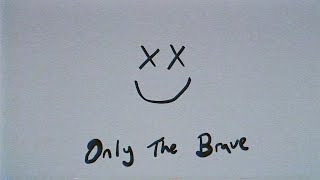
Watch the official Only the Brave
music video
The Chorus Turns Pain Into Courage
The key phrase is only for the brave
. In plain terms, the chorus argues that love requires bravery because it exposes people to heartbreak, rejection, and loneliness.
That idea becomes even sharper with the image of a solo song
. Instead of describing romance as a duet, the lyric frames it as an isolated experience. Even when people fall for someone else, they still have to carry their own fear alone.
This is one of the smartest parts of the writing. The chorus does not promise happy endings. It says bravery matters because there may be no reward except honesty itself.
Burnt Romances, Dying Stars, and Other Big Images
Tomlinson and his co-writers use grand, almost poetic symbols to make private feelings feel larger. The phrase church of burnt romances
mixes religion with heartbreak. It suggests a place built from old disappointments, where people gather around failed love instead of faith.
That image matters because it shows how damaged the speaker feels. Prayer, comfort, and certainty seem far away. The song is full of similar contrasts: history and fire, stars and dying light, cradle and grave. Each image points to something beautiful fading or something permanent being undone.
There ain't enough dying stars
in your sky
This short moment suggests emotional emptiness. Even the sky, usually a symbol of wonder, feels drained. Interpretation: It may describe depression, heartbreak, or the sense that even dramatic beauty cannot match the pain someone feels inside.
A Closing Track That Sounds Like a Confession
“Only the Brave” appears at the end of Walls, and that placement helps explain its power. Closing tracks often sum up an album’s emotional thesis, and this one does exactly that. Across Walls, Tomlinson sings about grief, loyalty, identity, and survival. This song strips those themes down to their most fragile form.
The production is key. Rather than building into a huge pop climax, the arrangement stays restrained. It uses a soft, theatrical style with a chamber-pop feel, letting the vocal sit close to the listener. That sparseness makes the song feel almost private, as if they are overhearing a thought that was never meant to be spoken loudly.
The melody also rises gently instead of exploding. That choice supports the lyric’s emotional message: bravery here is quiet. It is not a victory speech. It is simply the decision to admit the truth.
Who Is Speaking, and to Whom?
The lyrics shift in an interesting way. At times the voice sounds inward, almost like self-talk. Elsewhere, it turns toward a “darling,” which opens the possibility of a direct address to another person.
Interpretation: There are two strong readings:
- They are speaking to a lover, admitting fear while trying to stay emotionally present.
- They are speaking to themselves, using another person as a mirror for their own loneliness.
Both fit the song. That ambiguity is part of what makes it memorable. It never becomes so specific that the listener is shut out.
Why the Song Connects So Deeply
The meaning of Only the Brave Louis Tomlinson lasts because it rejects easy romance clichés. It says love can feel noble and terrifying at the same time. It recognizes that some people do not avoid closeness because they are cold; they avoid it because they know how much it can hurt.
That emotional honesty is very much in line with Tomlinson’s solo work. Reviews of Walls from outlets like NME and Rolling Stone noted the album’s plainspoken sincerity and reflective tone. “Only the Brave” may be one of the clearest examples of that quality.
The Final Take on Its Meaning
In the end, this song is about the cost of feeling deeply. It frames love as something that asks for risk, humility, and surrender. The title does not celebrate fearlessness; it honors people who keep going while afraid.
That is why the song feels so moving. It understands that the bravest thing in romance is sometimes not staying, winning, or being loved back. Sometimes it is simply allowing the heart to speak.
Disclaimer: This interpretation is based on the released lyrics, album context, and publicly available credits. Like most songs, “Only the Brave” can support more than one meaning.








