Why 'Taunt' by Lovejoy Cuts So Deep
Lovejoy’s “Taunt” turns tiny gestures into big red flags. Across brisk guitars and a twitchy groove, the narrator studies a partner’s habits and wonders what they really mean. For readers seeking the meaning of Taunt Lovejoy, this guide follows the clues the song leaves behind and how the sound sharpens the sting.
"Taunt" - Lovejoy
As if auspicious or in my pint
I'll find the answer or a good night
Loading lyrics...
Unable to load lyrics
We're unable to display the lyrics at this time. Please try again later.
A Spiky Portrait of Power and Pushback
“Taunt” is about power dynamics disguised as flirting. The narrator keeps getting mixed signals—cute quirks that also feel like digs. When they notice the little face move—wrinkle up the nose bridge
—they don’t take it as playful. They read it as provocation and admit, I took it as a taunt
.
Interpretation: the song frames attraction and annoyance as two sides of the same coin. The pull is real, but so is the pushback when boundaries blur.
Watch the official Taunt
music video
Who’s Talking, and What’s Their Angle?
The voice is first person, speaking to a you who constantly checks in—Am I alright?
—but then bails from conversations, fidgets, and dodges. The narrator tries to decode patterns and even leans into their own flaws, confessing they get too drunk and jump in
when curiosity spikes. They’re not perfect; they’re persistent. That persistence becomes scrutiny.
Interpretation: they want clarity more than affection. Their listening is less romantic, more investigative—trying to map motive to behavior.
From Table Manners to Catcalls: The Mini‑Plot
A handful of tight scenes sketch the relationship:
- At dinner, the you keeps leaving—
phone calls, toilet breaks
—telegraphing avoidance. - The narrator notices restlessness and labels it:
You’re insecure
. - A rushed exit follows, with the you claiming to dodge street harassment, while time together still feels scarce.
- It escalates when a drink gets thrown—
drench me under your drink
—crossing from tease to disrespect.
Each beat turns a social slip into a pattern. The narrator’s patience wears thin: thank God the time is short
suggests they’re relieved this won’t last.
Why the Hook Hits: The Risk of Never Hearing “No”
The chorus mantra—did anybody ever say no to you?
—is the song’s thesis. It’s not just an insult; it’s a diagnosis. If no one ever sets limits for someone, their quirks can harden into entitlement. The narrator wonders if this is why the small tics feel like little power plays. Interpretation: the hook is boundary-setting disguised as a catchy chant.
Objects and Gestures That Do the Talking
“Taunt” leans on ordinary details—tables, phones, drinks—to show how status gets negotiated in micro-moments.
- The table becomes a test: will they stay present?
- The phone functions like a shield from intimacy.
- The tossed drink flips banter into aggression.
Even the recurring check‑in—Am I alright?
—reads, in context, as self‑focused reassurance, not care. Interpretation: everyday props expose a larger theme—how people perform control without admitting it.
Guitars Like Side‑Eye: How the Sound Works
Lovejoy drive the tension with chiming, slightly overdriven guitars, a punchy bass line, and tight drums that push each verse forward. Verses feel clipped and curious, as if the band is peering around corners. Choruses widen and get louder, mirroring the narrator’s frustration spilling over. The vocal delivery sits between snark and sincerity—enough edge to bite, enough warmth to keep it human.
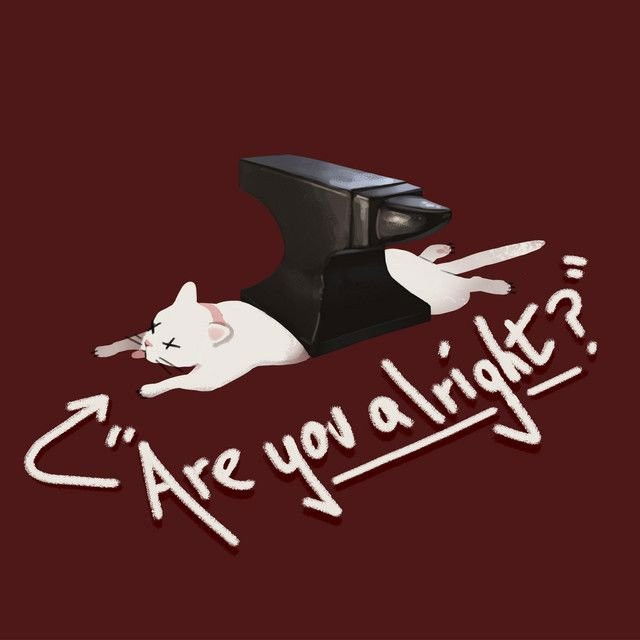
On their 2021 debut EP Are You Alright?, “Taunt” stands out for balancing indie sparkle with punkish impatience. The arrangement leaves space for the hook to land like a callout, so the question lingers after the last hit.
Credits and Context That Shape the Read
The song is credited to Ash Kabosu, Joseph Goldsmith, Mark Boardman, and William Gold (Wilbur Soot). That group authorship suits the track’s band‑in‑a‑room energy. Context matters: as a breakout-era Lovejoy cut, it mapped the band’s lane—smart, slightly caustic, emotionally readable.
Interpretation: knowing this was early Lovejoy helps explain the narrator’s mix of humor and heat. They’re learning where the line is—and how to say when it’s been crossed.
Other Ways to Read It
- Interpretation: Social critique. The repeated challenge about hearing “no” could target broader privilege—calling out how some people move through spaces unchecked.
- Interpretation: Self‑reproach. The narrator admits impulsiveness, so the sting might be partly projection—seeing taunts where there are just nerves.
Both reads can be true. That duality gives the meaning of Taunt Lovejoy its staying power.
Final Thought
“Taunt” isn’t anti‑flirt; it’s anti‑needling. By turning minor slights into a major hook, Lovejoy show how boundaries are drawn in real time. If someone won’t hear “no,” the loudest answer is the exit.
Disclaimer: Song interpretations are subjective. This analysis is one informed reading based on lyrics, performance, and public context.








