
Run by Lucy Spraggan
The meaning of Run Lucy Spraggan comes through fast: this is a song about motion as freedom. It imagines running not just as exercise or travel, but as a way to break from fear, routine, and other people’s limits. The words are simple, but that simplicity is part of the song’s power.
"Run" - Lucy Spraggan
(Oh-oh-oh-oh-oh-oh-oh)
(Oh-oh-oh-oh-oh-oh-oh)
Loading lyrics...
Unable to load lyrics
We're unable to display the lyrics at this time. Please try again later.
Lucy Spraggan has long worked in a direct, story-first lane of British folk-pop and acoustic pop. Factually, they are an English singer-songwriter who first broke through widely in 2012 and later built a catalog across multiple studio albums, including Choices and Balance (Wikipedia). That background matters here, because “Run” feels built on the same clear, relatable writing style that helped define their appeal.
What the Song Is Chasing
At the center of the song is a wish to test the edge of possibility. Early on, the narrator wants to go to the farthest place imaginable, using the phrase end of the world
not as geography but as a symbol. They want to find out whether the limits they have been given are even real.
That idea deepens when the lyric brushes off warnings and received wisdom. In plain terms, the song says that being told something cannot be done only increases the need to try. Interpretation: this makes “Run” less about escape from responsibility and more about reclaiming agency.
The hook adds the emotional reason. When the song says Bye-bye problems
, it does not solve those problems in a literal sense. Instead, it shows the fantasy of movement: if they keep going, maybe the mind can get ahead of the weight it has been carrying.
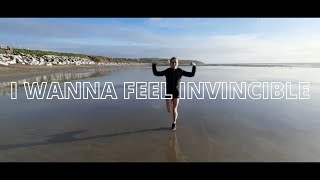
Watch the official Run
music video
The Chorus Turns Running Into a Belief
The repeated run, run, run
works like a mantra. It is catchy, but it also narrows the song’s message into one action. Do not freeze. Do not overthink. Move.
That is why the line about freedom lands so hard. The lyric if you want to be free
turns the song from a private dream into advice. The narrator is not only talking about their own urge to leave; they are speaking outward, almost like a friend urging someone else to stop waiting.
Run 'til the road hits the sea
If you want to be free
Those lines are the song’s clearest image. The road suggests structure and direction. The sea suggests openness and the unknown. When one reaches the other, the song finds a meeting point between order and freedom.
How the Verses Build the Feeling
The verses are short, but they keep adding layers. One key line is feel invincible
, which reveals that the running is emotional before it is physical. This is not just about leaving town. It is about pushing past helplessness.
Another strong detail is the idea of going one more mile “out of principle.” Paraphrased, that means persistence matters even before success appears. The act of continuing becomes its own victory.
Then the song introduces the crossroads. In everyday language, it says a single turning point can change everything. That fits the whole structure of the track: one decision to move can become a new life.
Symbols That Carry the Meaning
Several images do most of the heavy lifting:
- The end of the world: a symbol for the outer edge of possibility.
- The road: purpose, momentum, and personal choice.
- The sea: release, uncertainty, and a bigger life.
- The crossroads: a decisive moment.
- Concrete meeting water: where ordinary life touches freedom.
The last image is especially strong. The song says the place may seem far away, but it is closer than people think. Interpretation: that suggests freedom is not some fantasy destination. It can begin with a mental shift or one brave decision.
Why the Sound Matters Too
Even on the page, “Run” reads like an anthem. In performance terms, the repeated “oh-oh” vocal sounds likely function as lift and release, giving the song a communal feel rather than a private confession. That suits Spraggan’s style, which often favors memorable hooks and plain language over dense poetry.
Lucy Spraggan is commonly associated with folk-pop, indie pop, and acoustic writing (Wikipedia). Because of that, a song like this works best when the production keeps the rhythm driving and the vocal front and center. Interpretation: whether the arrangement leans acoustic or full pop, the repeated hook is designed to feel like forward motion, almost like feet hitting pavement.
There is also an important emotional contrast in the song’s sound. The words mention problems, distance, and doubt, but the chant-like repetition feels hopeful. That contrast helps explain why the track does not sound defeated. It sounds determined.
A Few Stronger Readings
There is more than one way to hear the meaning of Run Lucy Spraggan:
Reading One: An escape song
This is the most obvious reading. The narrator wants to outrun pressure, worry, and stagnation. Running becomes a release valve.
Reading Two: A self-renewal song
A deeper reading is that they are not running away from life, but toward a fuller version of it. The goal is not disappearance. It is transformation.
Reading Three: A quiet rebellion
By rejecting what they have “been told,” the song can also be heard as a refusal of other people’s rules. In that reading, freedom means trusting their own direction.
Why the Song Connects
What makes “Run” land is its lack of clutter. It does not bury the listener in detail. Instead, it uses a few clear images and lets them grow: distance, road, sea, freedom.
That approach fits Spraggan’s broader appeal as an artist who has often written in accessible, conversational language. In a 2013 statement about their songwriting, they said they wanted to put their own take on events people can relate to (Wikipedia). “Run” does exactly that. Almost anyone knows the feeling of wanting to leave, breathe deeper, and test whether life could be bigger.
In the end, the song is less about reaching a literal destination than choosing motion over fear. It says the horizon may not be as far away as it looks.
Disclaimer: This interpretation is based on the released lyrics, available artist context, and musical cues. As with any song, listeners may hear different meanings in “Run.”









