Why "Fly" Feels Bigger Than Its Few Words
The meaning of Fly marshmello, Leah is surprisingly rich for such a minimal song. On paper, there is barely any lyric at all. In practice, that simplicity is the point. Marshmello and Leah Culver build a track that feels like a burst of release, using one central idea to suggest freedom, confidence, and emotional lift.
"Fly" - marshmello, Leah
I can fly
I can fly
Loading lyrics...
Unable to load lyrics
We're unable to display the lyrics at this time. Please try again later.
Released on March 9, 2018, as a Marshmello single featuring Leah Culver, the song was written and produced by Marshmello, with Leah Culver credited as the featured vocalist according to widely cited release information. It also reached No. 7 on Billboard’s US Hot Dance/Electronic Songs chart, showing that its simple hook connected with a large audience.
The Core Message Hides in Plain Sight
At the center of the song is the repeated phrase I can fly
. That line does not seem complicated, but it carries the whole emotional weight of the track. Rather than describing a literal superpower, the song most likely uses flight as a symbol.
Interpretation: They seem to present “flying” as a state of feeling unburdened. It can mean escaping pressure, rising above pain, or realizing that fear no longer has control. Because there are no detailed verses, listeners are invited to project their own struggles and hopes onto that idea.
That is why the song works. Instead of narrowing the message, it opens it up. A listener can hear empowerment, healing, ambition, or even simple joy in that one repeated claim.

Watch the official Fly
music video
A Minimal Lyric, a Maximum Feeling
Most pop songs explain themselves through scenes, relationships, or conflict. This one does the opposite. It strips away almost everything except the emotional headline. Along with I can fly
, the vocal ad-libs like yeah, whoa
and oh oh
do not add plot, but they do add lift.
Those sounds matter because they act almost like exhaling. They make the song feel less like a story and more like a sensation spreading outward. The listener does not follow events; they follow momentum.
I can fly
I can fly
Even in this brief two-line refrain, the repetition becomes the message. The song is not trying to prove anything with detail. It is trying to make belief feel real by saying it again and again.
Why the Repetition Matters So Much
Repetition in dance music often creates trance-like focus, and that is exactly what happens here. Each return to I can fly
sounds like a stronger version of the last one. What begins as a statement becomes affirmation.
Interpretation: They may be hearing a song about self-talk. In that reading, the hook sounds like someone teaching themselves courage. The line keeps coming back because confidence often has to be repeated before it feels true.
There is also a childlike purity to the wording. The phrase is direct, almost innocent. That makes the emotion feel universal. It does not belong to one age group or one life situation.
How the Sound Sells the Idea
The production is a big part of the meaning of Fly marshmello, Leah. The track is commonly described as trap, and its structure fits Marshmello’s electronic style: clean vocal focus, bright synth textures, and rhythmic drops that make the hook feel airborne rather than heavy.
The music does not push darkness or tension for very long. Instead, it aims upward. The beat gives the song motion, while the airy vocal treatment creates a floating effect. Leah Culver’s delivery is crucial here. Her voice is not over-sung; it stays light enough to match the song’s sense of lift.
That balance between beat and openness helps explain the song’s emotional impact. If the production were denser or more aggressive, the message might feel forceful. Instead, it feels freeing.
Artist Context Helps Explain the Simplicity
Marshmello has built much of their career on highly accessible electronic pop, often pairing bright melodies with emotionally direct hooks. “Fly” fits that pattern. It arrived in 2018 between other major singles and showed how they could make a radio-friendly dance track from very little text.
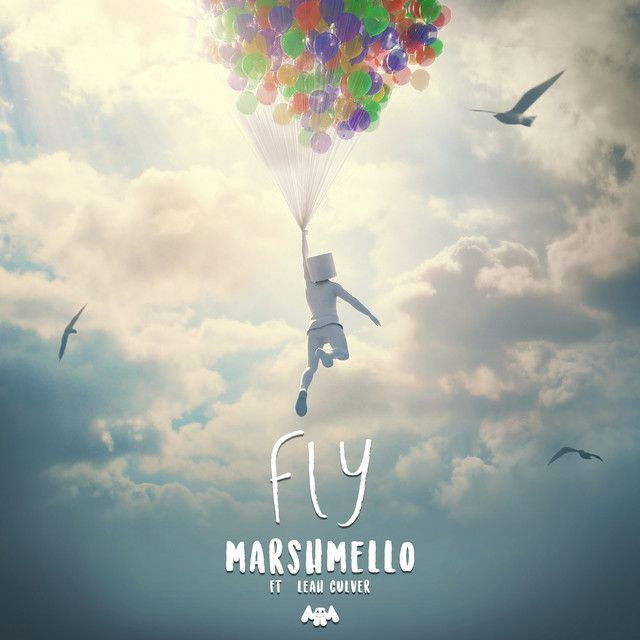
The animated video often associated with the song adds another useful layer. In it, Marshmello appears to drift above New York City with balloons before the fantasy is revealed as imagined from a park bench. That image supports the song’s emotional logic: flight may be fantasy, but the feeling behind it is real.
Interpretation: They could read that visual as a reminder that escape begins in the mind. Even if circumstances do not change right away, imagination can still create relief.
A Song About Escape, or About Belief?
There are at least two strong ways to hear the track:
- Escape reading: “Flying” means leaving stress, sadness, or limits behind.
- Empowerment reading: “Flying” means discovering inner power and trusting it.
Both fit the song. The lack of narrative detail is not a weakness; it is what makes both readings possible. A listener who feels stuck may hear release. A listener chasing a goal may hear motivation.
That flexibility is likely why the song has lasted beyond its original release cycle. It offers a clean emotional canvas.
Why This Tiny Song Connects
The best way to understand the meaning of Fly marshmello, Leah is to see it as a mood piece with a message. It says very little, but what it says is immediate and easy to feel. Through repetition, bright production, and Leah Culver’s airy vocal, the song turns a simple phrase into a moment of emotional expansion.
In other words, “Fly” is less about describing freedom than creating it for three minutes. That is why it resonates.
Disclaimer: This interpretation is based on the song’s lyrics, sound, and public release context. As with many minimal songs, meanings can vary from listener to listener.









