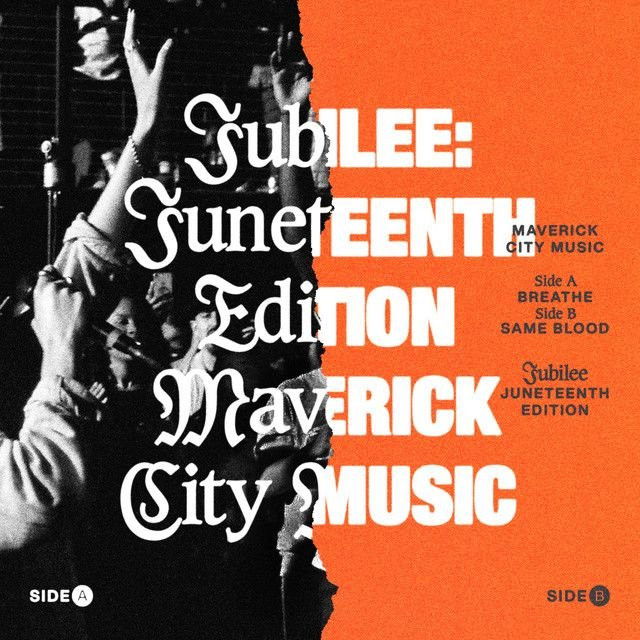
Why "Jireh" Feels Bigger Than Comfort
The meaning of Jireh Maverick City Music, Chandler Moore, Naomi Raine, Mav City Gospel Choir starts with a simple claim: love from God is not earned. This worship song does not treat faith as a prize for people who perform well. Instead, it says care, identity, and provision are already given.
"Jireh" - Maverick City Music ft. Chandler Moore, Naomi Raine, Mav City Gospel Choir
Than I am right now
Wasn't holding You up
Loading lyrics...
Unable to load lyrics
We're unable to display the lyrics at this time. Please try again later.
That is why the song has connected so strongly with listeners in the United States. It speaks to pressure, insecurity, and fear, then answers them with a steady refrain: God is enough, and they are already loved.
A Worship Song About Enoughness, Not Achievement
Factually, “Jireh” is associated with Maverick City Music and Elevation Worship, and it was written by Chandler Moore, Chris Brown, Naomi Raine, and Steven Furtick, as reflected in official credits and publishing listings from the artists and major music databases. The name “Jireh” points to "Jehovah Jireh," a biblical title linked to God's provision in Genesis 22.
The song’s central message appears in the opening idea. Before any storm is solved, the singer says they will never be more loved than they are right now. That line pushes against a common fear: the belief that love must be earned through success, holiness, or emotional strength.
In other words, the song says divine love is not fragile. It does not rise when people do well or fall when they struggle.
Watch the official Jireh
music video
The First Verse Rejects Performance Religion
One of the most important parts of the lyric is its refusal of spiritual pressure. When the song says nothing I can do
and later rejects the need for a trophy, it reframes faith as relationship rather than competition.
That matters because the song is not only about provision in the material sense. It is also about freedom from shame. They are not “holding God up,” and they cannot “let You down” in the way anxiety tells them they can. The message is that God's care is not dependent on human perfection.
Interpretation: This is why the song feels comforting without becoming shallow. It does not say hardship is fake. It says worth is secure before the hardship ends.
Storm Language Turns Theology Into Experience
The next section moves from belief into crisis. The singer is going through a storm
, but they refuse collapse. This is a classic gospel move: trouble is named directly, then answered with trust.
The storm imagery gives the song motion. Wind, ocean, and drowning all suggest fear that feels bigger than a person. Yet the lyric answers with closeness. God is not distant during pain; He is nearer in the middle of it.
That shift is key to the meaning of the song. “Jireh” is not saying believers avoid struggle. It says provision includes presence. Sometimes the gift is not immediate escape, but being held through the crisis.
Why the Chorus Lands So Hard
The chorus uses the short phrase You are enough
and then pairs it with contentment in every circumstance. That pairing is the heart of the song.
Contentment here does not mean passivity or denial. It means they can rest without having every answer. The song argues that if God's love and care are stable, then peace does not have to wait for perfect conditions.
This is also where the repetition matters. In worship music, repeating a line can deepen meaning rather than flatten it. The more the phrase returns, the more it sounds like a truth the singers are trying to believe with their whole bodies.
Identity Sits at the Center of the Song
Another major turn comes with I'm already loved
and I'm already chosen
. These are identity statements, not requests. The singer is no longer asking to be seen; they are declaring what is already true.
That is why the song resonates beyond church services. Many listeners hear it as an answer to modern exhaustion. In a culture shaped by comparison and achievement, the lyric says identity is received, not built by endless effort.
Interpretation: This section may be the emotional core of the song. Provision is not only about food, money, or protection. It is also about the deep human need to know they matter.
Lilies, Sparrows, and Biblical Echoes
Later, the song draws on Jesus’ teaching in Matthew 6, where He points to birds and flowers as signs of God's care. The lyric references lilies and sparrows to make a larger argument: if creation is attended to, people are not forgotten.
That biblical imagery keeps the song from becoming generic encouragement. It roots the message in Scripture and gives the chorus authority beyond emotion. Another line, more than you ask
, also echoes Ephesians 3 and its vision of God working beyond human imagination.
If he dresses the lilies
how much more will He clothe you
This short moment takes abstract theology and makes it visual. Flowers become proof of beauty without striving. Sparrows become proof of care without status.
How the Sound Carries the Message
The production supports the lyric’s meaning beautifully. “Jireh” begins in a calm, spacious way, then builds through layered vocals, soft keys, and a slow-growing gospel intensity. By the time the choir enters fully, the song feels communal rather than private.
That matters because the message is not framed as one person’s self-talk. It becomes a shared confession. Chandler Moore, Naomi Raine, and the choir turn reassurance into testimony, and testimony into invitation.
The extended vamp at the end, especially around the repeated idea of supplied needs, works like musical meditation. Instead of rushing to a conclusion, the song lingers until the truth sinks in.
Why "Jireh" Still Connects
The lasting power of the meaning of Jireh Maverick City Music, Chandler Moore, Naomi Raine, Mav City Gospel Choir is that it joins doctrine and emotion. It teaches while it comforts. It names fear while refusing to let fear define identity.
For many listeners, the song says the deepest need is not just changed circumstances. It is the assurance that they are held, known, and enough because God is enough.
Disclaimer: This interpretation is based on the released lyrics, biblical references, artist context, and the song’s musical presentation. As with any song, listeners may hear personal meanings that go beyond this reading.
Sources
- https://www.maverickcitymusic.com/
- https://www.elevationworship.com/
- https://www.ascap.com/
- https://www.biblegateway.com/passage/?search=Genesis%2022&version=NIV
- https://www.biblegateway.com/passage/?search=Matthew%206%3A25-34&version=NIV
- https://www.biblegateway.com/passage/?search=Ephesians%203%3A20&version=NIV









