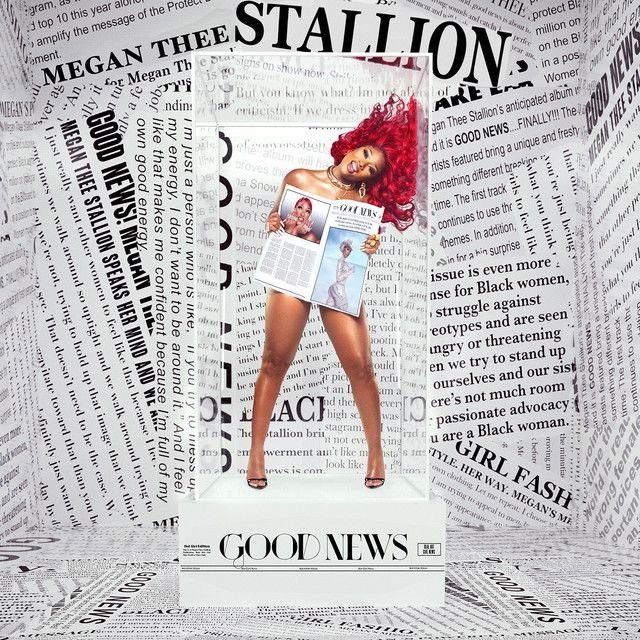
Why “What’s New” Is Megan at Full Power
The meaning of What’s New Megan Thee Stallion comes down to a simple idea: fame brings noise, and Megan treats that noise like proof that they are winning.
"What’s New" - Megan Thee Stallion
Provided by LyricFindAyy, ayy, look
Badder than your favorite bad bitch (ah)
Turned the whole world into a savage (yeah)Loading...Loading lyrics...
Unable to load lyrics
We're unable to display the lyrics at this time. Please try again later.
A Victory Lap Disguised as a Warning
“What’s New” is not subtle, and that is the point. Megan Thee Stallion uses the track to turn gossip, envy, and online chatter into background noise. Rather than answering every rumor, they present themselves as already above it.
At its core, the song is about status under pressure. Megan says the hate keeps coming, but nothing about that surprises them. When the hook shrugs at angry rivals with what’s new?
, the line works like a laugh in the middle of a fight. It says criticism is expected when someone is visible, successful, and hard to copy.
Interpretation: The song is less about one specific enemy than about the climate around success. Megan treats attention, even negative attention, as evidence that they matter.
Watch the official What’s New
music video
The Persona: Untouchable, but Still Alert
One of the key tensions in the song is that Megan sounds both relaxed and defensive. They boast, joke, and insult, but they also show how much they have learned from betrayal, competition, and people trying to get close for the wrong reasons.
Early on, they describe themselves as badder than your favorite bad bitch
. That kind of line is not just a flex. It sets the whole scale of the song. Megan is saying they are not competing at a normal level anymore.
At the same time, there is distrust under the confidence. They brush away questions about their personal life and warn that outsiders do not really want the truth. That matters because it shows the song is not only about ego. It is also about boundaries.
How the Verses Build the Song’s Meaning
First movement: from backlash to control
The first verse frames Megan as someone surrounded by talk but no longer shaped by it. They mention people switching sides and debts that were never repaid. In plain terms, the song suggests a world where loyalty is temporary and fame makes every relationship more complicated.
That is why the aggression feels purposeful. When Megan throws up a figurative and literal rejection of haters, the gesture is not random disrespect. It is a way of protecting space.
Second movement: wealth as proof and armor
The middle section is packed with images of luxury: cars, chains, designer labels, cash, and security. On the surface, these are classic rap flexes. But here they also serve a story purpose.
Megan contrasts their real spending power with people who only want to look rich. When they imply others rent the image and return the goods, they are attacking fake status. In that sense, money becomes a truth test.
Interpretation: Wealth in “What’s New” is not just about pleasure. It is a shield, a receipt, and a way to separate real power from performance.
Third movement: desire, control, and intimidation
Later, the song shifts toward sexual confidence and social dominance. Megan says attraction comes easily, but they still control the terms. A line like bite me, I’ll bite back
makes that clear: they refuse to be passive in romance, conflict, or public life.
This section also targets people who talk big online but cannot back it up in real life. That contrast between internet noise and real-world pressure is one of the song’s strongest themes.
Why the Chorus Hits So Hard
The hook is repetitive in a smart way. Every return to tell a hater
and what’s new?
strips the haters of importance. Instead of sounding wounded, Megan sounds bored.
That boredom is powerful. Many diss-heavy songs try to prove the other side matters enough to answer. “What’s New” does something different. It answers while pretending the question was never serious.
Middle finger out the roof
Tell a hater
What’s new?
Those clipped phrases sum up the emotional posture: public defiance, no apology, no surprise.
The Sound of Swagger
“What’s New” appears on Good News, Megan Thee Stallion’s 2020 studio album, released through 1501 Certified Entertainment and 300 Entertainment, according to Pitchfork and Billboard. The user-provided writing credits list Megan Pete, Donald Cody Tarpley, and Vincent J. Van Den Ende.
The production matches the lyrics with a blunt, hard-hitting feel. The beat leaves room for Megan’s voice to act like percussion. Their flow lands in short, forceful bursts, which makes each insult sound cleaner and each brag sound heavier.
There is also a strong call-and-response quality in the hook. That makes the song feel built for movement: car speakers, clubs, and social media clips. In other words, the sound helps the message travel. This is music made to be quoted, repeated, and used as attitude.
Artist Context Changes the Reading
The meaning of What’s New Megan Thee Stallion becomes sharper when placed in Megan’s larger career story. By the time Good News arrived, they had become one of rap’s biggest breakout stars, with major chart success and constant public attention, as covered by Rolling Stone and The New York Times.
That matters because the song sounds like someone responding to celebrity pressure in real time. It is not a diary entry. It is a power performance. Megan takes the mess around fame and turns it into evidence that they are still the center of the conversation.
Final Take: Why “What’s New” Still Lands
“What’s New” works because it understands something basic about rap confidence: the best flex is not just saying they are great, but acting like opposition is ordinary. Megan makes jealousy sound repetitive, fake luxury sound embarrassing, and self-belief sound practical.
For listeners, that is the song’s real thrill. It is not about vulnerability overcome. It is about dominance maintained.
Disclaimer: This interpretation is based on the lyrics, performance, and publicly available context. Like all song meaning pieces, some readings are interpretive rather than confirmed by the artist.
Sources
- https://pitchfork.com/reviews/albums/megan-thee-stallion-good-news/
- https://www.billboard.com/music/rb-hip-hop/megan-thee-stallion-good-news-album-release-9487429/
- https://www.rollingstone.com/music/music-album-reviews/megan-thee-stallion-good-news-1093709/
- https://www.nytimes.com/2020/11/20/arts/music/megan-thee-stallion-good-news-review.html








