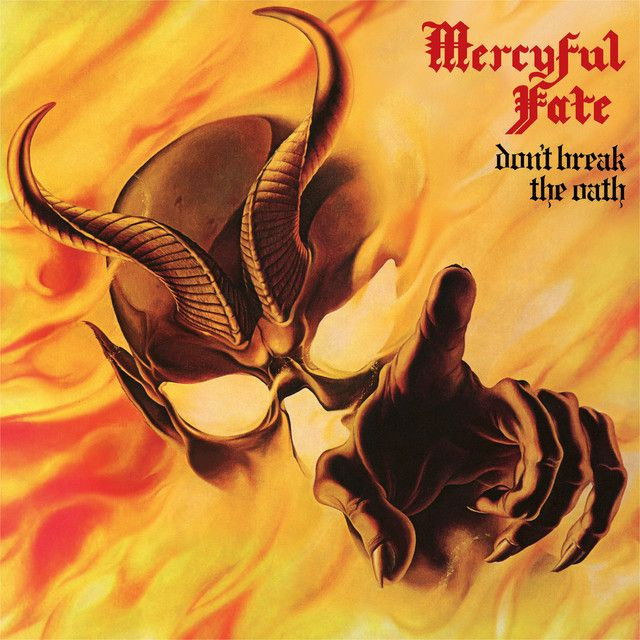
Why 'The Oath' Feels Like a Dark Ritual
The meaning of The Oath Mercyful Fate starts with its title. This is not a song about doubt, debate, or a passing temptation. It is built as a spoken-and-sung vow, where the narrator declares total loyalty to Satan and openly rejects Christianity. That directness is why the track still feels intense decades later.
"The Oath" - Mercyful Fate
I swear henceforth to be
A faithful servant of his most
Loading lyrics...
Unable to load lyrics
We're unable to display the lyrics at this time. Please try again later.
Mercyful Fate became one of the key early metal bands to fuse occult imagery with sharp, intricate guitar work and theatrical vocals. Their style helped shape extreme metal's later interest in blackened themes and ritual atmosphere. In this song, the band turns a declaration of faith inside out.
A Ceremony of Reversal
At its core, the song presents a dark initiation. The speaker does not merely flirt with evil; they formally enter into service. Early lines invoke sacred authority, then redirect that authority toward Lucifer, called the world's ruler. By doing that, the lyric frames itself as an anti-prayer.
Short phrases like faithful servant
and Prince Lucifer
show how the song borrows religious language while reversing its target. Instead of asking for salvation, the narrator offers obedience. Instead of humility before God, they choose devotion to Hell.
That reversal is the song's engine. The shock does not come only from blasphemy. It comes from how carefully the vow is structured, almost like a formal liturgy.
Watch the official The Oath
music video
Who Is Speaking in "The Oath"?
The narrative voice is first person, and that matters. The listener is not watching a distant story unfold. They are placed inside a ritual statement of belief.
The speaker says they deny Christ, reject Christian works, and pledge mind
, body, and soul to Satan's cause. This language suggests total surrender. There is no room left for private conscience or mixed loyalty.
Interpretation: This can be heard as more than occult roleplay. It may also dramatize how extreme belief systems work in general. The lyrics show a person replacing one absolute faith with another, just as rigid and demanding.
How the Lyrics Build Their Power
The song moves in clear steps:
- It invokes cosmic authority.
- It renounces Christianity.
- It calls on infernal names.
- It seals allegiance with body and soul.
That sequence gives the lyric a ritual rhythm. The line open wide the gates of Hell
acts like a threshold moment, where private belief becomes public action. A later phrase, Do what thou wilt
, points to occult and esoteric tradition, especially language associated with Aleister Crowley and Thelema.
Because the lyric is so direct, it avoids metaphor most of the time. It wants the listener to feel trapped inside the ceremony. The effect is more dramatic than poetic in the usual sense.
Sound First, Then Shock
A big part of the meaning of The Oath Mercyful Fate comes from its arrangement. The song opens with a tense, almost processional mood. That beginning makes the words sound ceremonial, as if the speaker is standing before an altar.
When the band surges in, the guitars turn that ceremony into force. Mercyful Fate were known for the twin-guitar work of Hank Shermann and Michael Denner, whose playing gave the band both melody and menace. The riffs do not just support the text; they make the vow feel irreversible.
King Diamond's voice is also crucial. He shifts between commanding speech, sharp singing, and eerie high notes. That theatrical delivery keeps the song balanced between horror performance and genuine menace. They sound less like a confessional singer and more like a priest of a forbidden rite.
Symbols Hidden in Plain Sight
Several motifs carry the song's meaning:
Sacred language turned upside down
Words tied to religion are repurposed for Satanic devotion. This makes the song feel confrontational, especially to listeners raised on Christian prayer forms.
The body as a vessel
The narrator describes being in a human body and then gives that body away in service. That makes possession, submission, and identity central ideas.
Named infernal powers
By listing figures like Lucifer and Leviathan, the song deepens its ceremonial feel. Names function almost like keys in the ritual.
As it was at the beginning
Is now and ever shall be
This brief borrowing of prayer-like cadence is one of the song's boldest moves. It mirrors familiar worship language while redirecting it toward Satanic allegiance.
Artist Context Matters
Mercyful Fate emerged from Denmark's heavy metal scene in the early 1980s, and their occult themes quickly became central to their identity. King Diamond, born Kim Bendix Petersen, built a reputation around horror, corpse-paint imagery, and anti-Christian symbolism. In that context, "The Oath" fits their broader artistic world: theatrical, provocative, and deliberately unsettling.
That context also helps explain the song's legacy. Many later metal bands took surface cues from Mercyful Fate's imagery, but fewer matched the band's musical sophistication. "The Oath" lasts because it is not only shocking. It is tightly constructed.
More Than Shock Value?
Interpretation: One reading sees the song as straightforward Satanic theater, designed to provoke and thrill. Another hears it as a study in chosen identity through rebellion. The narrator rejects inherited faith and remakes the self through taboo.
Those readings can coexist. Heavy metal often uses extreme symbols to act out freedom, danger, and confrontation. Here, the oath is both a literal dark pledge inside the song and a larger metaphor for crossing a line that cannot be uncrossed.
Final Take on the Song's Meaning
The meaning of The Oath Mercyful Fate is rooted in ritualized defiance. It stages a full reversal of Christian devotion, using formal vow language, occult names, and crushing metal drama to make that reversal feel absolute.
What makes the song memorable is its discipline. Every element, from the prayer-like wording to the ominous performance, serves the same idea: belief can be weaponized, and rebellion can sound like worship.
Disclaimer: This interpretation is based on the song's lyrics, performance, and known artistic context. As with most art, listeners may hear different meanings.







