Why ‘Mama Tried’ Still Hits So Hard
The meaning of Mama Tried Merle Haggard lies in one of country music’s simplest and sharpest ideas: a person can love their mother, respect her sacrifice, and still admit they were the one who went wrong.
"Mama Tried" - Merle Haggard
Provided by LyricFindThe first thing I remember knowin'
Was a lonesome whistle blowin'
And a young un's dream of growin' up to rideLoading...Loading lyrics...
Unable to load lyrics
We're unable to display the lyrics at this time. Please try again later.
The Song’s Core Truth Is Personal Responsibility
Merle Haggard’s “Mama Tried” is often heard as a prison song, but that is only the surface. At its heart, it is a confession. The narrator looks back on a rebellious life and refuses to blame the woman who raised him.
That is what makes the song sting. Even when they describe poverty, loss, and a damaged home, they keep returning to the same point: Mama tried
. In other words, the mother did her job. The son did not do his.
Factually, the song is deeply tied to Haggard’s own life. He later said his mother was “an excellent mother” and insisted that his prison time was not her fault, according to American Songwriter. That comment helps frame the whole song. It is less a complaint than an apology.
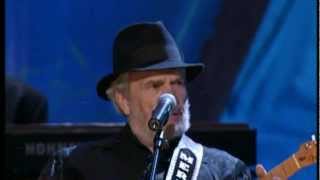
Watch the official Mama Tried
music video
A Story Told in Fast, Hard Strokes
The plot moves like a memory
The verses sketch a whole life in a few images. It begins with restless childhood dreams, including the pull of a train and escape. The phrase lonesome whistle blowin'
suggests both freedom and danger. The child hears motion before they understand consequence.
Then the song narrows into family history. The narrator calls himself the one and only rebel child
in a decent household. That contrast matters. Haggard is not building a story about being doomed by his surroundings. He is showing that rebellion can grow even inside a loving home.
Later, the prison line gives the song its harshest turn. By the time the chorus lands, the damage is already done. The point is not suspense. The point is regret.
The Mother at the Center, Not the Criminal
A lot of outlaw country songs lean on swagger. This one does not. The emotional center is the mother, not the lawbreaker.
The song paints her as overworked, faithful, and patient. After the father dies, she carries the family alone. The idea behind heavy load
is not just money troubles; it is the burden of replacing two parents at once. She works, teaches, and pleads, but none of it can fully stop the son’s choices.
That is why the chorus lands so deeply. When the narrator says he denied her pleading, the song becomes an act of moral clarity. They are not saying, “I could not help it.” They are saying, “I would not listen.”
Interpretation: This is one reason the song has lasted. It turns a familiar country subject—crime and punishment—into a story about family grief. The prison sentence matters, but the wound to the mother matters more.
Where Fact and Drama Meet
It is autobiographical, but not literal in every line
Haggard’s history gives the song unusual weight. His father died when he was young, and Haggard spent time in San Quentin. He also confirmed that he turned 21 in prison, as noted by American Songwriter and summarized by Wikipedia.
But one famous line is heightened for effect. Haggard later explained that he was not actually serving “life without parole.” That detail matters because it shows how the song works artistically. It is rooted in truth, yet shaped for emotional force.
turned twenty-one in prison
no one could steer me right
Those short lines compress the whole message: youth was wasted, guidance was offered, and blame rests with the narrator.
How the Sound Carries the Meaning
The recording helps explain why the song feels so immediate. Haggard said it was recorded in 1968 at Capitol in Hollywood and performed live with the band in one take, according to American Songwriter. He also named key players including James Burton, Glen Campbell, Norman Hamlet, and others.
That matters because the track sounds lean, not overworked. The dobro opening creates a lonely, traveling mood right away. The steady rhythm section keeps the song moving forward like a train that will not stop. Steel guitar adds ache without drowning the message in sentiment.
Haggard’s vocal may be the most important instrument of all. He sounds plainspoken, almost matter-of-fact. That restraint keeps the song believable. If he sounded theatrical, the confession might feel false.
The short runtime—about two minutes—also works in its favor. The song does not linger. It delivers its truth and gets out, which makes it hit even harder.
Why It Became a Country Standard
“Mama Tried” was released in 1968 and became Haggard’s fifth No. 1 on Billboard’s country chart, spending four weeks at the top, according to Wikipedia. It later entered the Grammy Hall of Fame and the U.S. National Recording Registry, signs of how far its influence has reached.
Its staying power comes from balance:
- it sounds tough but feels tender
- it tells a life story with great economy
- it honors a parent without becoming sugary
- it admits guilt without begging for pity
That balance also explains why so many artists covered it, from traditional country acts to the Grateful Dead.
The Lasting Meaning Behind the Chorus
The meaning of Mama Tried Merle Haggard is not that love always saves someone. It is that love can be real, deep, and sincere—and still be ignored.
Interpretation: The song’s deepest sadness is not prison. It is the moment a son realizes his mother’s effort was genuine, and that realization comes too late.
That is why the song still connects across generations. Almost everyone understands regret. Almost everyone understands wanting to thank a parent after failing them.
Final takeaway
“Mama Tried” endures because it is both specific and universal. It comes from Haggard’s life, but it speaks to anyone who has looked back and admitted that the people who loved them were not the reason they fell.
Disclaimer: This interpretation separates documented facts about the song’s writing and recording from critical reading of its themes. Meaning can vary from listener to listener.








