
Why Metallica’s Darkest Sequel Cuts So Deep
The meaning of The Unforgiven III Metallica centers on a hard truth: the deepest wound in the song is not caused by another person, but by the self. As the third part of Metallica’s “Unforgiven” series, this 2008 track turns inward. Instead of focusing mainly on outside control or betrayal, it studies guilt, memory, and the inability to let oneself off the hook.
"The Unforgiven III" - Metallica
Would change his life forever?
Set sail to sea but pulled off course
Loading lyrics...
Unable to load lyrics
We're unable to display the lyrics at this time. Please try again later.
Released on Death Magnetic in 2008, the song was written by James Hetfield, Lars Ulrich, Kirk Hammett, and Robert Trujillo, with Rick Rubin producing and David Campbell adding orchestration. According to Wikipedia, James Hetfield described it as part of the same story about “sin and consequence, forgiveness and unforgiveness.” That background matters, because this song feels less like a simple sequel and more like a later chapter in a long emotional struggle.
The Real Heart of the Song
At its core, the song tells the story of someone who chased meaning, made mistakes, and now cannot escape the memory of them. The verses use sea imagery to show a person setting out with hope, then drifting into danger. The search for treasure suggests ambition, desire, or even temptation. What looked bright at first becomes cold and empty.
That is why lines about sailing, fog, and running aground matter so much. They are not just adventure images. They show a life pulled off course by craving and bad choices. When the song asks how can I be lost
, it is not really about geography. It is about spiritual and emotional confusion.
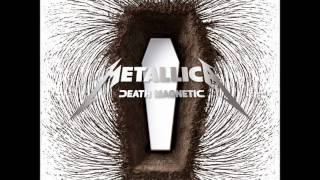
Watch the official The Unforgiven III
music video
From Blame to Self-Blame
One of the smartest things in the song is how it shifts point of view. Early on, the lyric describes the character as “he,” almost as if they are watching themselves from a distance. That distance suggests shame. It can be easier to talk about pain when it belongs to “someone else,” even if it is really their own.
Then the chorus drops the mask. The song moves into “I,” and the conflict becomes direct. The key emotional turn comes with me I can't forgive
. In plain terms, the narrator realizes that blaming another person no longer works. The real barrier is internal.
This matches Hetfield’s own brief explanation, noted by Songfacts: they cannot forgive anyone until they forgive themselves. That idea gives the whole song its weight. It is not just sad. It is brutally honest.
A Story Told Like a Shipwreck
The song’s images connect in a clear emotional timeline:
- A new beginning appears promising.
- Desire pulls the person off course.
- Fear and emotional avoidance build underneath.
- The journey collapses into isolation.
- The final enemy is self-judgment.
The phrase seas of gold
captures that false promise well. It sounds rich and beautiful, but the reward never arrives. Instead, the song asks why the search turned cold. That contrast between gold and cold is central: what they wanted was shining, but what they got was emptiness.
Later, the character becomes a castaway. That image pushes the meaning further. They are not only lost; they are stranded with their own thoughts. The song suggests that memory itself becomes punishment.
The Chorus Is the Emotional Center
The chorus is where the meaning of The Unforgiven III Metallica becomes unmistakable. It circles around confusion, memory, blame, and self-forgiveness. The repeated questions do not sound like a person expecting answers. They sound like a person trapped inside a mental loop.
Forgive me, forgive me not
Why can't I forgive me?
This is the one place where the song says the issue plainly. Everything else uses symbols. Here, there is almost nowhere to hide. Interpretation: this moment feels like a breakdown of defenses. The tough exterior associated with Metallica falls away, and what remains is exposed self-judgment.
Why the Music Matters So Much
The arrangement deepens the lyric meaning. Unlike the earlier “Unforgiven” songs, this one famously opens with piano rather than the familiar guitar-led pattern. That choice immediately changes the mood. It sounds reflective, wounded, and cinematic before the heavier instruments enter.
As the track builds, the band balances ballad-like space with metallic force. The drums and guitars do not erase the vulnerability; they push against it. Critics have described the song as reflective and full of “symphonic tension,” and that is a useful phrase. The orchestra does not make the song prettier for its own sake. It makes the emotions feel larger, almost tidal.
Hetfield’s vocal performance is also key. They sing with restraint at first, then with sharper strain as the chorus returns. That rising pressure mirrors the lyric’s trap: the more the narrator tries to reason through the pain, the more they relive it.
Where It Fits in the Trilogy
Within the trilogy, many listeners hear a progression. The first “Unforgiven” is often understood as anger at the world and its pressures. The second turns more toward damaged connection and trust. The third reaches the innermost layer: the self.
That does not mean every listener must read it the same way. Interpretation: some may hear addiction, some regret after failed relationships, and others a general crisis of identity. The sea imagery is broad enough to support different readings. Still, the song’s emotional center keeps pointing back to one problem: inner absolution never arrives.
That may be why the song has lasted. It was a Grammy nominee, appeared on the chart after Death Magnetic arrived, and remains a standout for fans who prefer Metallica at their most vulnerable. It is heavy music, but its real heaviness is psychological.
Final Take on Its Meaning
The meaning of The Unforgiven III Metallica is a portrait of a person wrecked less by the world than by unresolved guilt. Its shipwreck imagery, shifting voice, and dramatic arrangement all lead to the same destination: they are trapped by what they remember and by what they cannot pardon in themselves.
That makes the song one of Metallica’s most human pieces. It is not about winning the battle. It is about admitting where the battle really is.
Disclaimer: This interpretation is based on the lyrics, documented artist comments, and the song’s musical context. Like all art, the song can support more than one valid reading.









