
Reckoning in the Barn: Why ‘Hayloft II’ Hits Back
They came for the cliffhanger. They stayed for the reckoning. Mother Mother’s sequel turns a panicked teen drama into a showdown, and the meaning of Hayloft II Mother Mother hinges on whether retaliation feels like justice—or another wound.
"Hayloft II" - Mother Mother
One got shot and the other got lost in
Drugs and punks and blood on the street
Loading lyrics...
Unable to load lyrics
We're unable to display the lyrics at this time. Please try again later.
From Viral Spark to Sequel Fire
The story starts with an aftershock. The 2008 track Hayloft erupted on social media years later, pulling a new generation to the band. In response, Mother Mother wrote Hayloft II and released it on January 28, 2022, with Ryan Guldemond writing and co-producing with Howard Redekopp. The sequel kept the jittery energy of the original while giving the narrative an ending.
Hayloft II also crossed over beyond fandom. It charted on the Canadian Hot 100 and earned certifications in multiple countries. That reach shows how a niche indie tale became a modern folk myth—retold, argued over, and owned by listeners who found their own stakes inside it.
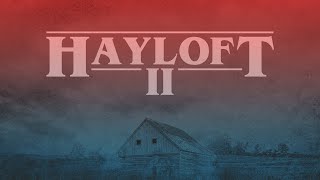
Watch the official Hayloft II
music video
What the Sequel Is Really About
Interpretation: The song imagines the survivor confronting the armed father who killed their lover. Where the first track freezes at the door, this one steps through it. Lines like eye for an eye
suggest a moral ledger, but the song also insists on cost: violence doesn’t make a broken heart whole.
When the hayloft burns and the past turns to ash, the character chooses action over escape. They aren’t presented as pure or evil—only certain. That certainty powers the song’s sprint and complicates its ethics.
Who’s Speaking, and Why the Voices Shift
The voice toggles between confession and chorus. In one breath, it’s personal—my baby's got a gun
. In the next, it steps back to describe—not a bad kid
. That switch creates two lenses at once: the raw rush of the moment and the community judgment that trails behind it.
Here the hook works like a siren. Panic turns declarative; a choice becomes a drumbeat.
My baby's got a gun
I better run
The Hook That Turns Panic Into Power
The refrain is a countdown. The chant feels like a trigger pull because it is one—musically. Its clipped syllables strike in time, and the percussion doubles the breathless pace. Onomatopoeia like boom boom crack
renders the danger as sound design, not just plot.
Interpretation: The hook reframes fear as agency. It’s not triumph; it’s push-through. The character knows the danger and moves anyway.
Symbols That Do the Heavy Lifting
- The hayloft: A teenage hideout now torched—innocence gone. When they note it’s “burnt to the ground,” it signals no return to secrecy or safety.
- Pop: The intimate name makes the villain a family member, not a faceless threat. A line like
hey Pop, you die
is shocking because it marries tenderness to fatal resolve. - Blood and knees: Images of injury and pleading recast romance as survival.
- Crucifixion language: Not theology so much as the weight of punishment. It frames the act as a ritual of blame and atonement.
Together, these motifs harden the song’s world: no institutions, no courts—only the barn, the body, and the beat.
How the Sound Carries the Story
Mother Mother stage the narrative with angular guitars, gang vocals, and sharp stops that feel like corners taken too fast. The arrangement borrows punk urgency within an indie rock chassis. Group shouts function as a jury, echoing the small-town chorus that polices desire in the first song.
Production choices spotlight the stakes. Drums punch in quick bursts. Guitars saw rather than shimmer. Vocals stack, then isolate, widening and narrowing the camera. The result is cinematic without gloss: a chase, a face-off, a reckoning.
Two Readings Worth Holding Together
- Interpretation: A literal revenge tale. The protagonist avenges their lover, a mirror image of the father’s brutality. Justice here is eye-for-eye; the cost is a self they cannot recover.
- Interpretation: A metaphor for ending cycles of abuse. The gun is agency; the barn is the family system; the fire is a reset. Inclusive pronouns in the lyrics broaden who can claim the story, hinting at identity and control in hostile spaces.
Both views are valid. One hears a ballad of payback; the other hears survival and boundary-setting by any means.
Timeline, Beat by Beat
- Two lovers hide; the father arrives with a weapon.
- A shot shatters the past; the survivor runs.
- Rumor and guilt pile on; the hayloft burns.
- The survivor turns, armed and decided.
- The story ends not with peace, but with a choice.
Takeaway
The meaning of Hayloft II Mother Mother lives in its tension: agency versus aftermath. It gives the character a voice and a decision, then refuses to tidy the consequences. That’s why it lingers—because the beat goes on after the trigger.
Disclaimer: Song interpretations are subjective. Details above mix reported facts with clearly labeled interpretation.
Sources
- https://en.wikipedia.org/wiki/Hayloft_(song)
- https://www.rollingstone.com/music/music-news/mother-mother-hayloft-tiktok-1079139/
- https://www.cbc.ca/music/how-mother-mother-s-hayloft-became-a-gen-z-anthem-1.6226421
- https://www.thestar.com/entertainment/music/canadian-indie-rock-band-mother-mother-releases-hayloft-ii/article_eb0d1e4a-4f41-5f64-8e7b-482f22721e40.html








