Why ‘Tiger Feet’ by Mud Still Struts
The meaning of Tiger Feet Mud is not hidden behind a deep story or a hard-to-crack message. This 1974 hit is mainly about flirtation, movement, and pure pop excitement. It takes a simple scene—someone being watched on a dance floor—and turns it into a larger-than-life glam-rock fantasy.
"Tiger Feet" - Mud
All night long, you've been looking at me
Well you know you're the dance hall cutie that you love to be
Loading lyrics...
Unable to load lyrics
We're unable to display the lyrics at this time. Please try again later.
That may sound light, but that is also the point. Mud and the Chinn-Chapman team built a record that feels immediate, playful, and physical. The song does not ask listeners to solve it. It asks them to feel it.
The Real Idea Behind the Song
At its core, “Tiger Feet” is about desire sparked by dance. The singer is captivated by a woman in motion, and nearly every image points back to her style, confidence, and effect on the room. Early lines describe her as a dance hall cutie
who knows exactly how she looks and what she is doing.
That matters because the song is less about romance in a lasting sense and more about magnetic presence. The attraction is instant. When the lyric says her hips are swinging out of bounds
, it suggests energy that feels exciting, maybe even overwhelming. The singer is not calm or thoughtful; they are swept up.
Interpretation: the famous title phrase is likely not meant to be taken literally. “Tiger feet” works as a glam-pop image for wild dancing, bold fashion, and animal-like charisma. It sounds vivid, strange, and catchy, which fits the glam era perfectly.

Watch the official Tiger Feet
music video
A Song That Prefers Picture Over Logic
One reason the track has lasted is that its nonsense is deliberate. According to Songfacts, songwriter Nicky Chinn said the song did not really make strict sense, but that it painted a “party picture.” That short description is useful.
The words are built from sensation more than narrative. There is looking, moving, flashing, aching, and repetition. Even phrases like warning lights
and tiger light
create a nightclub glow without fully explaining themselves. They function like snapshots from a loud, colorful night.
This helps explain the chorus. It repeats praise instead of advancing a story. The hook is not trying to reveal new information. It is trying to trap listeners inside the same dazzled feeling as the singer.
How the Verses Build the Flirtation
The song follows a clear emotional path, even if it is lyrically loose:
- The singer notices someone across the room.
- Her dancing becomes the center of attention.
- Physical attraction rises fast.
- The chorus turns that attraction into a chant.
A key line about having a feeling in my knees
shows how strong the reaction is. This is not thoughtful admiration. It is almost comic loss of control, which adds to the fun. Glam rock often pushed emotions into exaggerated, theatrical territory, and “Tiger Feet” does exactly that.
That's right, that's right, that's right, that's right
I really love your tiger light
That's neat, that's neat, that's neat, that's neat
I really love your tiger feet
In that chorus, the repeated words act like stomps on the dance floor. The language is simple, but the rhythm gives it force.
Why the Chorus Works So Well
The hook is memorable because it mixes nonsense with certainty. The singer may not define “tiger feet,” but they know they love them. That confidence makes the record feel bold rather than confused.
Interpretation: “Tiger feet” can stand for the whole performance of glam femininity—dancing shoes, swagger, stagey seduction, and visual flair. The feet matter because they are what drive the motion. In a dance song, movement is identity.
The title also benefits from sounding unusual. Pop listeners remember odd phrases, especially when they are tied to a chant-like chorus. “Tiger Feet” is one of those hooks that stays in the mind because it is just unfamiliar enough.
The Sound Turns the Lyrics Into a Hit
Production is a huge part of the song’s meaning. On paper, some lines might seem silly. On record, they feel huge. Mud’s performance gives the words weight through swagger, beat, and repetition.
Research on the song’s making points to the same thing. Guitarist Rob Davis said Mike Chapman wanted many guitar tracks to make it sound “fat and rocky,” while the drums were also carefully layered. The result is a dense glam-rock wall of sound: stomping rhythm, bright guitars, and a chant-ready chorus.
That sound tells listeners how to hear the song. It is not intimate. It is public, loud, and built for a crowd. Mud’s singer Les Gray reportedly doubted it at first, but once arranged, it became powerful on stage. That transformation matters. The song’s meaning lives as much in its communal energy as in its words.
Context: Mud, Glam Rock, and a Massive 1974 Moment
Mud released “Tiger Feet” on 4 January 1974, and it became their first UK No. 1. According to Wikipedia’s summary, it stayed at No. 1 in the UK for four weeks and sold more than 700,000 copies there, becoming Britain’s best-selling single of 1974.
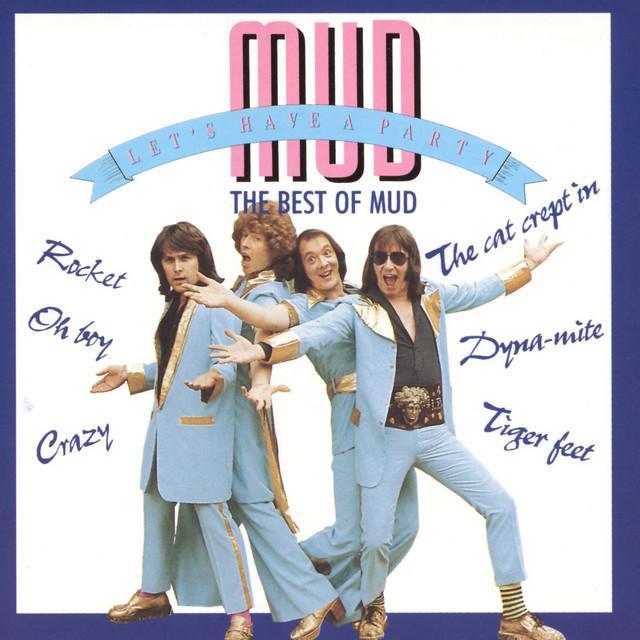
Those facts support the reading of the song as event music. It arrived at the right time for glam rock: flashy, rhythmic, easy to sing, and visually memorable. Mud even performed it in tiger-patterned slippers, turning the title into part of their image.
This also explains why the song still appears in films and TV. It carries instant atmosphere. A few seconds of it can summon a whole era of platform shoes, bright lights, and cheeky confidence.
Final Take on the Meaning of Tiger Feet Mud
The meaning of Tiger Feet Mud is best understood as a celebration of attraction through dance, style, and glam-rock spectacle. It is not a confessional ballad or a coded political song. It is a party record that turns infatuation into chant, image, and motion.
Its cleverness lies in how little it needs to explain. The song wins by sounding exciting, looking exciting, and making desire feel physical and fun.
Disclaimer: This interpretation separates documented facts from critical reading. As with many pop songs, listeners may hear different meanings in its images and energy.








