
A Tab in the Ocean by Nektar
The meaning of A Tab in the Ocean Nektar often comes down to one big idea: a journey into the mind. The song does not describe everyday events in a plain way. Instead, it uses surreal pictures, sea imagery, and direct questions about truth to explore perception, awakening, and possible illusion.
"A Tab in the Ocean" - Nektar
Of thought beneath the veils of bluey-green
Armoured horses with sparkling sunset eyes
Loading lyrics...
Unable to load lyrics
We're unable to display the lyrics at this time. Please try again later.
Nektar released "A Tab in the Ocean" as the title track of their second album in November 1972. The band was an English group based in Germany, and the album was produced by Peter Hauke with engineering by Dieter Dierks. It featured Roye Albrighton, Allan Freeman, Derek "Mo" Moore, Ron Howden, and visual artist Mick Brockett, whose projections were a key part of the band's identity. Factually, the album is widely classified as progressive rock and the title track runs over 16 minutes on the original release. Those details help explain why the song feels so expansive and cinematic. See the album reference here: Wikipedia.
A Mind Trip Hidden Inside Sea Imagery
At its core, the song presents consciousness as an ocean. Early images such as imaginary waves
and strange underwater scenes make the listener enter a world where normal logic no longer rules. Rather than giving a fixed plot, the lyric builds a mental landscape full of symbols.
Interpretation: the ocean likely stands for the unconscious mind. The song's invitation to climb aboard
sounds less like boarding a boat and more like accepting a shift in awareness. The title itself hints at psychedelia, but the lyric is careful not to reduce the experience to drug imagery alone. It can also describe spiritual searching or intense introspection.
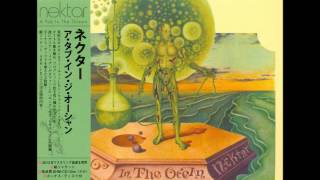
Watch the official A Tab in the Ocean
music video
When Reality Starts to Slip
The most important tension in the song is the question of what is real. The lyric keeps moving between wonder and doubt. That is clearest when the singer asks whether insight is genuine or whether it is only deception.
This gives the track emotional weight. It is not just a colorful fantasy. It is about the risk of opening the mind and not knowing if the vision can be trusted. Short phrases like nothing's clear
and just deception
push that idea forward.
The Song's Turning Point
Midway through, the lyric starts sounding more urgent and more inward. It tells the listener to test experience directly through feeling and thought rather than passive observation.
Taste, touch and find
what it is
that's in your mind
That brief passage matters because it shifts the song from description to challenge. The listener is no longer watching strange images pass by. They are being asked to search their own mind for truth.
A Chorus About Truth, Not Escape
The repeating lines about finding answers make the song sound philosophical rather than purely psychedelic. Even when the singer describes falling, the motion does not feel like simple collapse. It feels like surrender to a deeper layer of awareness.
Interpretation: this is why the song still connects with progressive rock fans. It treats altered consciousness as a serious question. The repeated search for the answer to "every question" suggests a universal desire for meaning, while the fear of error keeps the song grounded.
How Nektar's Sound Deepens the Meaning
The music is a major part of why the song works. As a long progressive rock piece, it unfolds in sections rather than sticking to a tight verse-chorus pop form. That structure mirrors the lyric's movement through uncertainty, revelation, and emotional lift.
Allan Freeman's keyboards and Mellotron help create the song's dreamy atmosphere, while Roye Albrighton's guitar gives it a sharper emotional edge. Ron Howden's drumming keeps the track moving even when the arrangement becomes hazy. According to the album credits, Peter Hauke produced the record and Dieter Dierks engineered it during sessions in October 1972. Those are factual anchors, and they matter because the recording has the spacious, exploratory sound many listeners associate with early-70s European prog. Source: Wikipedia.
Why the Images Feel So Strange
The song's creatures, colors, and underwater visions are not random. Images like purple thrones
and Neptune's world suggest myth, fantasy, and a realm beyond the ordinary. They make perception feel unstable.
Interpretation: these symbols may represent the masks people live behind or the hidden systems shaping what they call reality. The "plastic lives" image is especially sharp because it contrasts artificial living with the possibility of deeper truth.
The Ending Opens Toward Light
By the end, the song moves from confusion toward release. Night turns into day, minds step into the sun, and the feeling becomes something lasting rather than fleeting. That ending matters because it prevents the song from becoming a nightmare. The journey through uncertainty leads to a kind of revelation.
So, the meaning of A Tab in the Ocean Nektar is best understood as a voyage through altered perception toward self-knowledge. It may reference psychedelia, but it also reaches toward spirituality, imagination, and the fear that insight can always slip into illusion.
For many listeners, that balance is exactly what makes the track memorable: it is cosmic and questioning at the same time.
Disclaimer: This interpretation is based on the released lyrics, album context, and common critical readings. Like many progressive rock songs, its meaning remains partly open to the listener's own view.







