Why 'Maneater' Turns Power Into Pop
For many listeners, the meaning of Maneater Nelly Furtado starts with a simple image: a woman who walks into a room and immediately takes control. But the song is more interesting than a warning label. It plays with fantasy, vanity, and attraction, turning a familiar stereotype into a sharp, stylish dance track.
"Maneater" - Nelly Furtado
Everybody look at me, me (oh)
I walk in the door you start screaming (oh)
Loading lyrics...
Unable to load lyrics
We're unable to display the lyrics at this time. Please try again later.
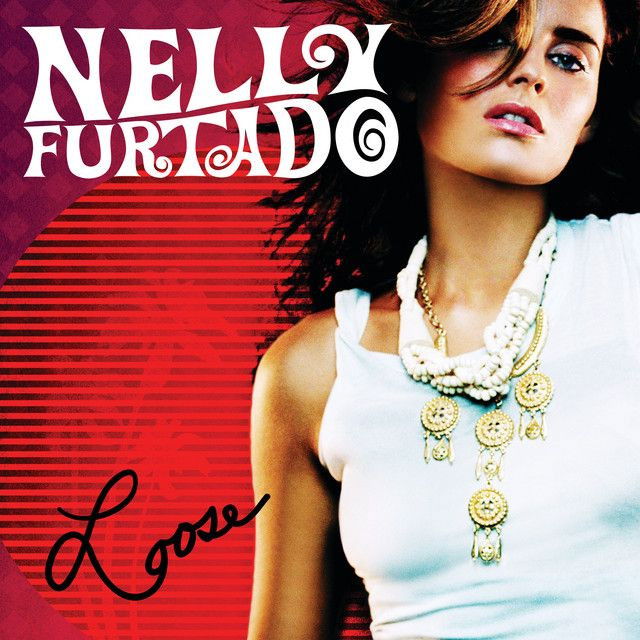
Released in 2006 on Loose, “Maneater” was written by Nelly Furtado, Timbaland, Nate Hills, and Jim Beanz, and produced by Timbaland and Danja. It became a major hit, reaching No. 1 in the UK and No. 16 on the Billboard Hot 100, while also topping U.S. dance charts. Those facts help explain why the song still matters: it was not just catchy, but culturally loud and confident.
A Persona, Not a Confession
The best way to hear “Maneater” is as a performance. Furtado is not simply saying, “This is who they are.” They are stepping into a character.
That character is introduced through instant spectacle. When the singer says Everybody look at me
, the line does more than ask for attention. It builds a stage. The room becomes an audience, and the woman at the center becomes part seductress, part celebrity, part myth.
Interpretation: The song is about how power can be created through image. The “maneater” is someone people desire, fear, and maybe even envy. That is why one of the key lines is be with me or be me
. The attraction is not only romantic. It is aspirational. Some want her; others want her confidence.

Watch the official Maneater
music video
What the Chorus Really Warns About
The chorus makes the song’s idea very clear: obsession has a price. The repeated phrase make you work hard
suggests that desire can turn into labor. Then the song raises the stakes with make you spend hard
, showing how attraction becomes transactional.
This is where the title matters. A “maneater” is usually framed as a dangerous woman who consumes men emotionally, financially, or both. Here, the song exaggerates that old archetype on purpose. It is flashy and almost cartoonish, which keeps it from sounding purely moralistic.
Make you buy cars
make you cut cards
In those lines, the point is not just money. It is loss of judgment. Someone under this person’s spell starts proving devotion through spending and sacrifice. The final warning, paraphrased throughout the chorus, is regret: by the end, they may wish they had never gotten involved.
Desire, Control, and the Crowd
The verses give the “maneater” physical presence. She walks with purpose, talks like someone fully in command, and asks without apology. That directness matters. Rather than sounding shy or passive, the song presents feminine power as public and aggressive.
Interpretation: One reading is that the song mocks the old fear of a “dangerous woman” by making her too cool, too stylish, and too self-aware to be reduced to a stereotype. Another reading is that it really does enjoy the fantasy of domination. Both interpretations fit because the song lives in that tension.
The crowd scenes also matter. Commands to move, jump, and get low make the song feel communal, not private. This is not a bedroom confession. It is a club performance where desire becomes a group event. Everyone can see the game, but they still play it.
Why the Sound Feels So Dangerous
A big part of the meaning of Maneater Nelly Furtado comes from its production. “Maneater” is built on hard drums, clipped synths, and a cold, stalking groove that draws from 1980s electro-pop and dance-rock. Sources on the song’s background note that Furtado and Timbaland were working with influences like Blondie, Eurythmics, and Talking Heads during the Loose sessions.
That sonic style gives the track its bite. The beat is lean and mechanical, but also physical. It feels like strutting music. Instead of warmth, it offers edge. Instead of romance, it offers impact.
Furtado described the song as “couture pop” in interviews, meaning fashion-forward pop that is bold and of-the-moment. She also spoke about its unusually intense energy after a studio speaker caught fire during an early session, a story repeated in later coverage of the song. Whether listeners take that as myth or memory, it matches the record’s mood: hot, unstable, and impossible to ignore.
The Hall & Oates Shadow
“Maneater” also carries a clear pop-history echo. Commentators have long linked it to Hall & Oates’ 1982 hit of the same name, and Furtado herself acknowledged that 1980s influence. Her version does not retell that song exactly, but it plays with the same archetype and updates it for the 2000s club era.
What changes is perspective. In Furtado’s track, the “maneater” is no longer just someone observed from a distance. She is centered, animated, and given the mic. That shift makes the song feel less like a warning from outside and more like a self-aware role from within.
Why the Song Still Works
Part of the reason “Maneater” lasted is that it can be enjoyed on more than one level:
- as a club banger
- as a satire of material desire
- as a performance of female control
- as a pop rewrite of an old stereotype
That flexibility keeps it fresh. Some listeners hear empowerment. Others hear irony. Others just hear a great beat. The song makes room for all three.
Final Take on the Message
So what is the meaning of Maneater Nelly Furtado? It is the thrill and danger of wanting what dazzles them, even when they know it may cost too much. The song turns seduction into theater and power into rhythm.
Its genius is that it never fully chooses between celebration and critique. They let the “maneater” be seductive, ridiculous, stylish, and threatening at once. That is why the song still hits.
Disclaimer: This interpretation blends documented context with critical reading. As with most pop songs, different listeners may hear different meanings.