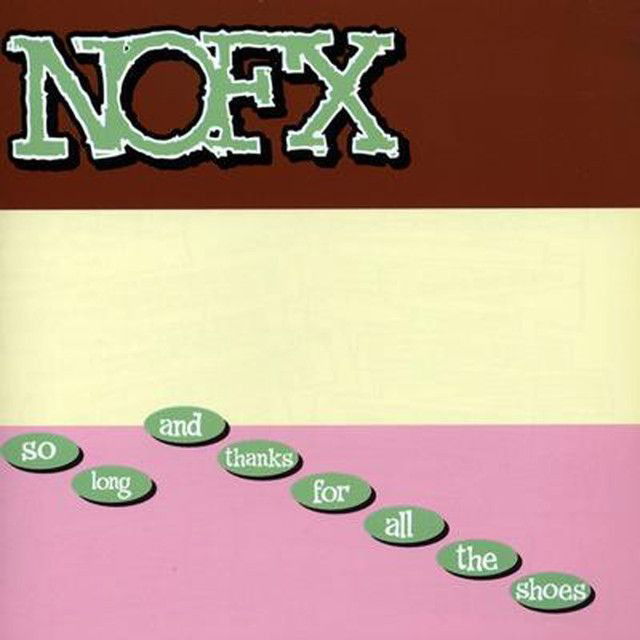
Eat the Meek by NOFX
Why This NOFX Song Still Bites
The meaning of Eat the Meek NOFX centers on power, fear, and social cruelty. On the surface, the song sounds like a fast, sarcastic punk blast. Under that energy, though, it paints a world where the strong feed on the weak and where fear has become a product people accept as normal.
"Eat the Meek" - NOFX
Why must we stay where we don't belong?
Because there's never gonna be enough space
Loading lyrics...
Unable to load lyrics
We're unable to display the lyrics at this time. Please try again later.
NOFX built their reputation on sharp political punk, especially through records released in the 1990s and 2000s, as documented by the band and label history at Fat Wreck Chords. That context matters here. They often mix jokes, speed, and ugly truths, and “Eat the Meek” follows that pattern.
The title itself flips a familiar moral idea. Instead of protecting the humble, the song imagines a society that consumes them. That exaggeration is the point: it turns exploitation into a grotesque meal so listeners cannot miss the violence built into everyday systems.
Watch the official Eat the Meek
music video
A Chorus About Belonging and Exclusion
The repeated question Why must we stay
where people don't belong
frames the whole song. Before the song gets into economics or propaganda, it starts with alienation. They describe people trapped inside a system that does not value them.
That hook works in two ways. First, it sounds personal, like someone asking why they have to keep living under hostile rules. Second, it sounds political, suggesting whole classes of people are pushed into spaces where they are only tolerated when useful.
Interpretation: The chorus is less about a literal location than social placement. They seem to be asking why ordinary people accept systems built to exclude, rank, and exploit them.
The Song’s Sharpest Image: Consumption as Politics
The central phrase eat the meek
is the song’s main symbol. They are not talking about cannibalism, of course. They are describing a culture where vulnerable people are consumed by stronger institutions, richer classes, and fear-based politics.
That phrase also carries a religious echo. It twists the ideal of the meek inheriting the earth into the opposite outcome. In this world, gentleness is not rewarded. It is preyed upon.
eat the meek
savor the taste
That two-line moment is brief, but it captures the song’s ugliest truth. The problem is not only exploitation; it is that some people enjoy it. The song suggests domination has been normalized to the point where cruelty becomes appetite.
Fear as a Manufactured Product
One of the smartest parts of the lyric is the image of a factory mass-producing fear
. They describe fear as something made, packaged, shipped, and sold. That metaphor turns politics and media into industry.
The next lines build that idea by showing fear entering daily life in every possible way. People do not just notice it once; they consume it constantly until it becomes part of the body. The song finally suggests fear is replacing love
, which is one of its bleakest claims.
Interpretation: This verse can be read as a critique of sensational news, political messaging, and social control. Rather than helping people understand the world, these systems train them to stay anxious, obedient, and divided.
This reading fits NOFX’s broader writing style. Fat Mike, credited as Michael John Burkett, has long used punk songs to mock authority and expose hypocrisy, a pattern visible across the band’s catalog and credits on AllMusic and Discogs.
Class, Privilege, and the Price of Air
Later, the song shifts from fear to hierarchy. It points to token truth
, old codes, and pedigree. In plain terms, they are describing a world where fairness exists only in small symbolic doses, while real power stays with the same people.
The most striking paraphrased idea in this section is that one group controls the air while another has to pay to breathe. That is not meant literally. It pushes privatization and inequality to an absurd extreme so listeners can feel how total that control is.
Interpretation: They appear to be criticizing class systems that present themselves as merit-based while actually running on inheritance, access, and exclusion. The song’s anger comes from how ordinary that arrangement has become.
How the Sound Carries the Message
Musically, “Eat the Meek” delivers its message through speed and attack. NOFX are rooted in melodic hardcore and skate punk, styles known for brisk tempos, tight rhythm changes, and sneering vocals. That kind of arrangement does more than create excitement. It mirrors the pressure of the world the song describes.
The quick pace makes the song feel unstable, as if the listener is being rushed through a machine. The barked vocals add sarcasm and disgust. Instead of sounding mournful, the band sounds wired and confrontational, which fits a lyric about a society feeding on people.
There is also a rough, almost tossed-off quality to NOFX’s performances that helps the meaning. They do not present oppression as distant theory. They make it sound messy, immediate, and lived-in.
The Joke at the End Matters Too
The spoken banter at the end can seem random, but it fits NOFX’s style. They often undercut seriousness with humor. That move does not erase the politics; it makes the band sound resistant to polish, authority, and self-importance.
In a song this dark, the chatter also feels like a release valve. After describing fear, hierarchy, and social predation, they end with a reminder that punk can still laugh in the middle of the collapse. That tension between comedy and anger is a big part of why the song works.
Final Take on the Meaning
The meaning of Eat the Meek NOFX is a bitter satire of a society that trains people to accept exploitation. Through images of eating, manufacturing fear, and selling survival, they show a system where the weak are consumed and inequality is treated as normal.
Their fast, ragged sound makes that message hit harder. Instead of preaching calmly, they make the critique feel urgent, ugly, and alive.
Disclaimer: This interpretation is based on the lyrics, the band’s public artistic context, and the song’s musical style. As with most punk songs, listeners may reasonably hear different emphases in the meaning.







