What "Can You Help Me" by $NOT Is Really Saying
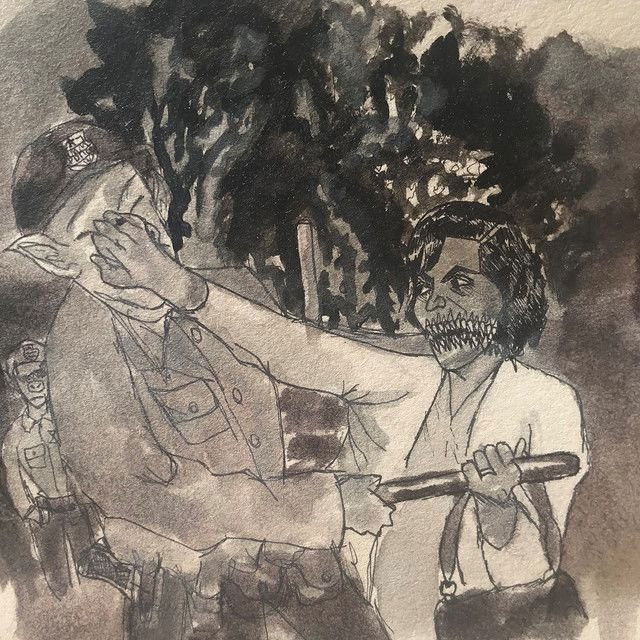
The meaning of Can You Help Me $NOT centers on a cry for help that is both personal and political. The song describes a moment of chaos involving police, fear, and possible death, but it also reaches beyond one scene. It becomes a protest song about racial violence, helplessness, and the frustration of feeling unheard.
"Can You Help Me" - $NOT
Look
Look at me, look at you, tryna fight for rights
Loading lyrics...
Unable to load lyrics
We're unable to display the lyrics at this time. Please try again later.
$NOT, the Florida rapper known for dark, stripped-back rap, often uses blunt writing and tense delivery to create emotional pressure. In this track, that style fits the topic. The words do not sound distant or academic. They sound immediate, like someone trying to process trauma in real time.
A Protest Song Disguised as a Panic Scene
At the song's core, they present a violent encounter from close range. The opening quickly moves from people tryna fight for rights
to a scene where police arrive and everything turns dangerous. That shift matters. It suggests that public demands for justice can be met with force instead of understanding.
The song's most painful idea is that the violence is not random. The lyric about a color thing
makes the point plainly: the speaker believes race is central to the suffering being described. This turns the song from a general complaint about authority into a direct statement about anti-Black violence.
Interpretation: The track works like a witness statement. They are not only describing fear. They are accusing a system of making that fear normal.
Watch the official Can You Help Me
music video
The Hook Turns Fear Into a Public Plea
The title phrase matters because it sounds like more than one voice. When the song reaches Can anybody hear me?
and later the cry of Help me
, it captures two kinds of silence. First, there is the silence of a person in danger. Second, there is the silence of a society that sees suffering and still does not respond.
That is why the hook sticks. It is simple, but it does heavy work. The song keeps returning to the same emotional wall: they call out, but the answer does not come.
Can anybody hear me?
I don't think so
Those lines are brief, but they frame the whole song. The point is not only fear of death. It is fear of being ignored while that danger unfolds.
A Story Told in Fast, Brutal Beats
The lyrics move like a short film cut into fragments. A simple timeline helps explain the song's structure:
- People are already under pressure and
tryna fight for rights
. - Police enter the scene and raise the threat level.
- Someone appears badly hurt and asks for help.
- The speaker tries to comfort them and keep them alive.
- The song widens from one victim to a larger call for change.
That movement is important. The first half feels trapped inside one emergency. The second half zooms out and asks what kind of country keeps repeating this cycle.
The Political Message Is Surprisingly Broad
One of the song's strongest turns comes when it stops blaming only one side of the political aisle. The line about the right wing and left wing being on the same bird argues that division can become a distraction. People may argue over ideology while real bodies are still on the ground.
That image is simple and effective. It says shared humanity should come before team loyalty. The later idea that people bleed the same blood
pushes the same message: whatever their politics, they are still responsible for each other.
Interpretation: This section does not weaken the song's anger about racism. Instead, it broadens the appeal. They seem to argue that justice should not be a partisan issue at all.
Pain, Rain, and Light: Small Images With Big Weight
The song uses a few recurring images instead of dense poetry. That directness is part of its power.
- The floor suggests physical collapse and helplessness.
- Rain adds exhaustion and emotional heaviness.
- Light introduces a last flicker of hope, even in crisis.
- Morning shows that the pain is not over when the scene ends.
These details keep the song grounded. Rather than using abstract slogans, it shows what grief feels like in the body and in daily life.
How the Sound Supports the Meaning
Even without dense production details, the writing suggests a sparse, hard-hitting rap setup: a repetitive hook, forceful vocal delivery, and blunt rhythmic phrasing. That matters because a polished or overly melodic approach might have softened the message. Here, the likely minimal beat leaves room for urgency.
The repeated lines work like chants at a protest or thoughts stuck in a traumatized mind. The near-circular structure mirrors how public tragedies repeat in the news and in memory. When the song returns to the same phrases, it feels less like a catchy chorus and more like a wound reopening.
This fits $NOT's broader style as an artist, which often leans into dark mood, clipped cadences, and emotional tension rather than flashy detail. In this song, that approach makes the message feel raw instead of theatrical.
Why the Song Still Lands
What makes the meaning of Can You Help Me $NOT hit hard is its lack of distance. They do not hide behind metaphor for long. The song names injustice, shows panic up close, and then asks listeners what good their opinions are if they do not act.
It also balances rage with grief. There is anger at police and at public passivity, but there is also tenderness in the attempt to comfort someone who may not survive. That human note keeps the track from feeling like a slogan.
Final Reading
In the end, "Can You Help Me" is about more than one emergency. It is about a recurring American emergency: racialized violence, helpless witnessing, and the struggle to stay human inside it. The song asks for help, but it also asks for attention, courage, and change.
That interpretation is based on the lyrics provided and publicly known artist context. Like any song, listeners may hear different meanings depending on their own experiences.








