
Why N.W.A’s Angriest Song Still Hits
The meaning of Fuck Tha Police N.W.A starts with rage, but it lasts because that rage is organized into a sharp protest.
"Fuck Tha Police" - N.W.A
Provided by LyricFind"Right about now, N.W.A. court is in full effect
Judge Dre residing
In the case of N.W.A. vs. the Police DepartmentLoading...Loading lyrics...
Unable to load lyrics
We're unable to display the lyrics at this time. Please try again later.
A Courtroom Turned Inside Out
N.W.A’s “Fuck tha Police” is not just made to shock. It is a protest song built as a mock trial, where the police are the ones put on trial instead of the young Black men they usually control. That setup matters because it flips power for a few minutes. In the song, Judge Dre runs the room while Ice Cube, MC Ren, and Eazy-E give testimony.
Factually, the track appeared on Straight Outta Compton and is widely understood as a response to police brutality and racial profiling. It has since been recognized as one of rap’s defining protest songs by outlets including American Songwriter and in later critical rankings by Rolling Stone.
The song’s central claim is simple: police are abusing authority in Black neighborhoods, and the group is done speaking politely about it.
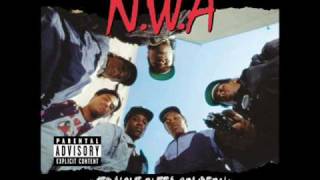
Watch the official Fuck Tha Police
music video
What the Song Is Really Arguing
At the heart of the meaning of Fuck Tha Police N.W.A is daily harassment. Ice Cube’s opening verse frames that clearly. When he says straight from the underground
, they present themselves as voices from a place ignored by mainstream America.
He then ties that outsider status to race and policing. The complaint is not abstract. It is about being watched, stopped, searched, and treated as guilty before doing anything. A short phrase like kill a minority
lands hard because it compresses the whole argument into one brutal accusation: the system treats Black life as disposable.
This is where the song becomes bigger than insult. It is not only anti-police in a broad sense. It is anti-abuse, anti-racial profiling, and anti-state violence.
Three Testimonies, One Shared Grievance
Ice Cube’s verse: profiling as routine
Ice Cube describes police suspicion as constant. Small signs of style or success make officers assume crime. His verse paints a world where a teenager can be treated like a threat just for being visible and Black.
MC Ren’s verse: power answered with defiance
MC Ren raises the temperature. His testimony is less about pleading innocence and more about refusing submission. When he sneers Readin' my rights
, the point is that legal language sounds empty when the encounter already feels unjust.
Eazy-E’s verse: criminal image as public trap
Eazy-E leans into his own outlaw persona, but even that serves the song’s argument. He shows how the police and the public image of the gangsta feed each other. The system sees a stereotype, then reacts to that stereotype with force.
The Hook as Protest Slogan
The chorus is blunt, repetitive, and impossible to misunderstand. That repetition turns the title into a chant rather than a detailed argument. It works like a slogan shouted at a march: simple, memorable, and emotionally direct.
Interpretation: The hook matters because it strips away debate. The verses explain why the anger exists, but the chorus gives that anger a public form. It is what people remember because it sounds like a refusal to cooperate with a broken system.
Why the Violence in the Lyrics Is There
This song includes violent fantasies and threats. That cannot be ignored, and it should not be softened. But it also should be read in context.
Interpretation: The violence is part of the song’s rhetorical design. N.W.A exaggerate, perform, and provoke in order to communicate how extreme the pressure feels. The mock trial format already tells listeners this is staged art, not a legal statement. Their goal is to force the listener to sit with fear, humiliation, and fury from the other side.
Order, order, order
The courtroom voice sounds official.
Then N.W.A use that official tone
to accuse the authorities instead.
That reversal is the song’s cleverest move.
How the Production Carries the Message
The beat is lean, tense, and marching. Produced by Dr. Dre and DJ Yella, it gives each verse room to sound like testimony rather than clutter. The drums hit with a hard, almost procedural feel, which fits the courtroom skit and the theme of confrontation.
Just as important is the vocal delivery. Each rapper sounds less reflective than confrontational. They do not sound like they are asking to be heard; they sound like they are taking the floor. That aggressive performance turns the song into a public charge sheet.
Context, Backlash, and Lasting Power
The song’s impact grew because institutions reacted to it. After release, the FBI sent a warning letter to N.W.A’s label criticizing the track. That backlash helped prove the group’s point: authorities were more comfortable policing the language than addressing the reality behind it.
Its endurance is also tied to how often American news has echoed its themes. Later public conversations around police violence made the song feel less like a period piece and more like an early warning. That is one reason it still appears in debates about protest music, censorship, and free expression.
Final Verdict on the Song’s Meaning
The meaning of Fuck Tha Police N.W.A is not subtle, but it is more structured than many first-time listeners expect. It uses a fake courtroom, three witness statements, and a chant-like chorus to argue that police power in Black communities is often racialized, humiliating, and violent.
Their message is ugly because the reality they describe is ugly. Whether listeners hear it as protest, provocation, or both, the song remains powerful because it refuses comfort and demands that anger be taken seriously.
Disclaimer: This interpretation separates documented context from critical reading. Meanings can vary by listener, especially with a song built on performance, satire, and confrontation.








