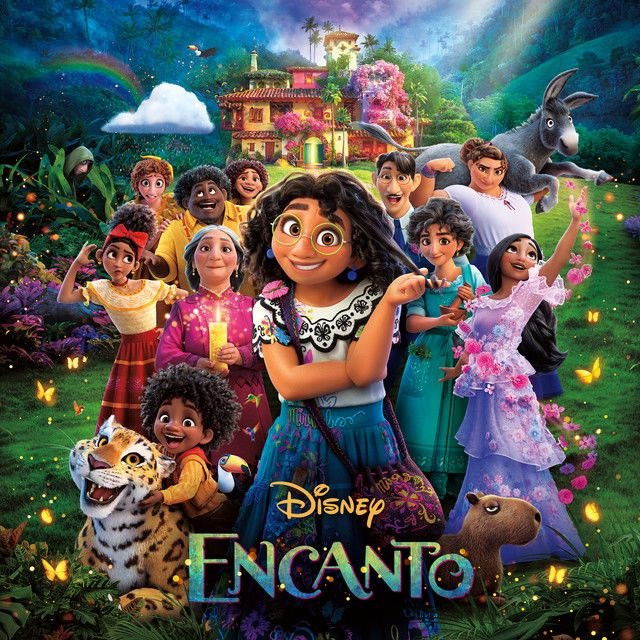
La familia Madrigal by Olga Lucía Vives, Yaneth Waldman, Encanto - Elenco
The Spanish-language showstopper from Encanto bursts open like a street parade. On its face, it’s a roll call of magical relatives. But the deeper meaning of La familia Madrigal Olga Lucía Vives, Yaneth Waldman, Encanto - Elenco is about how families define people by what they can do—and what happens to the one who doesn’t fit the mold.
"La familia Madrigal" - Olga Lucía Vives, Yaneth Waldman, Encanto - Elenco
¡Pisos!
¡Puertas!
Loading lyrics...
Unable to load lyrics
We're unable to display the lyrics at this time. Please try again later.
A Joyful Roll Call With a Hidden Question
They present a dazzling house tour where Mirabel proudly says, in effect, Es mi familia
before listing everyone’s gifts. The pace is playful, and the town is eager to know more. Under that cheer sits a key tension: the song keeps celebrating usefulness, while Mirabel keeps dodging the question of her own gift.
As the number speeds up, a taboo slips out—no se habla de Bruno
—a wink that there are cracks behind the perfect presentation. The result is both a welcome and a warning: this is a magical family, but they manage their image carefully.
Who’s Speaking, and To Whom?
They hear this as Mirabel addressing curious townspeople (and by extension, us). Olga Lucía Vives voices her with warmth and comic timing, while Yaneth Waldman’s Abuela hovers as the authority figure. The push-pull between pride and pressure mirrors how many families talk about their own legends.
Interpretation: the narrator acts like a tour guide to keep attention away from her missing power. Every joke and name-drop is a small defense, a way to belong without the proof of a “don.”
What Actually Happens in the Song
- Mirabel welcomes visitors and brags about the family’s powers.
- She profiles relatives: Pepa’s mood-weather, Julieta’s healing cooking, Bruno’s hush-hush visions, and more.
- The chorus turns the family name into a brand of safety and wonder.
- Suitors and cousins pop in; the house feels like a village.
- A kid asks about Mirabel’s gift. She sidesteps, then rushes off.
That final dodge reframes the whole whirlwind. The showcase is also a smokescreen.
Powers as Personality: Symbols That Speak
Each “gift” doubles as a character study:
- Pepa’s weather:
su humor afecta el clima
. Mood swings become storms—emotional pressure you can see. - Julieta’s cooking:
cura todo mal
. Caretaking as identity: she fixes others before herself. - Luisa’s strength:
fuerza irreal
. Strength reads as reliability—and a heavy, unspoken load. - Isabela’s flowers:
la perfección de pie
. Beauty and control; perfection looks lovely but can trap a person. - Bruno’s silence:
no se habla de Bruno
hints at fear around bad news, a family’s way of hiding messiness.
Interpretation: by praising “usefulness,” the song raises a hard question—what is someone worth when they’re not visibly useful?
A Vow and a Burden in One Breath
Mirabel sings about togetherness and the miracle itself, but the language of duty slips in alongside joy:
Hemos jurado abrir los brazos
Y juntos merecer el gran milagro
El pueblo vibra, el mundo gira
That promise energizes the music—and also plants the idea that love must be earned. For Mirabel, that belief becomes a knot she has to untie.
How the Sound Carries the Meaning
The arrangement leans into Colombian color: brisk cumbia swing, bright acoustic guitars, accordion accents, and hand percussion that feels like a plaza party. Call-and-response shouts and stacked chorus vocals make the Madrigals sound like a neighborhood.
Lin-Manuel Miranda’s quick patter and internal rhymes add comic velocity. As the tempo pushes, the vocal performance tightens, matching Mirabel’s rising nerves when kids press her about her gift. The music sells celebration while sneaking in anxiety at the edges.
Cultural Roots and Creative Intent
Encanto’s songwriting embraces Colombia’s rhythms and household textures, then filters them through a Broadway-ready, story-first design. This track functions like a prologue: it builds the world, introduces the rules, and drops a mystery. The Spanish-language cast keeps the humor sharp and the diction crisp so plot points land even at top speed.
Interpretation: choosing a festive style for a stressful introduction says something. In many families, pressure arrives with a smile. The song captures that contradiction—joy as a mask, love as work.
Alternate Readings That Hold Up
- It’s a community anthem: the refrain turns the family name into a civic brand, signaling safety and continuity.
- It’s a satire of resumes: each “don” reads like a job title, making Mirabel’s blank line feel painfully public.
Both readings fit because the lyrics balance pride with unease.
Takeaway: The Welcome That Starts the Journey
They should hear this as both a greeting and a thesis. The family’s magic is dazzling, but the song’s heart is Mirabel’s question: who am I if I don’t sparkle like the rest?
Disclaimer: Song meanings are interpretive; your own reading may differ based on context and experience.
Sources
- https://www.npr.org/2021/11/24/1058542353/lin-manuel-miranda-encanto
- https://lumiere-a.akamaihd.net/v1/documents/encanto_production_notes_disney_4b2b8b97.pdf
- https://www.billboard.com/music/music-news/encanto-soundtrack-explainer-lin-manuel-miranda-1235014496/
- https://en.wikipedia.org/wiki/Encanto_(soundtrack)







