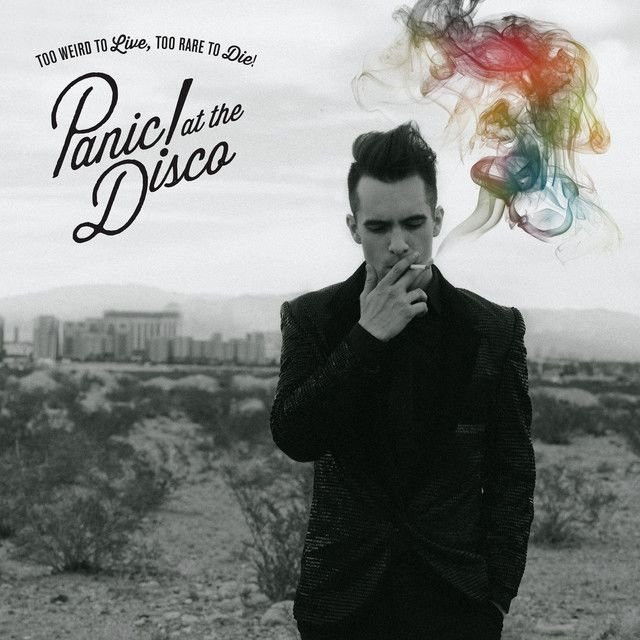
The End of All Things by Panic! at the Disco
A quiet love song at the end of a loud album
The meaning of The End of All Things Panic! at the Disco starts with a simple idea: love that lasts through time, distance, and change. On an album full of flashy sounds and neon-night storytelling, this closing track turns inward. It is soft, brief, and deeply personal.
"The End of All Things" - Panic! at the Disco
I am always yours
Any change in time
Loading lyrics...
Unable to load lyrics
We're unable to display the lyrics at this time. Please try again later.
Factually, the song appears on Too Weird to Live, Too Rare to Die! from 2013, and Brendon Urie wrote it about his wife, according to Songfacts. That context matters. The song does not sound like a breakup, a dramatic confession, or a twisted love story. It sounds more like a vow.
That is why the title can feel misleading at first. “The end” here does not point to destruction. Instead, it suggests the final truth beneath everything else: when life changes, love can remain.
Watch the official The End of All Things
music video
What the lyrics are really saying
At the center of the song is a promise of devotion. The speaker says that whether someone is close or far away, they are still connected. The phrase always yours
gives that idea its clearest shape. It is not casual romance. It is commitment.
The next idea is just as important. Time moves, people age, and life shifts, but love can still make two people feel renewed. When the lyric says we are young again
, it does not mean they literally go back in time. It suggests that love can restore wonder, hope, and emotional freshness.
Later, the song turns toward the future. It admits that life will change in coming years
. That line keeps the song grounded. This is not a fantasy where nothing goes wrong. It is a realistic love song that makes room for change while still holding onto loyalty.
Why the refrain feels like a vow
The repeated line we're in love
is striking because it is so plain. Many Panic! at the Disco songs are full of wordplay, tension, or theatrical detail. This one strips all that away. The plainness is the point.
Lay us down
We're in love
In context, that refrain can sound almost ceremonial. Interpretation: many listeners hear it like a wedding vow or a blessing over a shared life. “Lay us down” may suggest surrender, rest, or even being placed side by side by time itself. Because the song is so spare, the words feel open enough to hold all three ideas.
How the song’s sound shapes its meaning
Production is a huge part of the song’s emotional power. According to Songfacts, Urie told American Songwriter that it was “very honest, very confessional” and built from looped chords in a very bare-bones way. That matters because the music mirrors the message.
Instead of a beat-driven arrangement, the track leans on slow piano and a fragile vocal feel. There is very little to distract from the words. The effect is intimate, almost like standing in a chapel after everyone else has left.
That minimal style also makes the song feel timeless. A big pop production might have tied it to one era. Piano, space, and repetition make it feel more like a private promise than a trend. In that sense, the arrangement supports the lyric’s claim that feelings can stay steady even as the world changes.
Artist context makes the message clearer
Knowing where the song sits in Panic! at the Disco’s catalog helps explain why it hits so hard. The band often mixed glam, pop, electronic, and theatrical rock. Urie was known for vocal range and showmanship. So when they close an album with something this restrained, it stands out.
That contrast seems intentional. Songfacts also notes that Urie said in a Reddit Q&A that the track had “the most personal meaning” to him and was his favorite on the album. For listeners, that quote frames the song less as a character piece and more as a direct statement from the writer.
This helps answer why the lyrics are so simple. Simplicity can be a sign of sincerity. Instead of hiding behind images or cleverness, the song says exactly what it needs to say.
Two strong ways to read the title
Reading one: love outlasts everything
The most direct reading is that the title points to permanence. At the end of all changes, all fears, and all passing years, love remains. The lyric about feelings that remain the same
strongly supports that view.
Reading two: love exists beside mortality
Interpretation: there is also a quieter, heavier reading. Because the words lay us down
can sound final, some listeners hear a brush with mortality. Not death in a literal plot sense, but the idea that love is meaningful precisely because life is finite.
That second reading gives the song extra depth. It turns a sweet love song into a meditation on what people hold onto when everything else falls away.
Why listeners keep connecting to it
Part of the song’s lasting appeal is that it says something many love songs avoid: real commitment includes change. It does not promise a life without hardship. It promises steadiness through hardship.
It also works because it feels believable. The language is small, but the emotion is large. Anyone who has loved someone across distance, through growing older, or through uncertain seasons can hear themselves in it.
For fans of Panic! at the Disco, the track also shows another side of Urie as a writer. He proves he does not need spectacle to create impact. Sometimes three chords, a soft voice, and a direct promise are enough.
The final takeaway on its meaning
The meaning of The End of All Things Panic! at the Disco is best understood as a love vow set to bare piano. It is about devotion that survives time, distance, and change. Its title sounds apocalyptic, but its heart is gentle.
Interpretation: the song suggests that when everything noisy and temporary fades, the deepest human truth may be simple: two people choosing each other, again and again.
Disclaimer: This interpretation blends verified context with informed reading of the lyrics and sound. As with any song, listeners may hear meanings that differ from the artist’s intent.








